




Voting in Los Angeles’ 2026 mayoral primary was being counted Tuesday as Mayor Karen Bass faced two serious challengers: Republican former reality TV star Spencer Pratt from the right and City Council member Nithya Raman from the left. If no one wins a majority, the top two candidates will move on to the general election runoff.
Bass is seeking a second term in the second largest city in America, and the result will decide whether she keeps power outright or is forced into a one-on-one race later in the year. Pratt entered the contest in January after his home burned in the 2025 Palisades Fire, and his campaign has leaned heavily on that loss and on criticism of Bass’s handling of the city’s fire response.

That campaign has also raised real money. Between April 19 and May 16, Pratt brought in $2.7 million, a haul that gave him nearly 10 times what Bass raised in the same span and approximately seven times Raman’s total. For a candidate who only announced months ago, the fundraising has helped turn him into a live factor in a race that was expected to be shaped by the incumbent and the city’s Democratic left.


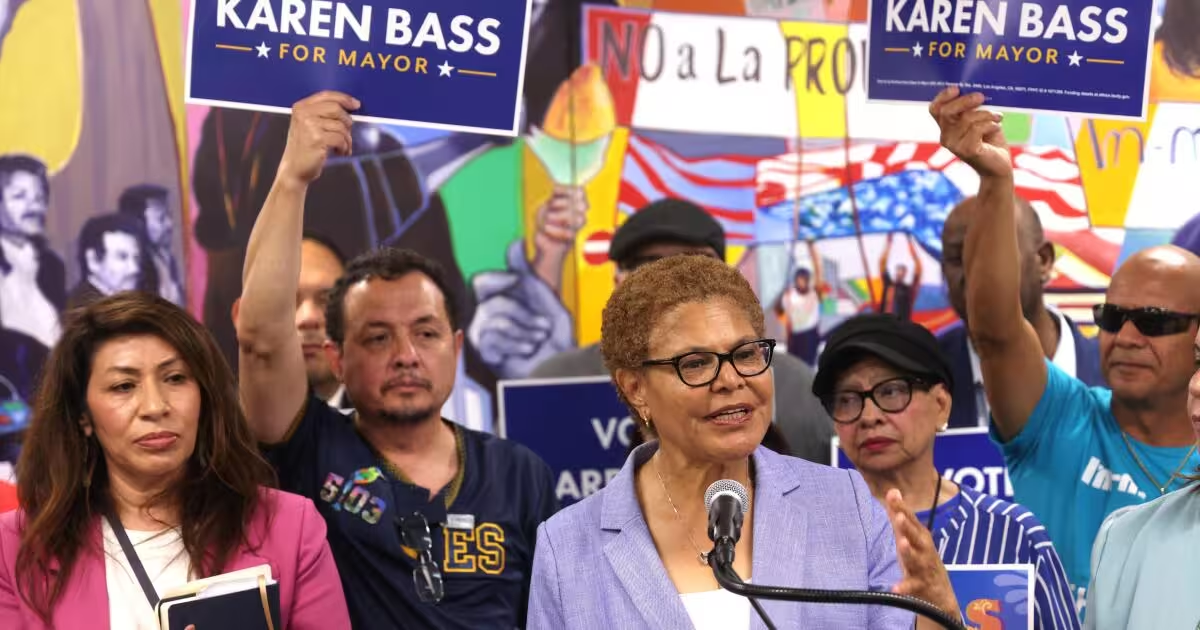
Bass spent Monday sharpening her case against Pratt at a campaign event, saying he has no experience in city government and may never have held a job outside reality television. She said he does not know the issues and is operating out of anger. Raman has made a similar attack from the opposite side, calling Pratt an anti-vaccine conspiracy theorist and saying he is not offering a realistic answer to the city’s problems.
The question now is whether Pratt’s momentum is broad enough to survive contact with the city’s electorate. A UCLA political psychology professor noted that Los Angeles has not elected a Republican mayor since 2001, and Pratt’s base remains narrow even as his name recognition and fundraising have climbed. That leaves the race in a familiar place for the city’s all-party primary system: the first test is whether any candidate clears a majority, and if not, the fight shifts to who finishes in the top two. For Bass, the immediate threat is not just Pratt’s rise on the right, but whether Raman can hold enough support on the left to push the incumbent into a runoff she would rather avoid.
When the count is finished, the field will either produce a winner in one go or send Los Angeles into another round of voting. If Bass falls short of a majority, the final place in the runoff may decide whether the city’s next mayor is chosen by a broad coalition or by the narrowest sliver of a fractured primary.



