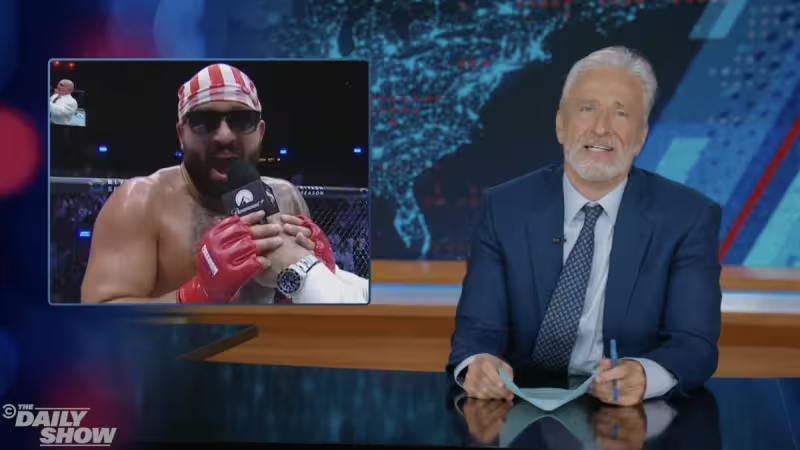
“Sunday night gave the president and his acolytes an opportunity to rebut the joyous communion of teamwork that embodied the New York Knickerbockers for a joyless, Vegas-style trudge through the People's House, now transformed into a gold-plated pummeling center,” Jon Stewart said on air as he opened his show Sunday night, mocking Donald Trump's UFC Freedom 250 event held over the weekend.
The line landed as a present-tense attack on spectacle and taste — then Stewart suddenly changed gears midsegment when he realized the broadcast came from his show’s corporate family. “Once again the leaders of Paramount+ providing us all with incredible content at reasonable prices,” he deadpanned, and followed with the mock-serious pledge: “I...I am proud to stand with the Paramount family and whatever shows they decide to either cancel or put on.”

That pivot is the most newsworthy move Stewart made: a comedian satirizing a White House spectacle and, within the same breath, adopting the tone of the network that had carried it. The two actions — ridicule of the Freedom 250 and an on-camera wink to Paramount+ — folded politics, corporate ownership and late-night posture into a single, half-lampooning, half-defensive beat.
Stewart did not confine his jabs to the hosting arrangement. He called out UFC fighter Josh Hokit for attacking former First Lady Michelle Obama in a post-fight interview, and later recounted his own proximity to New York’s basketball moment. On an episode of The Weekly Show with Jon Stewart, he said he had handled the Knicks festivities and attended celebrations in New York, and that President Trump had gone to one of the finals games. “People immediately were like, ‘F--- you!’” Stewart said, describing the crowd in Madison Square Garden booing Trump incessantly.
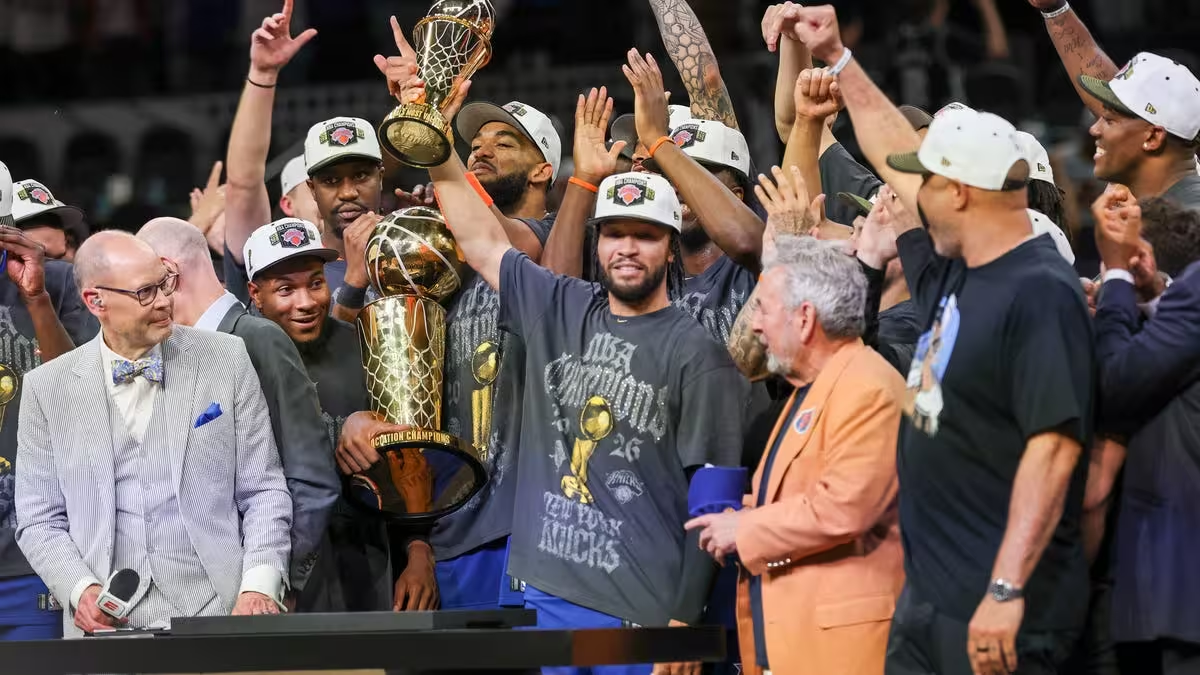
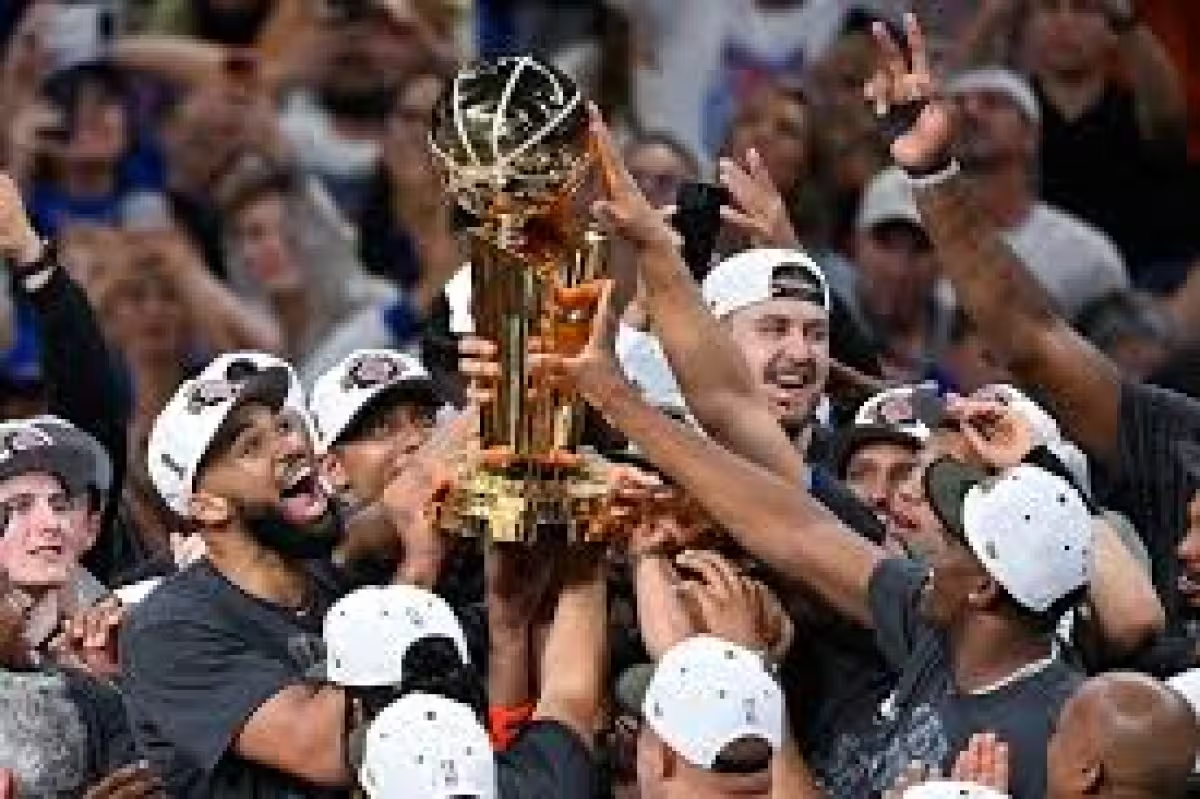
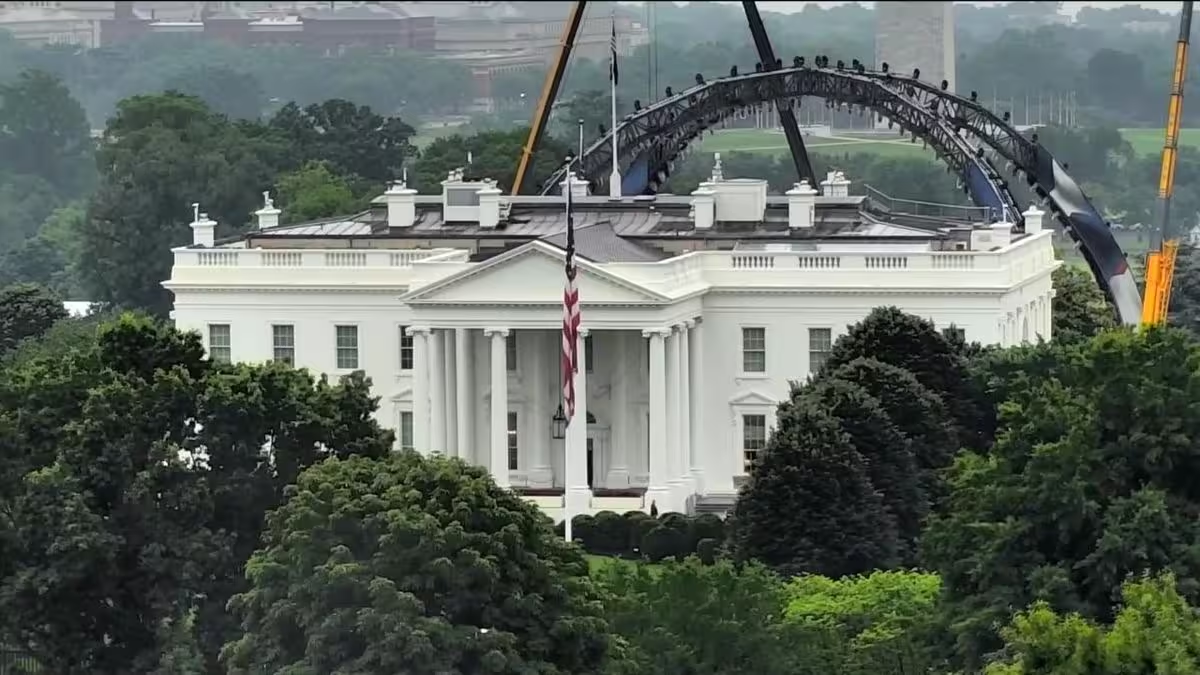
Those details tether the bit to a specific weekend: a Knicks championship atmosphere in New York and, elsewhere, a Trump-hosted UFC spectacle that Paramount+ chose to air. Contextually, it’s the collision of two public rituals — a civic-sports parade and a political pageant — both amplified by the same media platform. That overlap, Stewart implied with both scorn and a company-friendly aside, complicates the simple joke of a late-night monologue.
The friction is plain. Stewart’s mockery aims at the event’s tone and at fighters who turned political insults toward public figures; the pivot toward corporate flattery undercuts the purity of that mockery. Instead of escalating, Stewart neutralized potential industry fallout with self-aware irony, converting a potentially awkward on-air callout into a gag that acknowledged his own employer’s role in distributing the footage.
What happens next is the open part of the story. Stewart turned the weekend’s two spectacles into material for one show and closed the segment with loyalty-laced sarcasm rather than a sustained assault. There are no confirmed replies from the president, Paramount+, or the White House in the immediate aftermath, and Stewart’s choice to lampoon and then lampoon himself leaves those institutions to decide whether the moment requires a response.
Stewart’s performance did at least two things: it turned a political event into late-night theater, and it underscored how intertwined modern spectacle, corporate media and political pageantry have become. By mocking the Freedom 250 and then embracing — mockingly — the network that aired it, he walked back from a direct confrontation and, in effect, set the next test to other actors: will the White House or Paramount+ change the note of the conversation, or will Stewart’s sarcastic solidarity be accepted as the final line?