



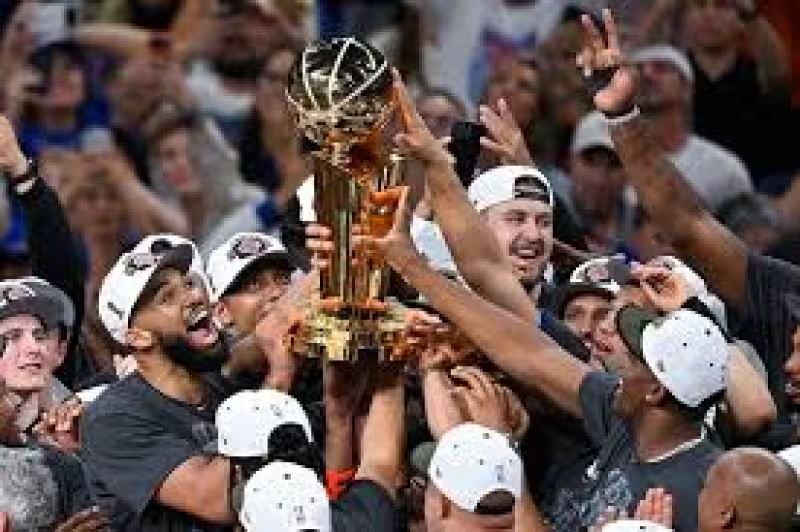
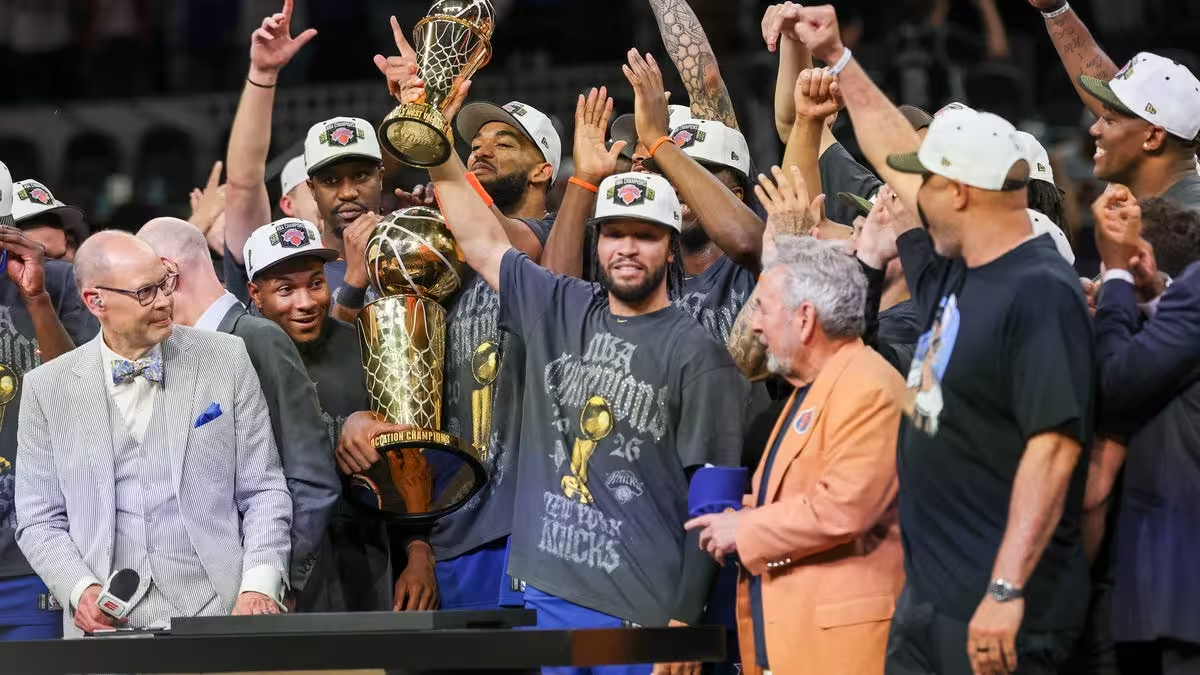
The New York Knicks swept past the San Antonio Spurs 4-1 to capture their first NBA title since 1973, and the immediate question for fans and officials is not a parade route but whether the team will accept a customary White House visit — an invitation that is expected but has not been confirmed or accepted.
The scale of what just happened is simple to measure: a 4-1 Finals victory that ended a 53-year title drought. That win came amid a series of headline moments that shape the White House question. President Donald Trump attended Game 3 at Madison Square Garden — becoming the first sitting president to attend an NBA Finals game — and was met with loud, sustained boos on the jumbotron during the national anthem; the Knicks lost that game 115-111, snapping a 13-game playoff winning streak. Security around Madison Square Garden for Game 3 produced canceled watch parties and long entry delays, and parts of the fanbase later blamed Trump’s presence for the defeat. After the series, Trump publicly congratulated the Knicks and described himself as "very enthusiastic."

The backdrop matters because visiting the president is not automatic anymore. NBA champions have been invited to the White House since at least 1963, but in the late 2010s several title teams either declined invitations or were not formally invited; the Golden State Warriors and Toronto Raptors were among those that stepped away from the ritual or never received a formal call. What was once a predictable stop on the championship calendar has become an unpredictable page in the public part of a title run.
The friction is obvious and immediate: an invitation is expected, yet the Knicks have not publicly said whether they will accept or decline. That gap leaves two competing forces in play. One is the traditional, apolitical framing of a White House visit as part of a team’s public celebration and recognition. The other is the politicized atmosphere that has prompted recent champions to skip or be denied visits, amplified here by the Garden boos, security disruptions and the fact that some fans blamed the president’s presence for a pivotal playoff loss.
Practically, the decision will shape how the Knicks’ championship is presented to different audiences. A White House visit would join a long line of ceremonial honors that mark the end of a season; a public decline would align the team with recent examples of champions who opted out amid political friction and could deepen the split between parts of the fanbase. Either choice will be parsed as much for its political signal as for its ceremonial content: whether the Knicks accept, decline, or simply wait will be read as a statement about how this franchise wants to close a 53-year chapter.
For now the concrete steps left are procedural and plain. A formal invitation from the White House has not been announced, and the Knicks have not announced an acceptance or a decline. That leaves the single, consequential question: if and when a formal invitation arrives, will the Knicks accept it? The answer will both settle the immediate logistics of a presidential visit and add a fresh line to the modern history of championship teams choosing whether to appear. Until the team speaks or the White House extends an official invite, the public ritual that once followed a title remains uncertain — and a city that has waited 53 years for this will watch that uncertainty very closely.



