



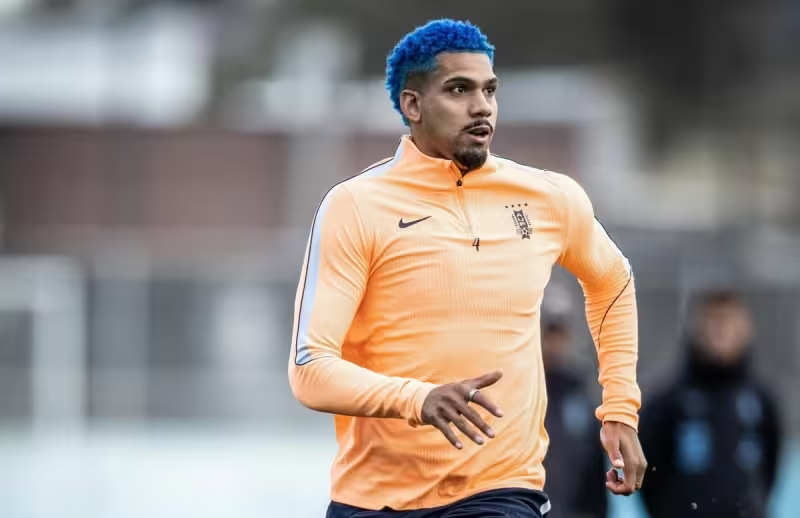
“Llegó con un problema muscular que no era serio, de hecho en los últimos seis meses no tuvo ninguna lesión en Barcelona,” Marcelo Bielsa said, before adding: “También tuvo un desgarro.” The national coach put the detail bluntly in a press conference that reshaped Uruguay’s immediate plans ahead of its debut on Monday at 19:00 in Miami against Arabia.
Bielsa framed three separate fitness problems together while explaining why key names are uncertain for the opener. He said Ronald Araújo arrived with what staff judged a minor muscle problem — and that the Barcelona centre‑back, who had not suffered any injury in the previous six months at his club, then tore a muscle during Uruguay training.

The scale of the disruption is small in number but large in consequence: Araújo’s issue came alongside an ankle problem that delayed José María Giménez’s integration by one week and a muscle injury to Giorgian de Arrascaeta, who was also still recovering from a clavicle fracture suffered at the end of April. Those three separate setbacks compressed Uruguay’s preparation time and reduced options for Bielsa’s first XI in Miami.
Bielsa did not treat Araújo’s case as a routine update. He said the Uruguay staff felt responsible for the tear — a rare public admission of accountability — even as he insisted no decision was taken unilaterally. “Repito, si se desgarra entrenando, hay algo que está mal. Él está trabajando con un grupo de gente de su confianza y no hubo ninguna decisión que no fuera consensuada con ellos y el propio Araujo. Nos sentimos responsables, pero no podríamos haber hecho algo diferente a lo que hicimos,” he said, underlining both concern and the limits of hindsight.
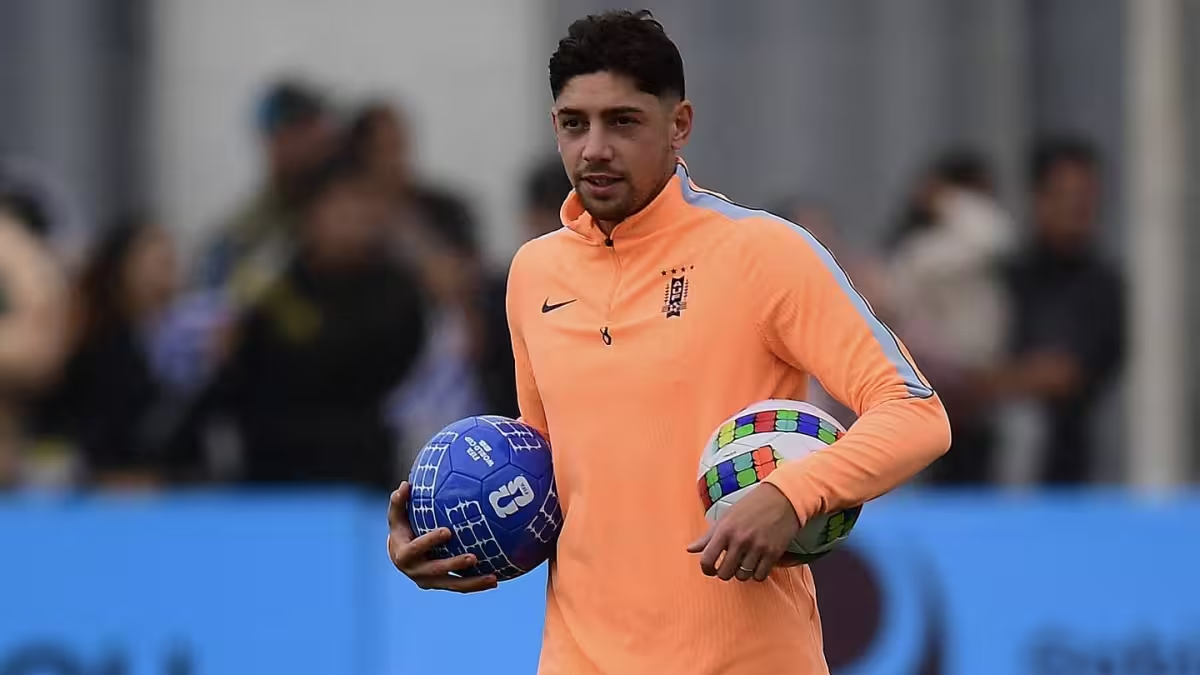

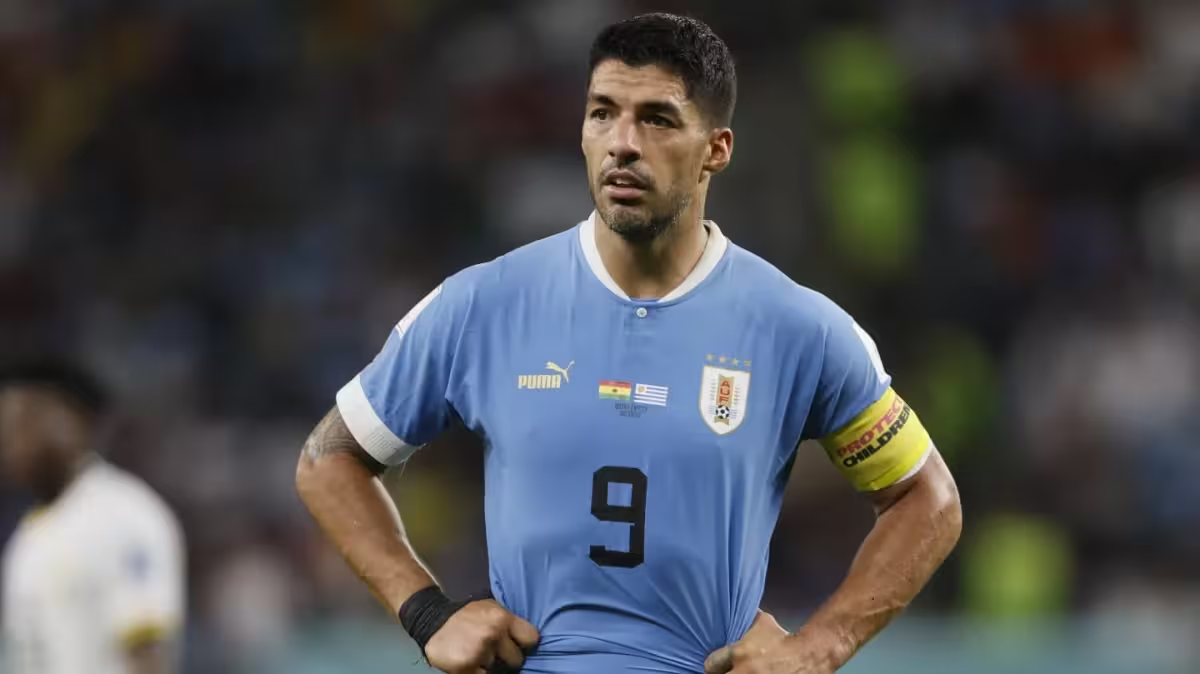
The coach was equally precise about the circumstances around De Arrascaeta’s workload. Bielsa said every session and every level of exertion for De Arrascaeta had been agreed between the player, his physiotherapist, Flamengo’s medical staff and Uruguay’s own staff — a line of joint responsibility he used to distinguish that case from the one involving Araújo.
That sequence of accounts raises an obvious friction: Bielsa acknowledged staff responsibility for Araújo’s tear, yet he also stressed unanimity in decisions and implied there was nothing they could reasonably have done differently. The combination reads as both a mea culpa and a statement that the squad followed accepted protocols — a tension that will govern questions about preparation standards and risk management as Uruguay moves into competition.
Practical answers are limited and immediate. Giménez rejoined the group one week later than his teammates because of an ankle problem, and De Arrascaeta’s string of issues followed a clavicle fracture at the end of April. Araújo’s tear, occurring in the current training period, removes a previously reliable defensive option; Bielsa’s reminder that a muscle tear in training signals that “something is wrong” leaves room for medical and tactical reassessment before kickoff.
The next, unavoidable fact is time. Uruguay’s debut is Monday at 19:00 in Miami against Arabia; the squad will have to finalise selections and adapt tactics with these fitness doubts hanging over them. The single most consequential unanswered question is the length of Araújo’s layoff — Bielsa offered the diagnosis and accepted responsibility but did not supply a timeline for recovery, leaving the team and its fans without clarity on whether the Barcelona defender will be fit for the remainder of the window or need longer-term care.
Bielsa’s account closes the briefing with a choice rather than an answer: accept a shared responsibility for a training injury while insisting the group made consensual decisions, or press for different standards of preparation and oversight. For now, the immediate test arrives in Miami at 19:00 on Monday — and the squad will walk onto the pitch with the uncertainty over Ronald Araújo’s availability still unresolved.



