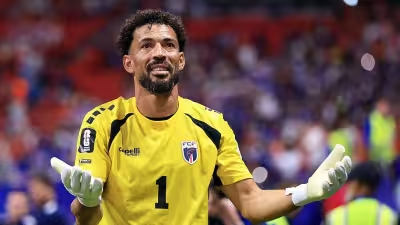
River Plate will move to rescind the deals for Matías Viña and Kendry Páez once the 2026 World Cup ends, effectively ending both players’ six-month spells at the club as part of an immediate squad overhaul.
Sporting director Stéfano Di Carlo has signalled a major turnover — he said about 15 players will leave River — and the club has already targeted Viña and Páez among those departures. Both are at the World Cup with Uruguay and Ecuador respectively; River plans to complete the administrative steps to terminate Páez’s loan from Chelsea and to return Viña to Flamengo when the tournament finishes.

The numbers underline how limited each player’s contribution has been. Kendry Páez featured in 14 matches for River during the first half of 2026, logging 461 minutes, scoring once — against Aldosivi — and providing one assist. Matías Viña also made 14 appearances but picked up nine bookings and was used mainly from the bench while competing with Marcos Acuña for the left-back role; he even had to play in goal in the away Sudamericana tie at Carabobo after Santiago Beltrán’s red card. Viña arrived in January on loan from Flamengo for $500,000 on a deal running to December 31, 2026.
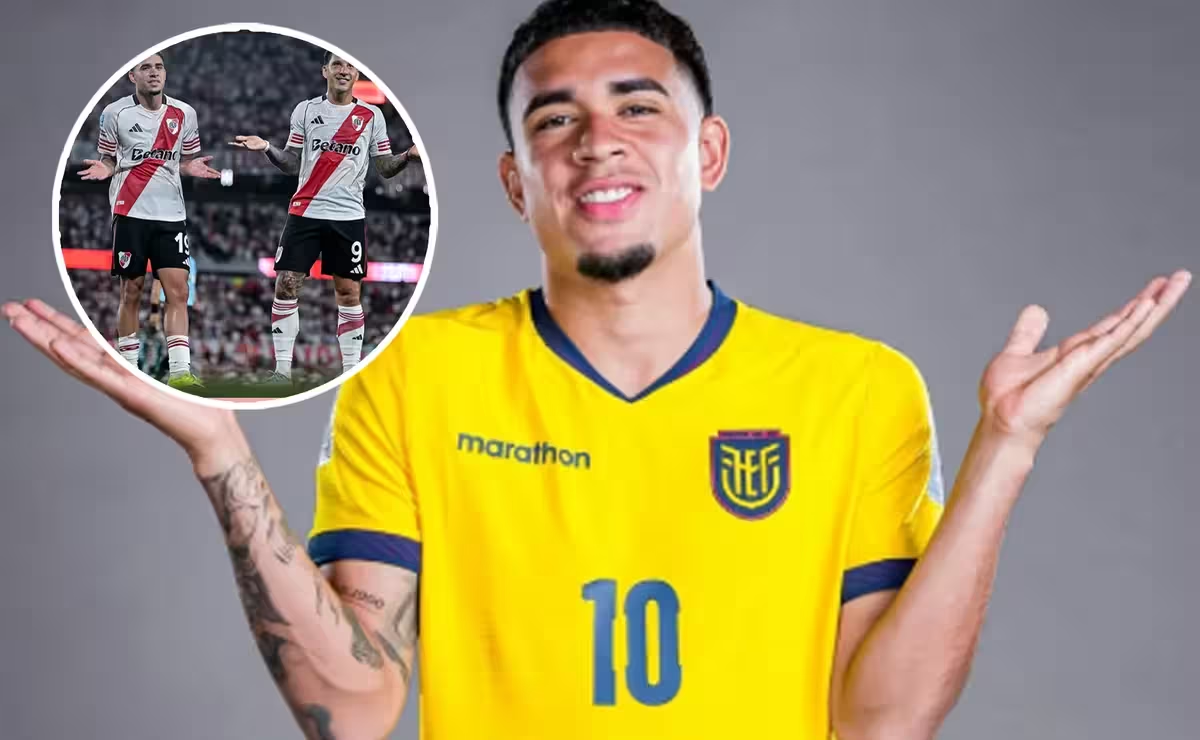
River’s decision has been framed inside a broader push to refresh the squad for the second half of the season. Club sources say the coaching staff and sporting management — reportedly including agreement between Eduardo Coudet and Pablo Longoria, as reported by Olé — have identified a list of players they will not count on going forward. On the Wednesday before the squad returned to activity in Ezeiza, Coudet made clear he would not include Páez and Viña in plans for the second semester.
Context sharpens the move: Chelsea retains repurchase options on Páez in June and again in December, and Páez failed to reach 50% of River’s official appearances during the semester. That underperformance helps explain why River intends to rescind the Ecuadorian’s loan rather than keep him through the full term. For Viña, the deal from Flamengo already carried a finite end date and a clear financial outlay; the club’s current plan is to send him back rather than extend or convert the loan.
The decision exposes the friction between transfer-market ambition and on-field reality. Kendry Páez arrived with fanfare and was among River’s highest-profile signings last window, yet he never established himself as a regular starter; his 461 minutes and intermittent impact underline how quickly a promising acquisition can fall short in a squad under intense pressure to reset. Viña’s case is less about a failed signing than about redundancy — nine bookings, sporadic minutes and competition with an established left-back left him surplus to requirements.
What happens next is procedural but consequential: River will wait until its players finish their World Cup commitments and then begin formal rescissions. The club’s broader plan to move roughly 15 players out of the squad sets the stage for new arrivals and a compressed transfer strategy in the coming window. The single most consequential unanswered question is whether River will execute the rescissions immediately after the World Cup as planned or leave room for last‑minute reversals should post-tournament assessments or market options alter the calculation.