



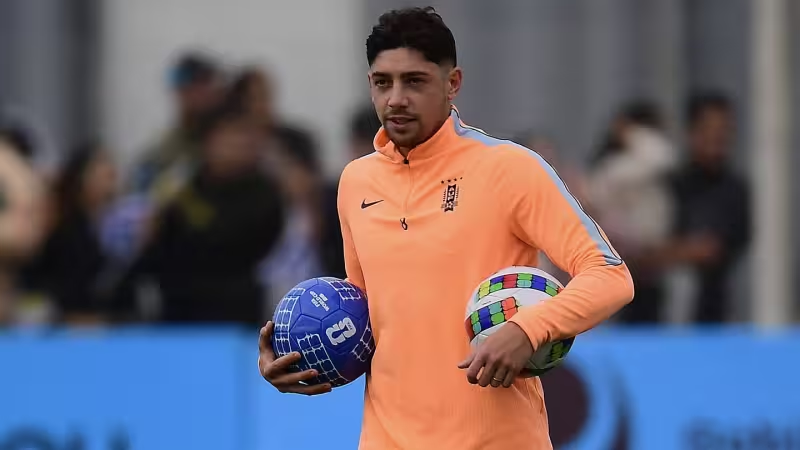
When Federico Valverde walked into the dressing room this season with the armband at Real Madrid, it completed a trajectory he has insisted always aimed higher than personal acclaim: "Si gano un título con la selección, puedo morir feliz." The gesture was simple; the meaning was not. Valverde was installed as Real Madrid's first captain after Dani Carvajal's departure, a promotion that puts the 27-year-old midfielder at the heart of both club and country ahead of the 2026 World Cup.
The elevation is built on numbers and trophies. Valverde finished the 2025-26 season with 49 appearances, nine goals and nine assists, and his Transfermarkt value peaked at 122.5 million euros. He has collected three La Liga titles, two Champions League trophies, three Club World Cups, two UEFA Super Cups, one Copa del Rey and three Spanish Super Cups; he also won the MVP award in the Spanish Super Cup final. Individually, his volley against Manchester City took the 2024 Champions League Goal of the Season and his early promise was recognised with the Silver Ball at the 2017 FIFA U-20 World Cup.

His rise was not effortless. Born on July 22, 1998, in La Unión, Montevideo, Valverde came from a working family — his father worked as a security guard and his mother sold clothing and toys to help the household. Real Madrid signed him from Peñarol in 2016 for a 5 million euro fee. He spent 2016-17 with Castilla and a 2017-18 loan at Deportivo de La Coruña before making his first-team debut on October 23, 2018, against Viktoria Plzen in the Champions League.
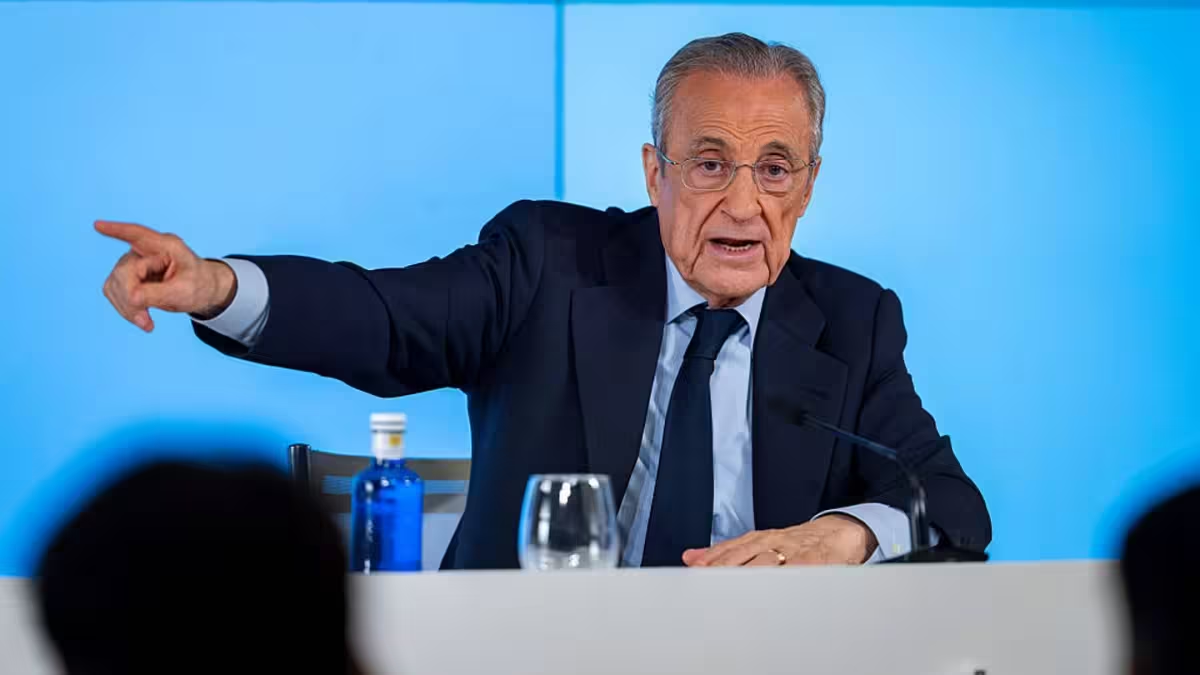
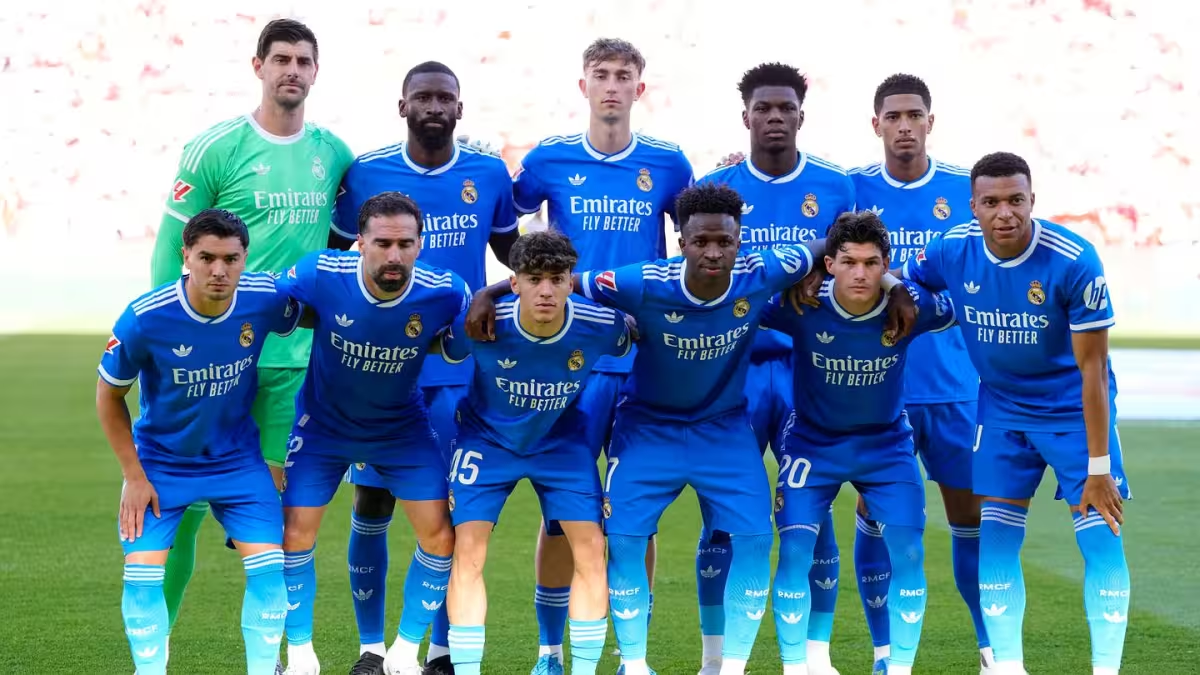
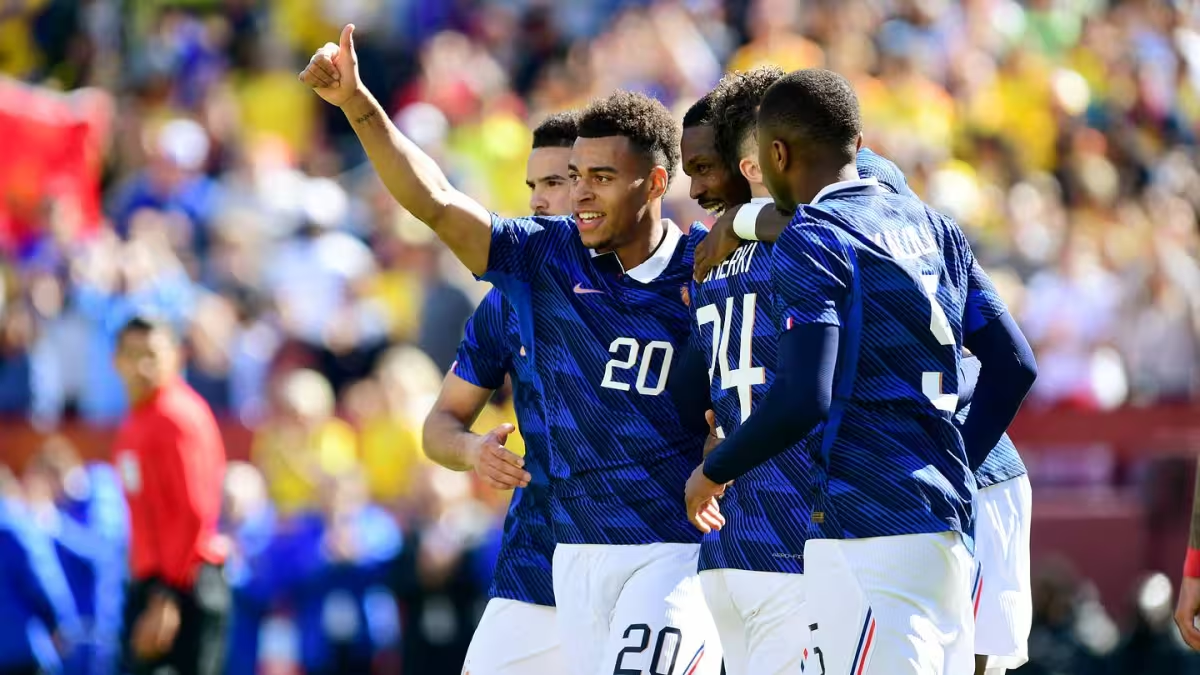
On the pitch, Valverde is often described in shorthand as a box-to-box midfielder, but he is more than that: he can occupy the defensive pivot, play on the right or even at full-back and as a winger when called upon. Carlo Ancelotti publicly challenged him in 2022 to surpass 10 goals in a season; Valverde answered with 12. At international level he debuted for Uruguay at 19 in a World Cup qualifying match for Russia 2018, missed that final tournament in Óscar Tabárez’s selection, became an undisputed starter at the 2021 Copa América and started all three group matches in Qatar 2022, where Uruguay were eliminated at the group stage.
Those credentials explain why national figures see him as central to Uruguay’s 2026 hopes. Marcelo Bielsa put it plainly before Qatar: "Para un Mundial tener jugadores de ese perfil es importante." The new Real Madrid armband reinforces that profile: a player who carries club authority and international responsibility simultaneously.
But leadership also means managing internal strain. In February 2026 Valverde was involved in a physical altercation at Valdebebas with teammate Aurélien Tchouaméni; the club fined each player 500,000 euros. The episode sits uneasily beside the narrative of Valverde as model professional and locker-room leader. It is a disciplinary mark that will be measured against his on-field output and his capacity to steady a midfield that Real Madrid and Uruguay will depend on heavily.
Valverde’s appointment is a bet on continuity and temperament. He has already proven adaptable and decisive in big moments — from Castilla to the Champions League stage — and his trophy cabinet matches his new status. The immediate question now is whether the armband will sharpen him or expose fault lines: can Valverde convert individual excellence into collective calm at Real Madrid and, crucially, deliver the international silverware he has vowed to win for Uruguay?



