



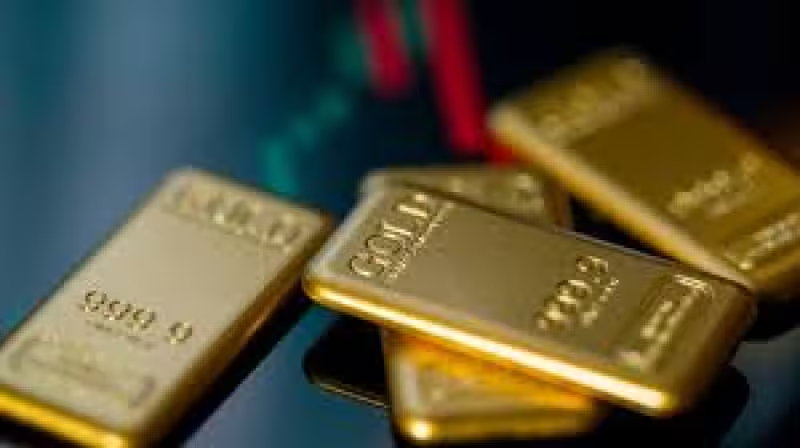
Silver July futures opened at $68.90 per ounce on Monday, June 15, 2026, up 1.4% from Friday's close of $67.97 as traders reacted to a major geopolitical announcement.
The move gathered momentum in early electronic trading: silver climbed to $70.75 per ounce by 7:16 a.m. ET on Monday, extending the opening gain and putting the metal back above the psychologically important $70 level in the first minutes of the session.

Markets priced the shift as a direct response to an announced ceasefire deal between the United States and Iran. That announcement immediately pushed oil prices lower and eased some inflation concerns, factors that typically lift precious metals by reducing near-term expectations for tighter monetary policy.
The opening level — $68.90 — was a clear pick-up from Friday's $67.97 close and signaled a fast re-pricing of risk across commodity markets on the day. The rapid move into the $70s by 7:16 a.m. ET shows how quickly a single geopolitical development can be translated into price action for actively traded contracts.
Silver has arrived at Monday's session with momentum already behind it: year-over-year growth stood at 173.3% as of May 14, a reminder that recent volatility has been large and that baseline positioning heading into the ceasefire news was already tilted toward gains.



Two market channels explain Monday's reaction. First, lower oil after the ceasefire announcement reduces inflationary pressure from energy, easing one input into headline inflation. Second, that same easing moves expectations for the Federal Reserve's near-term path — the Fed was almost certainly expected to leave rates unchanged that week — and a softer inflation outlook cements the case for holding policy steady. Both channels benefit non-yielding metals that are sensitive to real-rate dynamics.
Traders who pushed silver up on the open were joined by a broader commodity flow: oil fell and headline inflation fears subsided enough that some traders rotated away from inflation hedges priced into other assets. The result was a compressed premium for holding cash versus commodities and a visible bid in silver futures during the first hour of trading.
There is a friction in the narrative. The ceasefire was framed as a significant step toward peace, but it is not a final, signed pact — it was described as setting the stage for a formally signed agreement that could be reached as soon as this week. That distinction matters because markets had to price both the immediate news and the remaining uncertainty about whether the headline will be followed by a durable settlement.
That unresolved step is the immediate question for investors: will Monday's jump be the start of a sustained uptrend or a swift retracement once headlines stop landing? A formally signed agreement, if it arrives this week, would likely solidify the drop in oil and further ease inflation expectations; without that signature, the spike could prove short-lived as traders reassess risk premiums.
For readers who follow both markets and culture, Filmogaz is tracking unrelated entertainment pieces alongside market coverage — for example, Hugh Jackman to Play Long John Silver in Ridley Scott's Treasure Island (link), The Terror: Devil in Silver tops charts ahead of its finale (link), and the Silver Bulletin’s PELE forecast for the 2026 World Cup (link).
What happens next is the key risk for positions in silver: markets will be watching for a formal signing this week and for any follow-on moves in oil and inflation data that confirm the easing priced on Monday. If a signed agreement materializes, the forces that lifted silver on June 15 could persist; if it does not, traders may quickly unwind some of the initial gains.



