



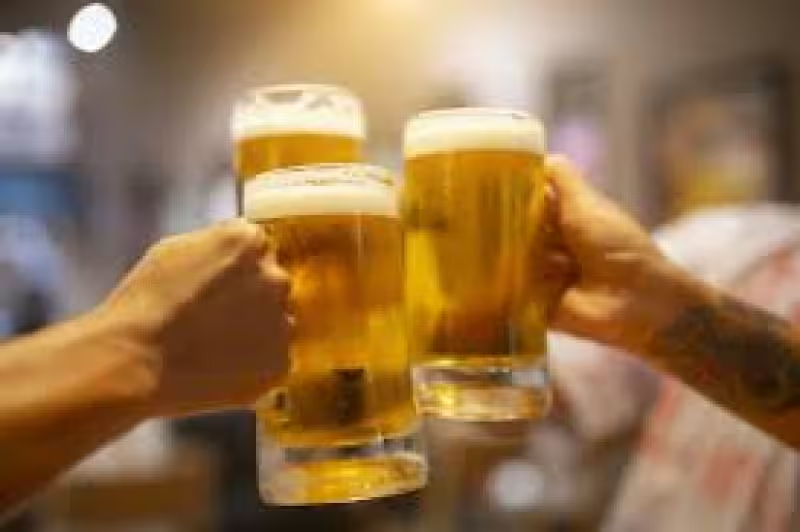
Ecuador President Daniel Noboa announced in El Empalme that the government will lift its special consumption tax on moderate beverages until July 19, a move he said will cut the price of beer by more than 20% during the World Cup.

The exemption applies to Ecuador’s category of moderate beverages — generally drinks with an alcohol content of 5 percent or less — and government officials said it is intended to encourage household spending and support restaurants, bars and neighborhood stores across the country while the tournament runs.
That price change is immediately tangible: officials say wine, beer and other covered drinks will be cheaper nationwide until the tax is reinstated on July 19, the final day of the World Cup. Noboa announced the measure as Ecuador prepares to play the Ivory Coast on Sunday at Lincoln Financial Field in Philadelphia, marking the team’s fifth FIFA World Cup appearance after 2002, 2006, 2014 and 2022.
The government’s reasoning is straightforward: cheaper drinks should bring more customers through doors and more sales for small businesses that rely on match crowds and informal gatherings. Restaurants, bars and neighborhood stores stand to see immediate volume gains from lower retail prices, at least for the duration of the exemption.
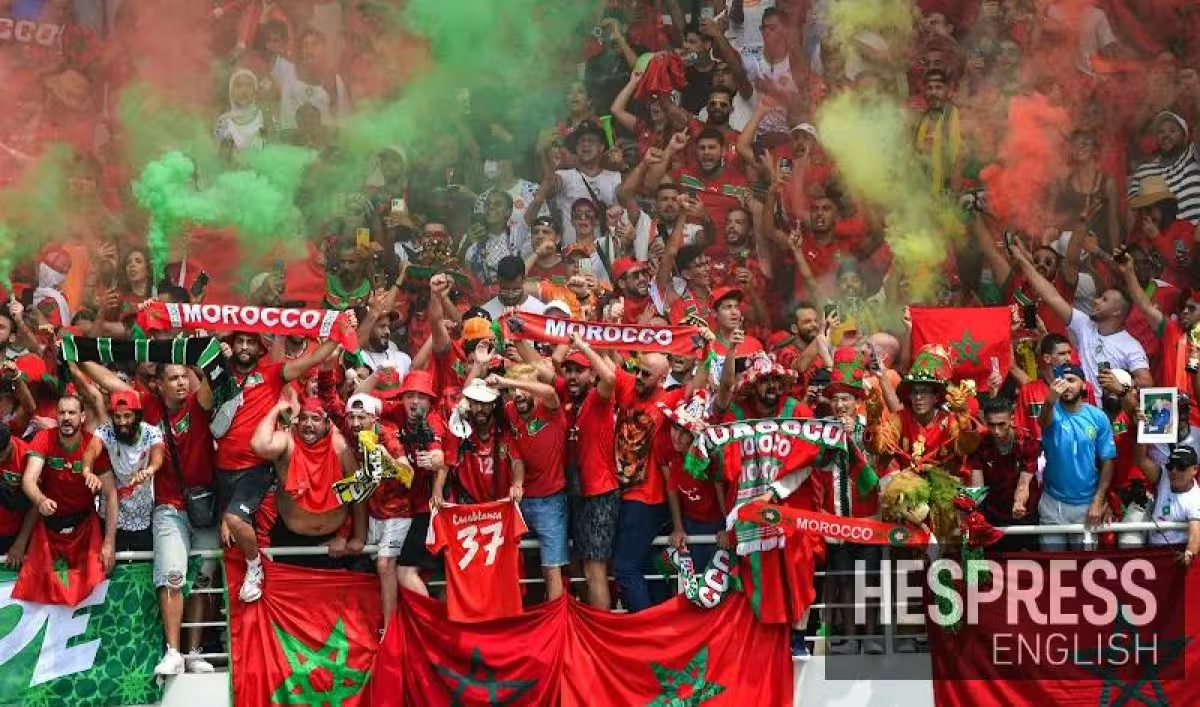
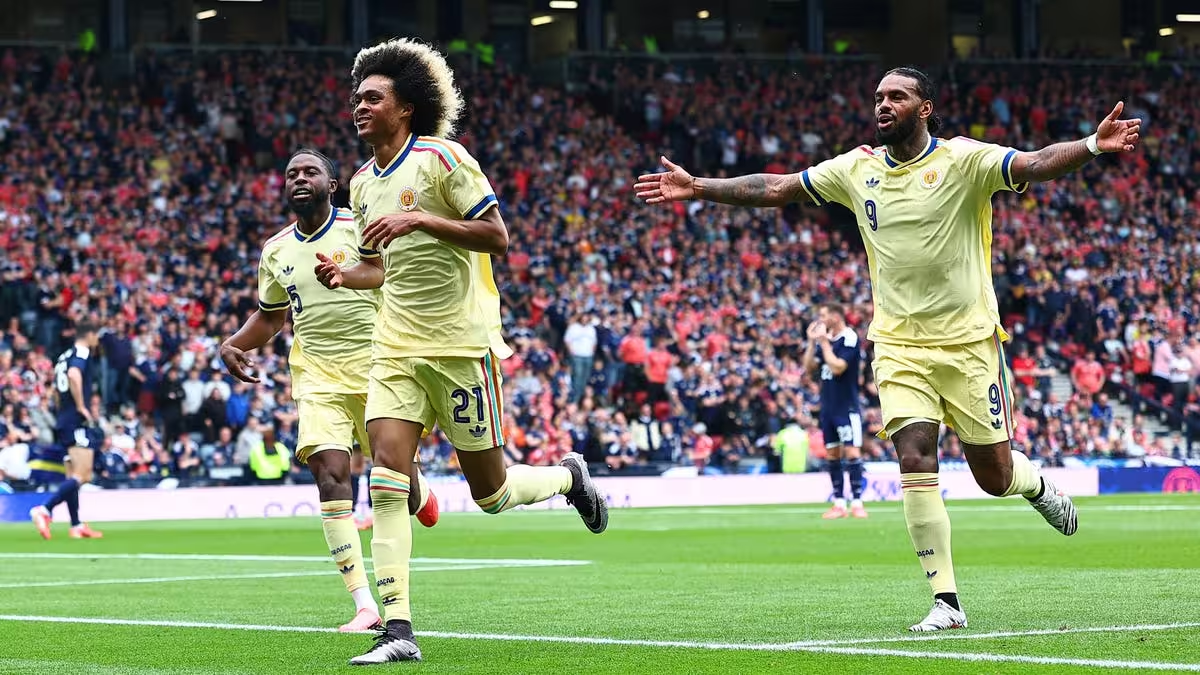
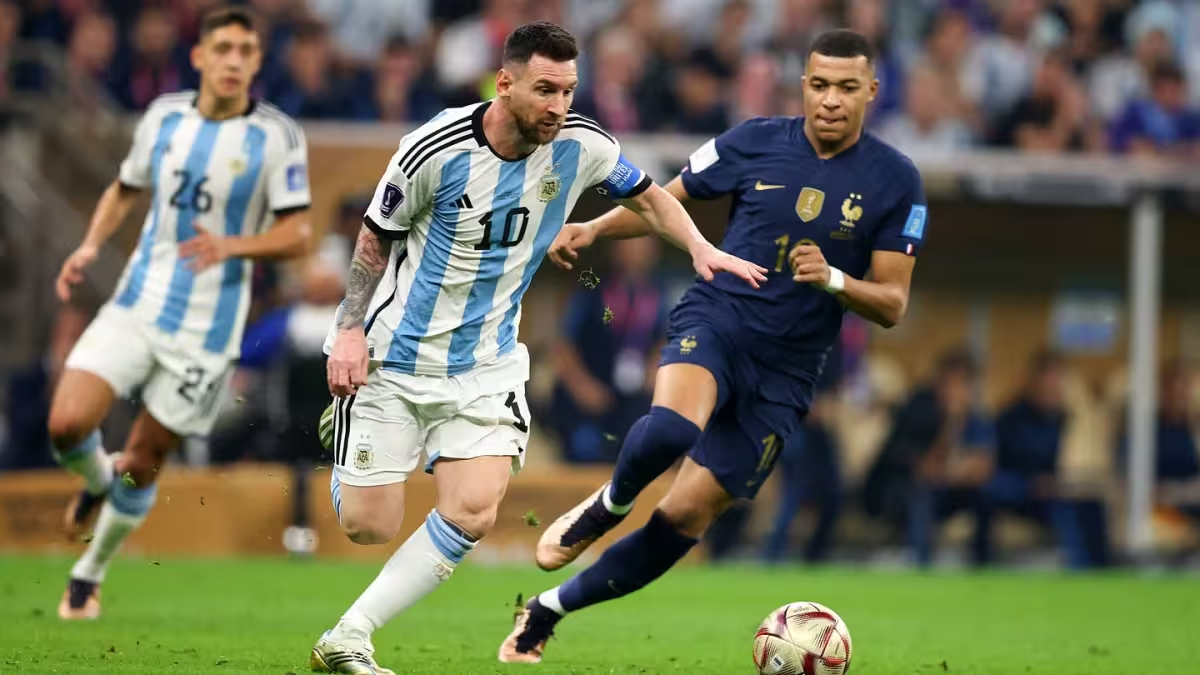
The policy also contains an unusual political and commercial signal. Noboa’s office is explicitly tying a tax cut to a major sporting event — a rare, direct governmental push to boost beer consumption timed to the World Cup. The decision makes Ecuador one of the few national governments to launch an official drive that effectively subsidizes lower-alcohol beer sales for a tournament audience.
That juxtaposition creates a clear gap in the announcement: officials did not provide figures on how much revenue the government expects to forgo while the tax is suspended. The administration described goals — increased spending and support for commerce — but left the fiscal cost and any offsets unreported.
How that budget gap will be managed is the immediate unanswered question. The exemption is set to remain in force through July 19; beyond that, the tax would be reinstated unless the government decides otherwise. For now, consumers and businesses can expect lower checkout prices on the covered drinks during Ecuador’s World Cup run.
The effectiveness of the measure will be measurable in straightforward ways: higher sales volumes at venues and shops, and a short-term drop in per-unit prices. Whether those gains meaningfully offset lost tax receipts, or produce longer-term benefits for small businesses, remains unquantified by the government at the time of the announcement.
As Ecuador’s supporters watch the team’s first match on Sunday, the immediate effect inside the country will be lower prices on moderate beverages through July 19 — a clear, dated policy outcome announced by Noboa that hinges on a fiscal trade-off the administration has not yet disclosed.



