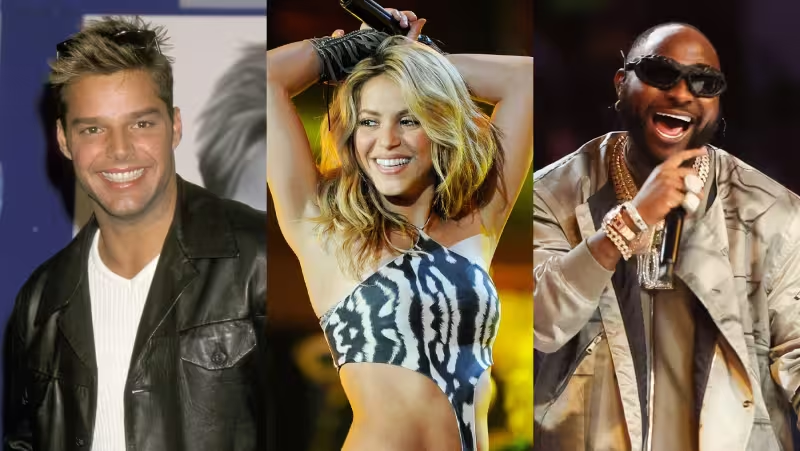
Shakira said her 2010 FIFA World Cup anthem "Waka Waka (This Time For Africa)" "turned her into a mother," a striking personal verdict that has resurfaced as new World Cup songs arrive and the official playlists for the next tournaments take shape.
The claim matters because the song has not faded. In 2024 it became the most streamed FIFA World Cup track and earned a Guinness World Record, a data point that frames Shakira’s remark as more than nostalgia: a single song kept finding new ears and new meaning over a decade. Musically, the anthem was noted for blending Afro-Colombian elements with South African styles — a hybrid that helped it travel beyond the tournament and across generations.

That longevity sits inside a long, uneven history of World Cup music. The run of official and popular anthems stretches back to the early 1960s, when a Chilean group released a song ahead of the tournament there, and continued through high-profile efforts tied to host nations — the United States last hosted before the current cycle in 1994, and Germany staged the 2006 event that featured its own commissioned performances. Some songs were formal FIFA anthems; others rode public momentum without an official contract.
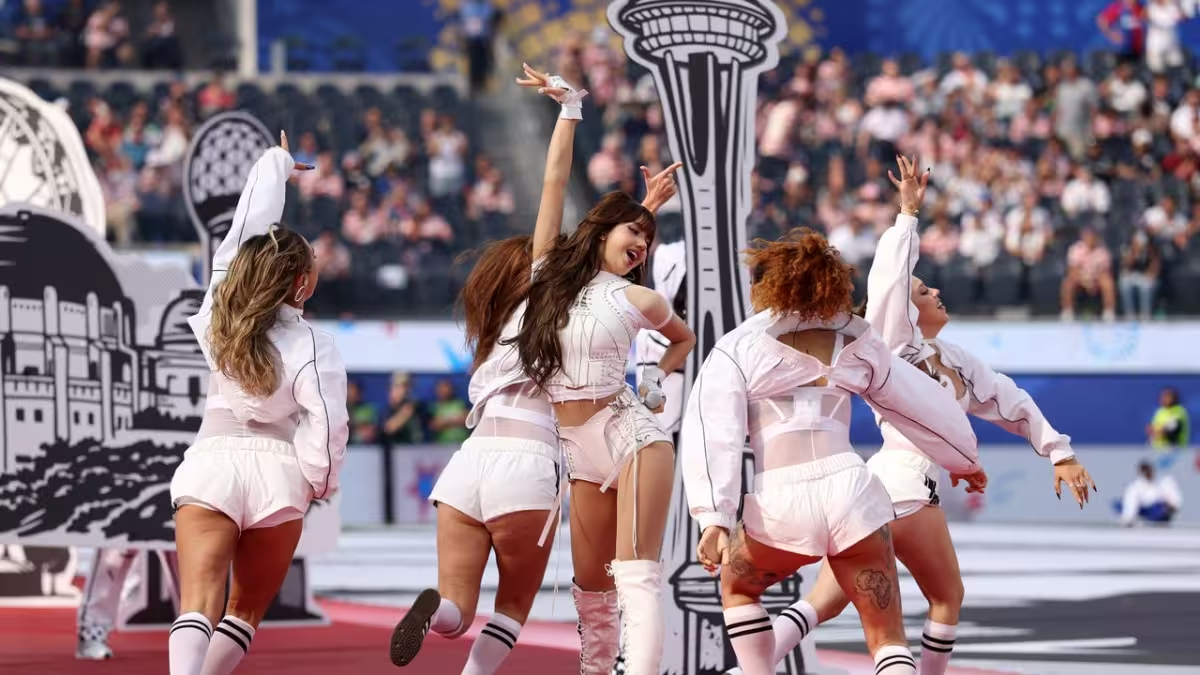
There is a contradiction beneath the applause. Reviews of World Cup anthems trace a pattern: a few become inescapable hits and enter global playlists for years, while many others evaporate after the final whistle. That tension — hit permanence versus instant forgettability — is now being replayed. New official tracks for the 2026 World Cup are already in public view: one pairing names Shakira alongside Burna Boy on an anthem called "Dai Dai," and another performer who will appear in opening-ceremony coverage has been talking about her own official song, "Siir Siir." The performer who discussed what fans can expect from "Siir Siir" has also been visible on international stages and awards stages in the past year.
Those fresh releases will be judged by the same yardstick that defined "Waka Waka": streaming figures, cultural reach and the curious, hard-to-measure degree to which a song becomes a personal marker for the artist. Shakira herself returned to the stage last year at a major festival appearance in New York, and other artists tied to World Cup coverage have been appearing at awards ceremonies and events, keeping the conversation about official songs in public view as the 2026 games approach.
The single unresolved question — the one that reshapes the anecdote into a journalistic hinge — is what Shakira meant when she said the song "turned her into a mother." Did she mean the phrase literally, as a reflection on personal life choices prompted or accelerated by the song’s success, or did she mean it figuratively, as in the song altered her public identity and responsibilities? She has not clarified that point, and the distinction matters: one reading frames "Waka Waka" as a private turning point, the other as an account of how cultural momentum can recast an artist’s role.
With the 2026 World Cup songs now circulating and the games set to kick off, the dilemma remains: will any of the new anthems remake an artist the way Shakira says "Waka Waka" did? Or will they join the many tournament tracks that burn bright for a month and then fade? The coming months offer the only practical test of her claim — and the only place, publicly, where she might explain which meaning she intended.