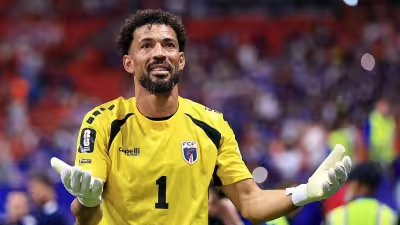
Ecuador and Ivory Coast meet Sunday night in Philadelphia in a World Cup group-stage match that has produced an unusually tight three-way moneyline: Ecuador +140, the draw +180 and Ivory Coast +260.
That draw price — listed below +200 at +180 — is the headline number here. A stalemate figure this low in a group-stage match is rare, and it has pushed bettors and tacticians alike to treat the game as a true coin flip rather than a one-sided group fixture.

On paper the two sides offer contrasting blueprints. Ecuador arrives under coach Sebastián Beccacece, a disciple of Marcelo Bielsa who has leaned into an all-action press high up the pitch and a plan to punish opponents in transition. Ivory Coast rely on the physical and technical blend around Franck Kessié in midfield and the pace of forwards such as Nicolas Pépé and Amad Diallo, with Yan Diomandé adding another attacking option and Christ Inao flagged as a youngster who can overrun defenses.
That makes the matchup straightforward to describe and hard to call. Ecuador’s midfield, led in style by Moisés Caicedo, is built to win the second ball and turn pressure into quick vertical attacks. Piero Hincapié provides the outflanking threat from the back, and Enner Valencia remains Ecuador’s experienced fox-in-the-box to finish scrappy chances. Ivory Coast counters with a midfield capable of both breaking lines and releasing speedy attackers on the counter.
The betting market, however, has priced the contest as if it will be a slog. Oddsmakers’ caution rests on the expectation that both sides can be compact and hard to break down. That conservatism sits oddly next to the personnel and tactics: Ecuador’s aggressive press is designed to manufacture chaos in the final third, and Ivory Coast pack enough forward talent that turnovers can quickly become scoring opportunities.
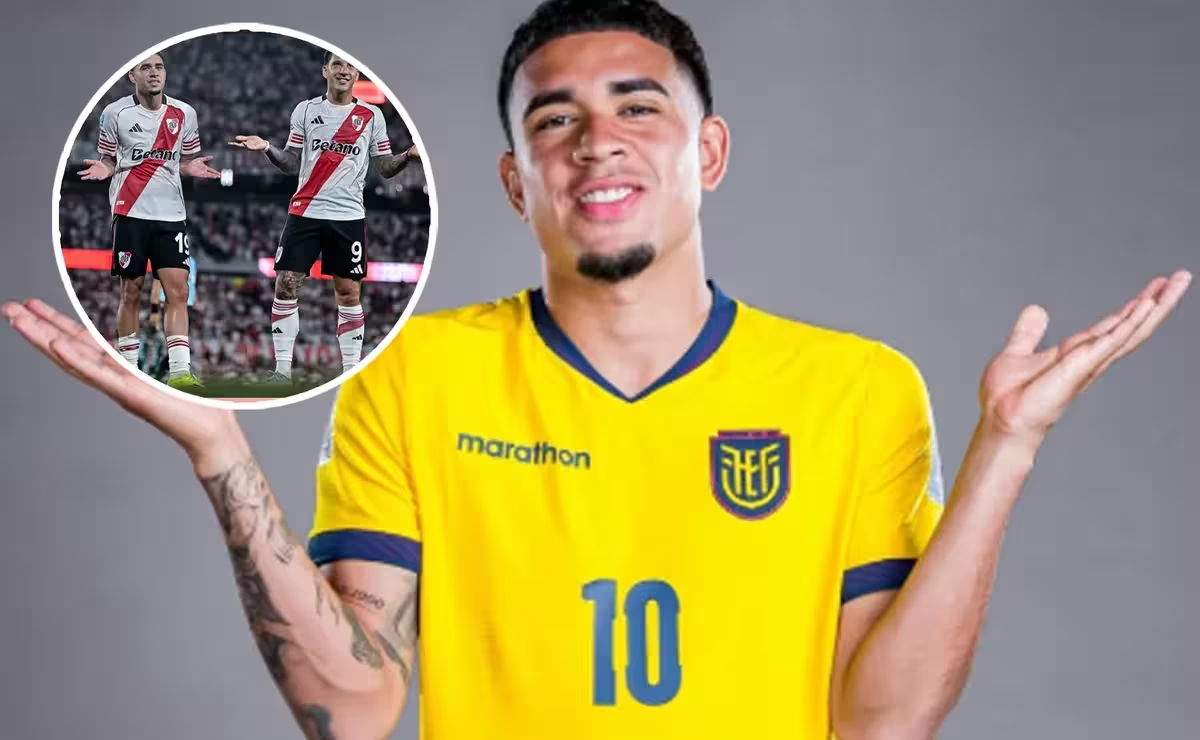
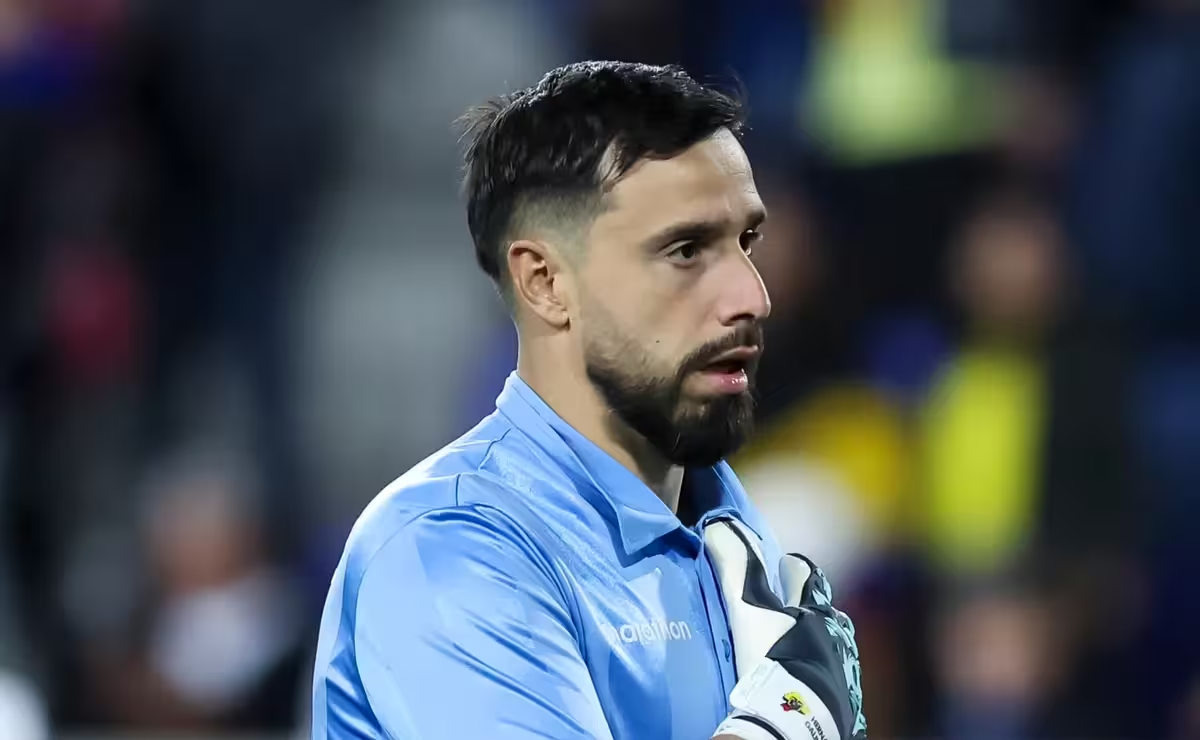
The practical mirror of that friction is the game’s decisive battleground: transitions. If Ecuador’s press forces quick turnovers inside Ivory Coast’s half, the match tilts toward open, high-quality chances and goals. If Ivory Coast can bypass that press with measured possession through Kessié and release Pépé, Amad Diallo or Yan Diomandé into space, the result could equally be a frenetic, end-to-end affair rather than the low-scoring grind the market expects.
For bettors the numbers to note are the three-way moneyline and what they imply about outcome probabilities: +140 for Ecuador is short enough to make them a favored pick but not definitive; +260 for Ivory Coast keeps them very much in the mix; and the +180 draw is low for a group-stage tie, reflecting the bookmakers’ view of balance. The tightness of those lines is itself the story — they signal that neither side has a clear tactical or personnel edge in the minds of oddsmakers.
Key players to watch from kickoff are Moisés Caicedo, whose ability to win duels and spring counters will test Kessié’s capacity to control midfield tempo; Piero Hincapié, who can turn defense into wide attacking threat; and Enner Valencia, whose penalty-box instincts will be decisive if the game opens. For Ivory Coast, the impact of Nicolas Pépé and Amad Diallo on the flanks, and how Yan Diomandé connects play into the box, will determine whether they can force errors from Ecuador’s press.
The unresolved question going into Sunday night is not who wants to attack but whether Ecuador’s high press will actually produce the scoring chances its style promises. If it does, the match should produce the sort of chances and goals oddsmakers appear reluctant to price in; if it doesn’t, the market’s expectation of a low-scoring, tightly contested draw will look prescient.
What happens next is binary and immediate: the team that wins the transition battle will likely carry the three critical points in Philadelphia. Given the close moneyline — Ecuador +140, draw +180, Ivory Coast +260 — the match itself will supply the answer the market is currently refusing to give.