




World Cup TV rights holders say FIFA has still not confirmed the length of the half‑time show for the World Cup Final 2026 at MetLife Stadium next month, even though headline performers have been booked and the production is already being curated.
Madonna, Shakira and BTS are listed for the MetLife Stadium spectacle, which organisers say is being curated by Chris Martin. Rights holders and commercial broadcasters view the timing as crucial: ad teams need a precise interval to sell and schedule spots ahead of the final.

The practical stakes are concrete. At last year’s Club World Cup final at the same venue the break in play ran 24 minutes, and one rights‑holder told colleagues they were planning on the musical production lasting between 12 and 15 minutes. The International Football Association Board has been unambiguous on the rule: "players are entitled to an interval at half-time, not exceeding 15 minutes, and it may be altered only with the referee’s permission."
Broadcasters say multiple requests for clarity on the half‑time length have gone unanswered. FIFA declined to confirm the interval. That gap is the current source of friction: FIFA has committed big names and a high‑profile creative lead, yet commercial partners must sell advertising inventory without the basic timing they need to guarantee when and how long breaks will run.

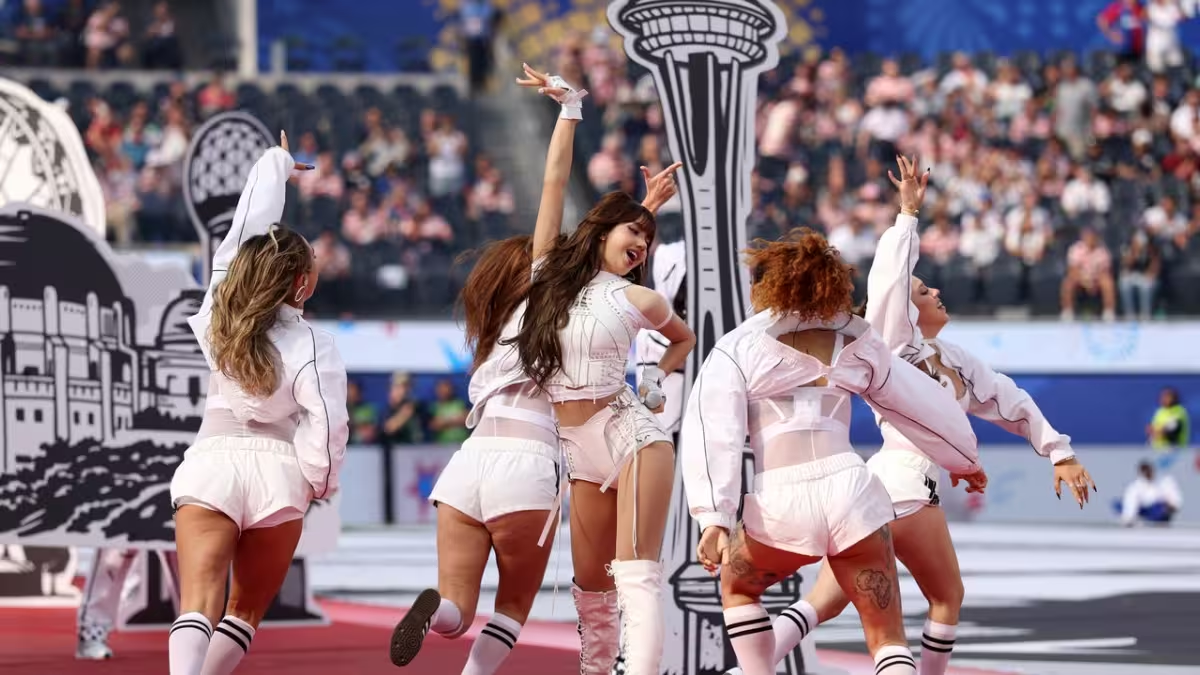
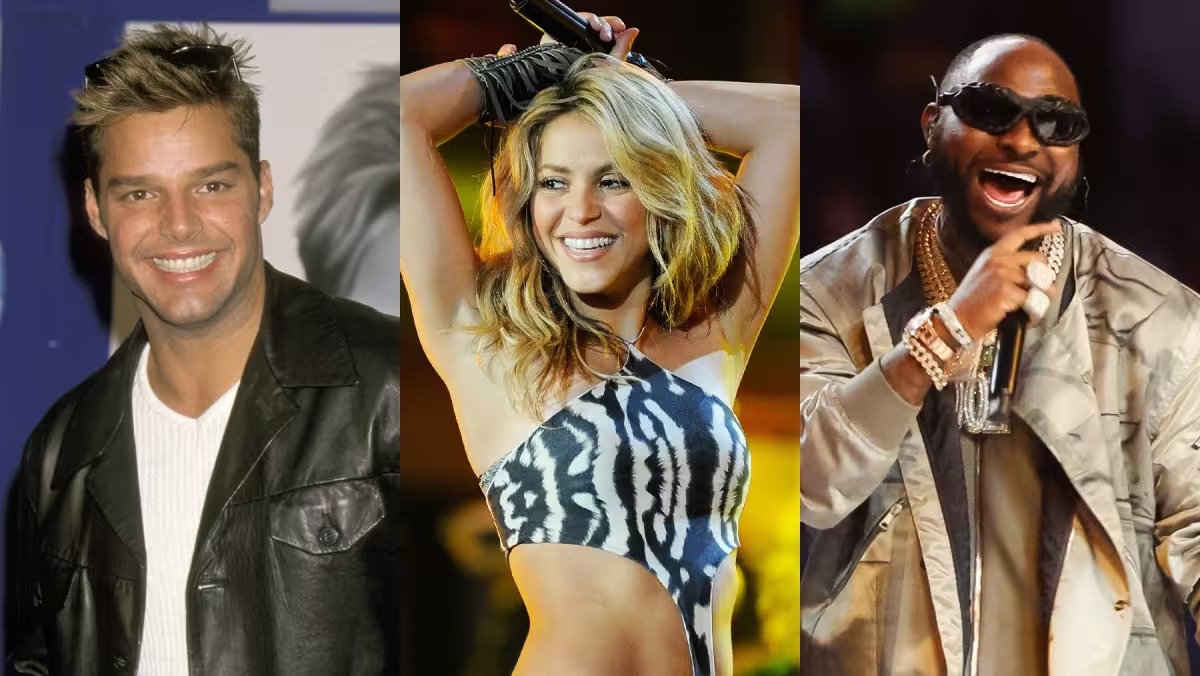
The uncertainty sits alongside a wider change at this tournament: organisers have significantly increased pre‑match entertainment across host venues to suit the American market. Early fixtures underline the scale of the live production schedule — Shakira and Burna Boy will headline a pre‑match show before Mexico meet South Africa at the Azteca Stadium on Thursday, while Alanis Morissette and Michael Bublé will appear in Toronto before Canada v Bosnia and Herzegovina on Friday. Later on Friday, Katy Perry, Lisa, Rema, Anitta and Future will perform in Los Angeles ahead of the US meeting Paraguay.
Chris Martin’s role sharpens the operational questions. He put in a surprise performance at last year’s Club World Cup final at MetLife Stadium, a show that extended the interval to 24 minutes; rights holders worry a high‑production halftime could similarly push beyond the standard window unless match officials explicitly permit it. Under the rules, any extension requires the referee’s permission, which will have to be sought and granted on match day if producers run long.
For now commercial broadcasters are left to hedge. One rights‑holder’s working assumption of a 12–15 minute show is practical but not definitive; another party’s reminder of the 24‑minute interval at the same stadium last year shows how quickly a plan can slip. FIFA is expected to confirm the half‑time length before the final, but multiple unanswered requests and the presence of major acts mean the situation remains fluid.
What to watch: whether FIFA sets a fixed half‑time duration or leaves room for a referee‑approved extension. The decision will determine how broadcasters sell and schedule their premium inventory and whether the World Cup final’s half‑time will simply mirror other championships or become an unusually long, stadium‑scale production.



