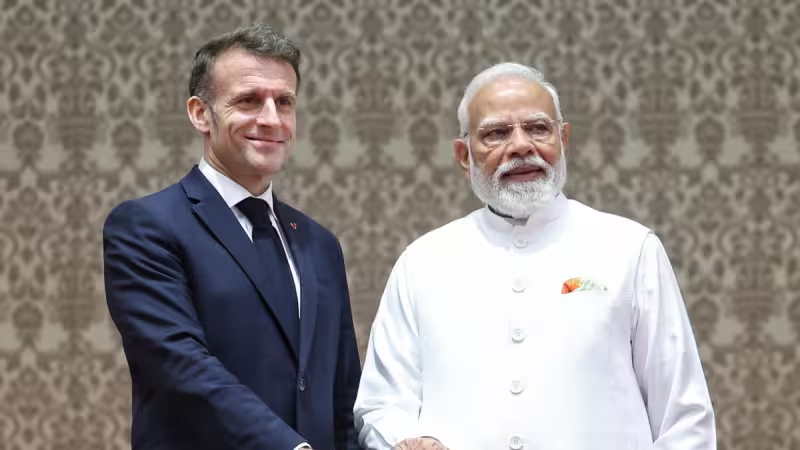
France has proposed a broader maritime security partnership with India that would include participation in a multinational initiative to ensure freedom of navigation in the Strait of Hormuz, French diplomatic sources said in New Delhi on June 11, 2026, ahead of Prime Minister Narendra Modi’s bilateral talks with President Emmanuel Macron at the G7 Summit.
The proposal is being floated as a focused, West Asia-centred effort: leaders from India, the United States, Qatar, Saudi Arabia and the United Arab Emirates are expected to take part in a West Asia-focused meeting on the margins of the summit, according to the same diplomatic briefings. French officials described the move as part of work with partner nations to preserve maritime security and freedom of navigation amid rising regional tensions.

Officials framed the offer as one item on a broader agenda the two leaders are set to discuss. French sources said defence cooperation, maritime security, military hardware and developments in West Asia will be on the table when Modi and Macron meet; India’s Secretary (West), Sibi George, told reporters that "All issues of interest — global issues — including the developments in West Asia will be discussed."
Context matters: the Strait of Hormuz is a chokepoint for international oil and shipping traffic and has been the focus of diplomatic and military attention as regional tensions have climbed. France’s proposal is explicitly pitched as a multinational effort to keep shipping lanes open, and it arrives with summit organisers already arranging a meeting of regional and global powers on the topic.
The friction in the reporting is straightforward. France is proposing India join a multinational initiative around the Strait of Hormuz, and India was expected to be among the invitees — but the sources do not say whether New Delhi has accepted or will accept the invitation. That unresolved acceptance is the central diplomatic gap ahead of the bilateral at the G7: an invitation and an agreement are not the same thing.
How the gap closes will shape the practical diplomacy coming out of the summit. If India takes up the invitation, Paris’s proposal would fold New Delhi into a small group of powers explicitly addressing freedom of navigation in a volatile sea lane; if India declines or delays, the initiative could proceed without one of the region’s largest navies. Either outcome will be evident in the bilateral talks expected on the margins of the G7 Summit.
Timing is tight. The proposal was made public on June 11, 2026, as part of the run-up to Modi’s travel to France and to Slovakia, and leaders are slated to discuss the offer at their meeting during the summit. The single most consequential unanswered question remains whether India will sign on — and Modi’s response to Macron will determine whether France’s idea moves from a diplomatic paper proposal to a working multinational effort.