



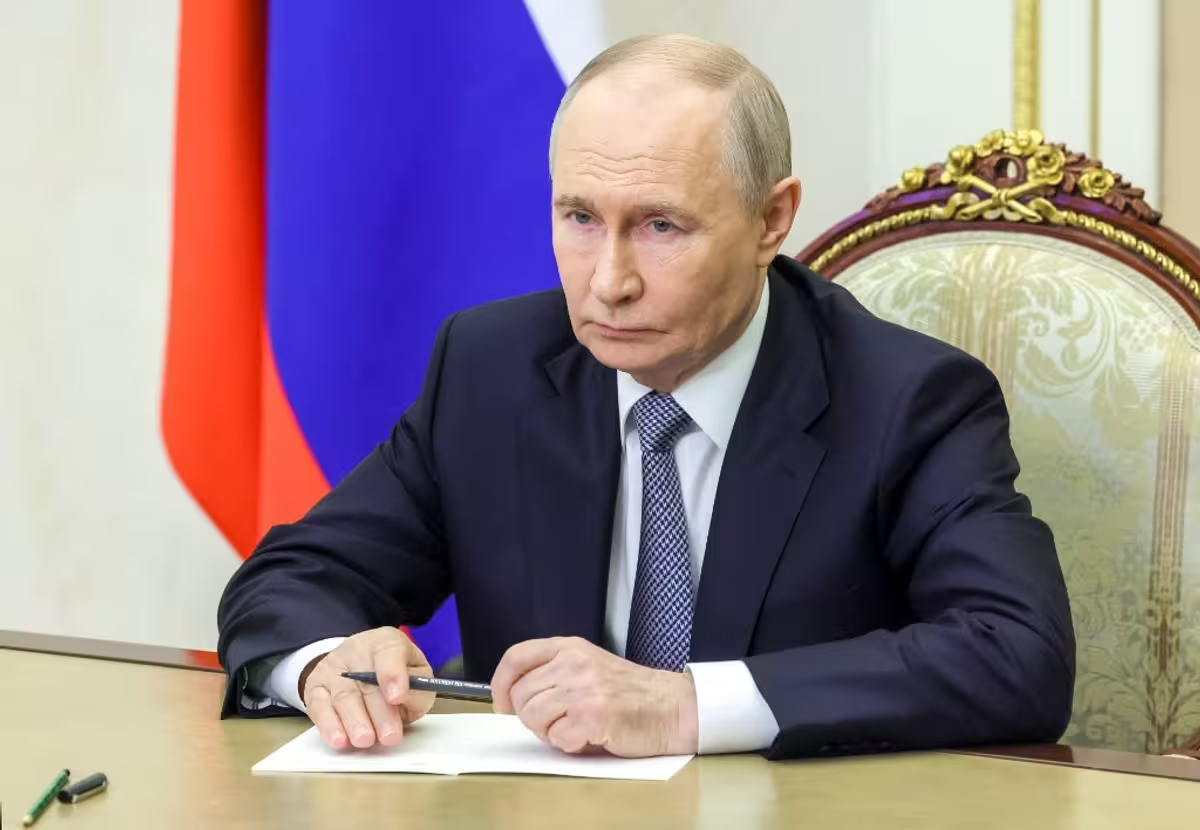
Ramzan Kadyrov, the 49-year-old leader who has ruled Chechnya for 22 years, is reported to be suffering from a serious, likely terminal illness and does not have a clear successor — a combination that could produce a sudden and dangerous succession crisis in the North Caucasus republic.
Kadyrov built Chechnya’s power structure around himself over more than two decades of harsh rule. His hold on the regional administration, security forces and patronage networks has been intensely personal; the governance system that remains is, by design, centered on one man. That concentration of authority, and the countless grievances his rule has left behind, mean a looming leadership gap is not simply an administrative problem but a political fault line.

Two stark numbers explain the urgency. Kadyrov has dominated the republic for 22 years; his favorite successor appears to be his 18-year-old son, Adam — widely described as too young to assume full control. For a republic that, for over a century, has punched above its weight in producing instability, the question is not hypothetical: a sudden removal of Kadyrov from the scene would force an immediate scramble for control.
Where that scramble might go is unsettled. One plausible route is a managed transition engineered by Moscow: allowing Adam nominal authority while placing a trusted ally or a regent from the Kremlin to run things in practice. That option would keep the Kadyrov family formally in place while giving the central government a hands-on way to steady the republic. But making a teenager the visible face of a volatile, grievance-riddled polity, and doing so under Moscow’s supervision, carries its own dangers — including popular resentment against both the local dynasty and outside interference.
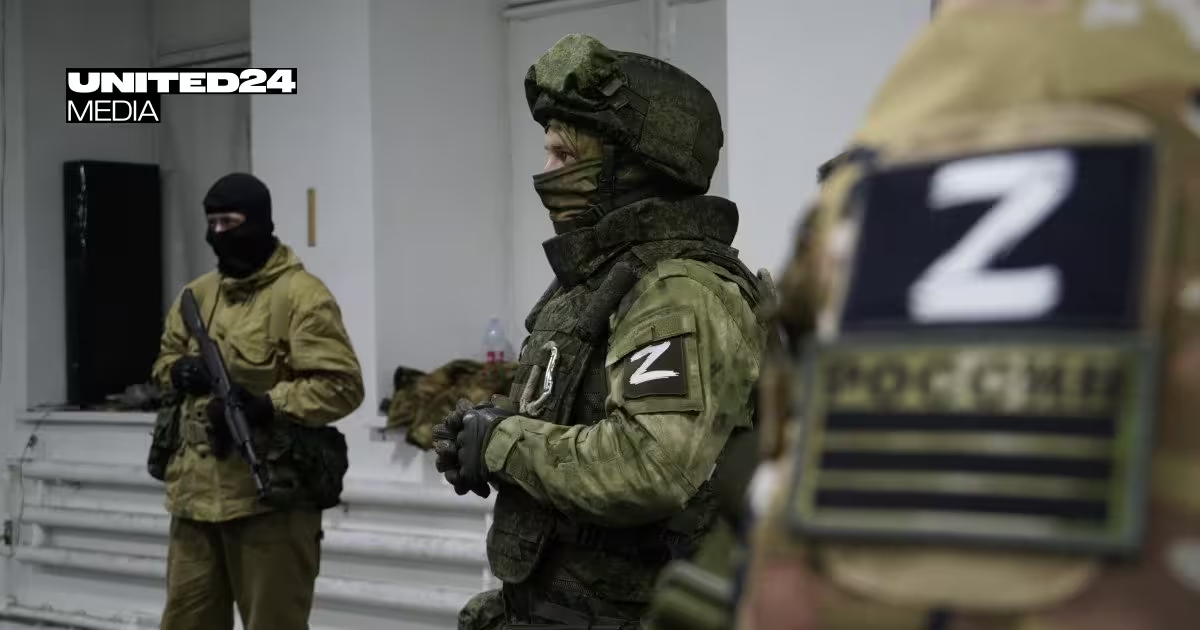
The deeper problem is structural. Kadyrov’s model of rule left no institutionalized mechanism for succession. Where power rests on one person’s networks, a departure forces immediate reconfiguration: patrons and local strongmen, security appointees and clan factions must choose sides or seek new patrons. Given Chechnya’s history and its role as Russia’s most volatile republic, any misstep could cascade beyond the republic’s borders into the broader North Caucasus.
The wider Kremlin context sharpens the stakes. Moscow is not operating from a position of full freedom: pressures from the war in Ukraine, strains on the economy and limited external support complicate heavy-handed options. A lengthy or messy dispute over Chechnya’s leadership would demand attention and resources that the central government may prefer to avoid — but will it tolerate a power vacuum in a republic with a record of generating disproportionate turmoil?
Practical outcomes range from a quiet, tightly managed regency that keeps the Kadyrov name on the chair while real authority shifts to a Moscow-approved custodian, to a more open contest that could empower local rivals and inflame long-standing grievances. Neither path is risk-free. A Moscow-backed regency might preserve short-term stability at the cost of legitimacy inside Chechnya; an unresolved contest could invite destabilizing violence or broaden political fragmentation across the North Caucasus.
The single most consequential unanswered question now is what specific succession arrangement, if any, the Kremlin will choose: a regent-backed, nominal Adam Kadyrov under Moscow’s tutelage, or another arrangement that abandons family continuity and potentially exposes the republic to renewed instability. How that decision is made — and how quickly — will determine whether Chechnya remains a tightly controlled province of the Russian state or becomes a new source of regional upheaval.



