



Olivia Trujillo folds a bell sleeve into a padded box, tucks a note inside and waits for the motorcycle that will carry the dress to the National Palace where the president lives. She sews the garments in a working-class neighborhood on the southern edge of Mexico City, with her family around her, three dogs underfoot and a green parrot keeping watch.
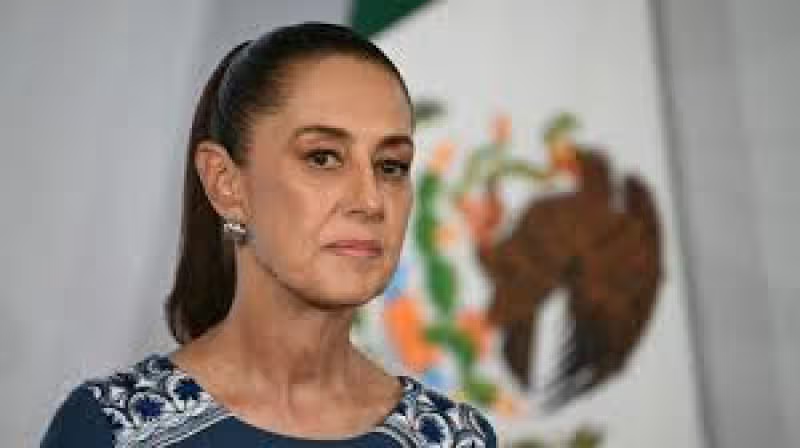
Trujillo designed and made the bell-sleeved dress Sheinbaum wore to her 2024 inauguration, and later the wedding dress for the president’s recent remarriage. Trujillo remembers first being mentioned to Sheinbaum more than a decade ago, when Sheinbaum was mayor of Mexico City; their collaboration quietly continued until the president’s landslide victory in 2024 placed those modest, home‑stitched pieces on a national stage.

The scale of what those garments now represent is large: Sheinbaum governs 133 million citizens and earlier this year issued a decree for universal healthcare for all of them. The Morena movement that lifted her to the presidency draws much of its support from poorer and Indigenous Mexicans, and Sheinbaum has woven that constituency into the way she dresses — fabrics produced in Mexico, Indigenous motifs and a steady invocation of her administration’s slogan, "For the good of all, first the poor."
Trujillo laughs when she describes the practicalities of sewing for a president. She points out that Sheinbaum has never done a fitting with her — "Not once has she done a fitting for me, never!" — and says most adjustments are made by rule of thumb or to allow for fast alterations on the palace end. She also framed a new normal of caution: she made extra reinforcement "in case someone threw tomatoes or something. There are bad people out there!"
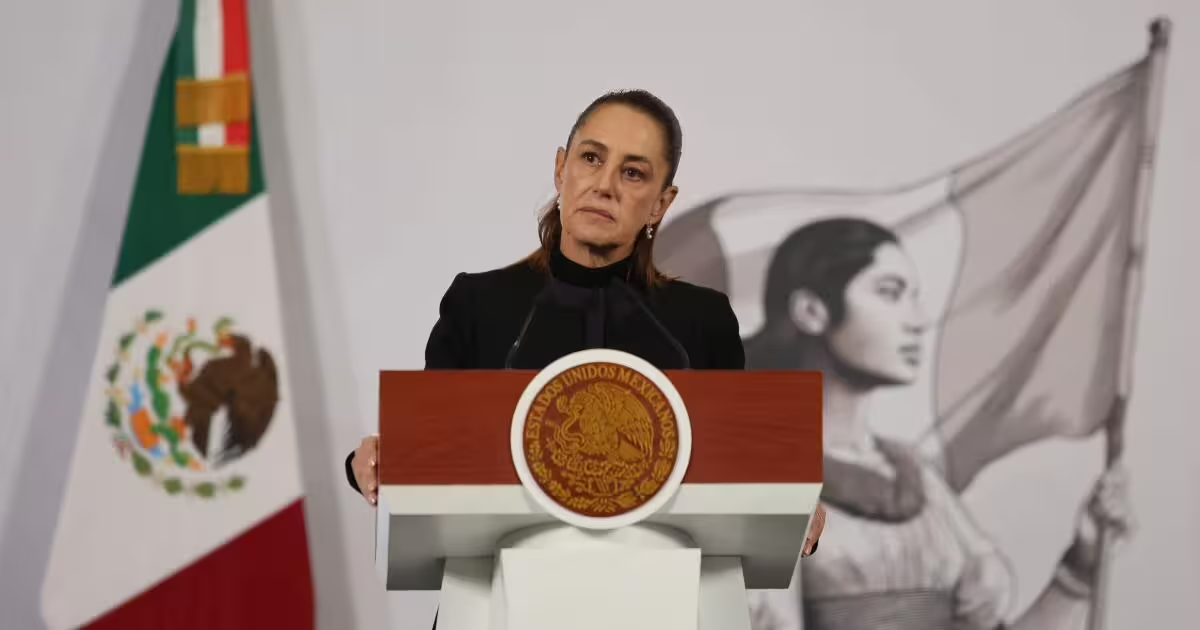
The visual modesty is deliberate. The garments are made from modest Mexican fabrics and finished with Indigenous designs; Sheinbaum has publicly thanked Indigenous artisans, calling them "the pride of the nation." Those choices carry political weight in a country where clothing can signal class, regional identity and loyalty to a movement.
Still, the image collides with other facts. Sheinbaum lives and works out of the National Palace and, despite the homemade simplicity of many of her outfits, she was named to a high-profile style list in 2025 — appearing on a list of "67 Most Stylish People of 2025." Opponents who try to frame Morena’s rise as elite dismissiveness sometimes use the nickname "Morenaco," a class- and race-coded jab that highlights the gap between symbolic humility and concentrated power.
The friction matters because Sheinbaum’s wardrobe is both personal and political. For supporters in poorer and Indigenous communities, stitched motifs and locally sourced fabric read as respect and representation; for critics they can read as curated theater, a carefully managed image that softens scrutiny of policy. Trujillo says she voted for Sheinbaum in 2024 and takes pride in sending clothes that speak to ordinary people even as they arrive at the heart of Mexican government.
There is a practical finish to the story: a suit boxed in a humble house in southern Mexico City, picked up by a rider, and delivered to the palace where decisions affecting 133 million people are made. There is also an open question that the facts do not resolve: as Sheinbaum governs and implements programs like universal healthcare, how much of her popularity flows from tangible policy and how much from the carefully stitched symbols she wears into the public eye? That split — image versus deliverable change — is the political seam both she and her critics will be watching as her presidency continues.



