



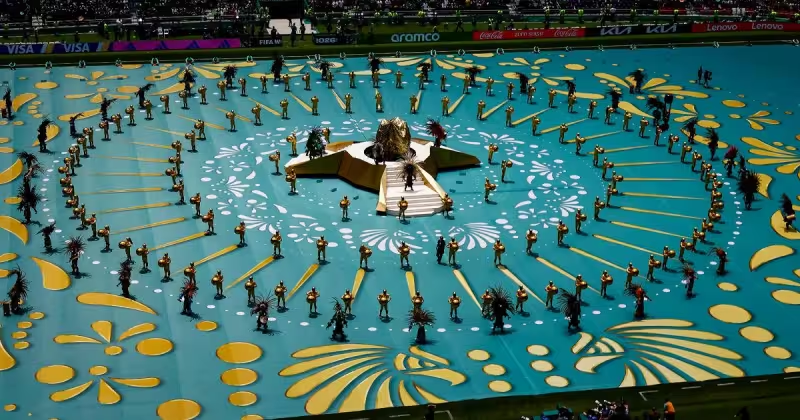
Mexico and South Africa meet in the opening match of the FIFA World Cup 2026 at Stadio Azteca in Mexico City on 11 June; the host‑city ceremony is scheduled to begin at 19:30 and the game serves as the tournament’s official first fixture.
Mexico will line up in a 4-3-3 under coach Aguirre, who names a front three of Alvarado, Jimenez and Quinones. South Africa’s coach Broos counters with a 5-3-2 built around forwards Foster and Rayners. The contrast—an aggressive three-pronged attack against a compact five-man defensive base—frames the tactical story before a ball is kicked.

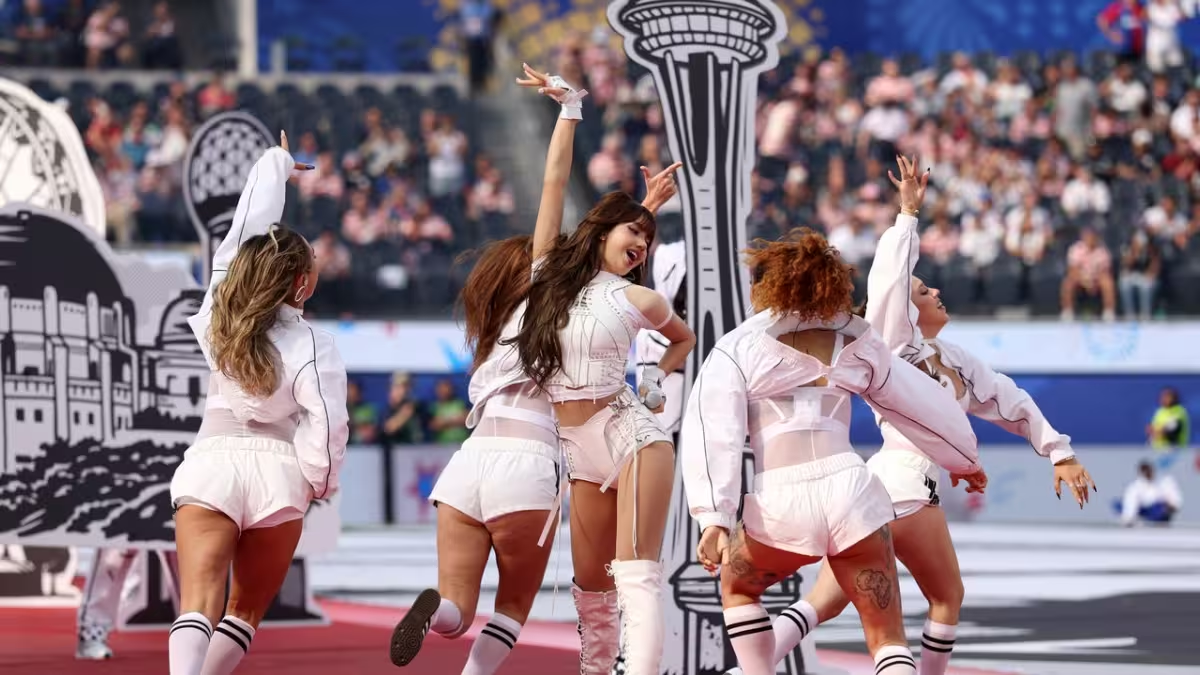
The match matters beyond the two teams on the field. This World Cup is the first staged across three countries—Canada, the United States and Mexico—featuring 48 teams, 104 matches and a 39-day schedule; the Azteca opener is one of three separate opening ceremonies produced for the host nations.
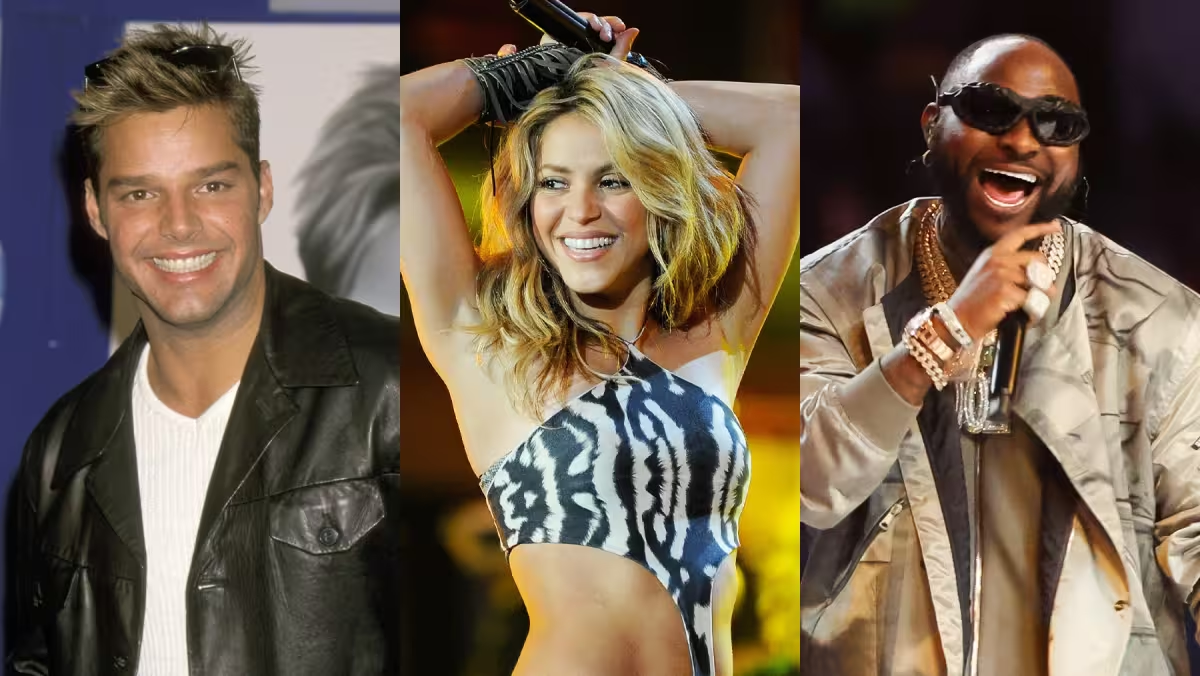
The Mexico City ceremony, created by Balich Wonder Studio, draws on the colours and cut-paper motifs of papel picado and will spotlight Shakira, who returns to a World Cup stage associated in past tournaments with hits such as "Waka Waka." Shakira will present the new official song "Dai Dai" with Burna Boy, and Andrea Bocelli will perform the tournament anthem "Dna." Bocelli has described singing the World Cup anthem as an honour and said he hopes people will appreciate great football because, in his words, when the sport is beautiful and honest it is part of the beauty that can save the world.
On the pitch, the immediate stakes are clear: Mexico is playing its ninth consecutive World Cup and will use home support to try to control Group A; South Africa returns to the finals for the first time since 2010 and arrives with the tournament objective that has shadowed its comeback—making, for the first time, the passage into the knockout phase. That goal frames every tactical choice Broos makes with his 5-3-2.

The two sides have a compact competitive history: they have met four times previously, Mexico with two wins, South Africa with one and one draw, and both teams have found the net in every prior meeting. Those head‑to‑head results feed into the nervous calculation both camps will make before the first whistle.
Practical details fans need: Mexico and South Africa share Group A with the Czech Republic and South Korea, so the opener will shape early group dynamics. Aguirre’s 4-3-3 is designed to overload wide areas and seek quick transitions into the final third; Broos’s 5-3-2 aims to absorb pressure, narrow lanes through the centre and turn defenders’ clearances into opportunities for Foster and Rayners on the break.
For viewers following buildup form, warm-up fixtures remain a reference point—broadcasters carried friendlies such as Sudáfrica - Nicaragua live from Johannesburg—and those matches will be scoured for fitness cues and tactical tweaks ahead of the Azteca kickoff.
What to watch once the match begins: Mexico’s ability to create overloads behind South Africa’s wing-backs, the midfield tussle for tempo between a three and a trio, and how often South Africa can turn compact defence into direct counters for Foster and Rayners. The first 30 to 45 minutes should reveal whether Broos’s block can blunt Aguirre’s trident or whether Mexico’s forwards will establish the attacking rhythm.
After the Azteca opener the tournament moves north: Canada faces Bosnia in Toronto on 12 June and the United States opens against Paraguay in Los Angeles on 13 June, each host staging its own opening ceremony. The match leaves a single, sharp unanswered question: will sudafrica’s return to the finals end with a historic first progression from the group stage, or will Mexico’s experience at home set the tone for Group A and the wider tournament?



