



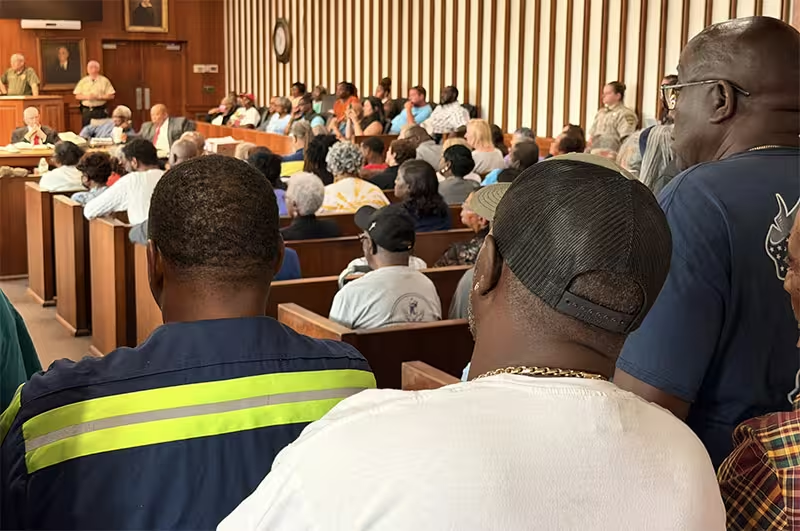
Hundreds of residents turned out in a rainy Elizabethtown meeting this week and stopped a proposal to shrink Bladen County’s governing board and abandon its district-based elections, a move county leaders introduced on May 18 and shelved by the June meeting.
On May 18, Bladen County Commission Chairman Cameron McGill proposed reducing the commission from nine members to five and ending the districts that have governed local representation since 1988. Commissioners delayed a vote until June 1 after fierce public opposition; by the June session McGill quietly withdrew the plan and told the crowd that if an arrangement is working, it should be left alone.

The turnout was not a one-off protest. Residents packed the hearing in the rain, and Commission member Ophelia Munn-Goins publicly opposed the change during the May meeting. The district system at the center of the debate was created in 1988 after Black residents successfully challenged the county’s at-large elections under the Voting Rights Act—making the proposal more than a technical tweak to lines on a map.
Those local facts have landed against a larger legal backdrop. The proposal surfaced this week amid fallout from the Callais decision from the Corte Suprema, which critics say weakened federal protections under the Voting Rights Act and cleared the way for more aggressive redraws and election-law changes at the state and local level.
The immediate consequence in Bladen was straightforward: the proposal is off the table for now. McGill’s retreat came only after residents mobilized and one commissioner voiced opposition. The quick reversal underscores the political cost when a county with a history of voting-rights litigation confronts abrupt changes to the way its voters are represented.
But the story did not end in Bladen. Two days after the Bladen meeting, Jackson County election officials met on June 2 to decide early-voting options for 2026. At that session, Jackson County board member Jay Pavey told the public he had received pressure from state officials to eliminate a popular on-campus voting site at Western Carolina University; he later joined Democrats on the board in approving a compromise site. Pavey said he had been warned that failure to vote as directed could cost him his seat on the board.
The two episodes together expose the tension running through North Carolina local election politics: one county’s public resistance can void a proposed change, while nearby officials say they face outside pressure to alter polling access and local election arrangements. Residents in both counties showed up to defend sites and systems many see as critical to turnout, particularly in communities of color where the district lines were originally drawn after litigation.
Officials have provided no clear roadmap for what comes next. The immediate procedural milestones — the May 18 proposal, the June 1 postponement, McGill shelving the plan in early June, and the June 2 Jackson County meeting — are confirmed. What remains unsettled is whether state actors who have been described as applying pressure will pursue other avenues to change representation or voting access, or whether the visible local pushback will deter further attempts.
The single most consequential unanswered question now is whether state-level pressure will shift tactics and press local boards again to curtail district-based representation and popular voting sites, or whether the quick, noisy public response in Bladen and Jackson will force a pause in similar efforts elsewhere.



