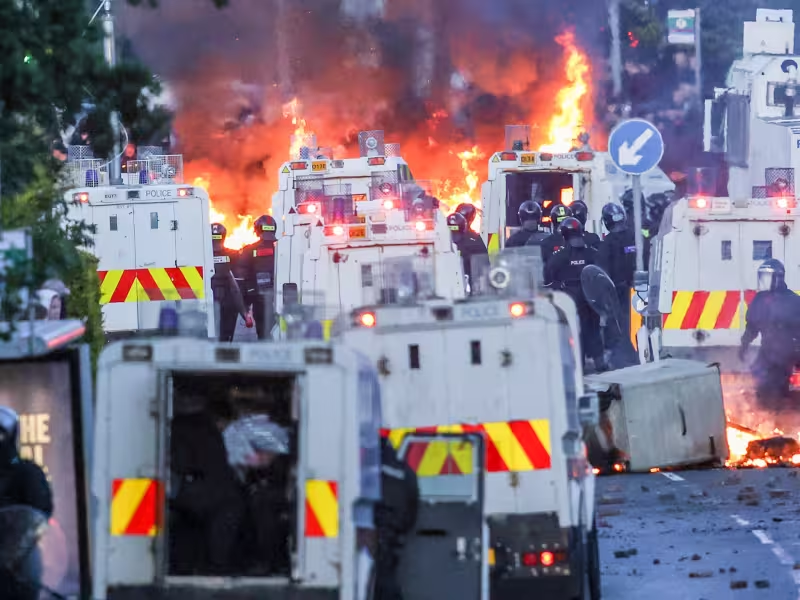
Police deployed a water cannon at the Sandyknowes roundabout in Glengormley on Wednesday to disperse a large crowd during a second night of disorder linked to a knife attack in north Belfast.
Riot officers came under sustained attack from people throwing bricks, bottles and pieces of wood, police said, and some protesters also hurled petrol bombs at lines of officers. Footage showed dozens dressed in black and with face coverings tearing up driveways and fences to use as missiles while several fires burned in the streets and bins were set alight.

The unrest caused significant damage and disruption: a large Department for Infrastructure vehicle was seen in flames, several cars and a bus were reduced to shells, and police helped one family escape from a burning house. Ministers said at least 27 people were made homeless after assailants went door-to-door targeting foreign nationals.
The disturbances followed a knife attack in north Belfast on Monday in which Stephen Ogilvie, a man in his 40s, suffered serious injuries, losing his left eye and sustaining damage to his right eye, neck and back. Hadi Alodid, a 30-year-old originally from Sudan, appeared in court on Wednesday charged with attempted murder; he was remanded in custody and the case was adjourned to July 8.
Public transport across Northern Ireland shut down on Wednesday, some schools closed early and Belfast city centre was largely deserted after many businesses closed by lunchtime. The crowd at Sandyknowes appeared to be trying to get close to a hotel that houses asylum seekers, and officers said attempts were made to set fire to a derelict property in the area.
While Wednesday’s disorder was not on the same scale as the violence that erupted on Tuesday, unrest spread beyond Belfast. About 150 people gathered in east Belfast amid a large police presence but caused little trouble; more than 100 people gathered near the Ulster University campus in Coleraine and some remonstrated with police about houses of multiple occupation; roughly 140 people assembled at the Stormont estate.
Residents described targeted attacks on Black people and foreign nationals. One local, Jamie Corry, said he watched his house burn and that people setting a car on fire ignored his protests that it was his property. Local politicians and a pastor said many of those targeted were Black.
Ogilvie’s family released a statement on Wednesday night urging calm and warning against false information spreading on social media; they said overnight unrest was not welcome, peaceful protest was the only way forward, and they did not want the tragedy used to divide people or fuel hostility. Their appeal came as attacks on homes continued, undercutting calls for calm.
Police said they deployed water cannon and other measures to maintain public order on Wednesday, but the immediate question facing authorities is how to stop further targeting of homes and protect vulnerable residents while the criminal case proceeds. The suspect in the knife attack has been remanded and will next appear in court on July 8; whether that legal step and tightened policing will halt the street-level campaign of attacks is the decisive test for police, prosecutors and community leaders.