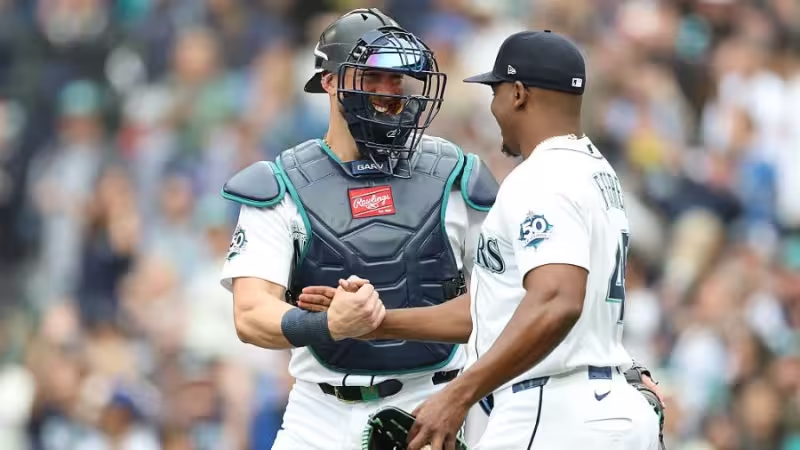
Mitch Garver quietly sold his Bellevue house in late May for just over $3 million, a transaction that closed only months after he bought the same Lake Hills property in February for nearly $3.1 million.
The home at 1028 163rd Avenue S.E. sits on a 7,502‑square‑foot lot and was built in 2023. The 4,300‑square‑foot residence included five bedrooms, four bathrooms, a two‑story living room and a chef’s kitchen. The online listing described the design as thoughtful and easy to live in, noting a dramatic two‑story great room that floods the house with light and a high‑end, Wi‑Fi‑enabled Thermador kitchen that anchors daily life and entertaining.

Numbers make the sale notable. Garver purchased the house in February, shortly after signing a two‑year, $24 million contract with the Seattle Mariners, and sold it for more than $3 million in late May — a gap that leaves a modest difference between purchase and resale prices. The transaction comes while Garver is in his third season with the Mariners and after a sequence of roster and contract developments: he later re‑signed as a free agent on a one‑year minor league deal and then won the backup catcher job in Spring Training.
The timing adds texture. Garver’s real‑estate move coincides with an injury to the Mariners’ starting catcher, Cal Raleigh, who has been sidelined with a right oblique strain since mid‑May and made his first rehab start Sunday with the Everett AquaSox. Garver’s roster role as the team's backup means his living arrangements and availability for home games matter to the club’s depth especially while Raleigh recovers.
The house itself fits the profile of a player purchase: new construction, open public spaces and luxury finishes in a desirable Bellevue neighborhood. Built in 2023 and marketed with high‑end appliances and a volume living area, the property offered the kind of space many players seek for family life and entertaining. Yet the short window between purchase and sale — about three months — is the story’s friction point: a rapid resale at a price slightly below the purchase figure hints at circumstances beyond a typical long‑term home buy.
That gap raises questions the public record doesn’t answer. Was the resale driven by playing‑season logistics, a change in personal plans, or something tied to contract rework? No public filing or listing note details why Garver moved so quickly from a house he acquired immediately after signing a multi‑year deal.
Garver’s career path provides context but not explanation. Drafted in the ninth round of the 2013 MLB Draft, he spent five seasons with the Minnesota Twins and a two‑year stint with the Texas Rangers before joining the Mariners. Those stops, and the two‑year deal he signed before buying the Bellevue property, make the purchase and the subsequent quick sale look less like caprice and more like a decision connected to a career in motion — yet the motive remains unresolved.
The single consequential question left in the wake of the sale is practical: where will Garver base himself for the season, and how permanent is that decision? The record lists the transaction and the property’s features but gives no hint of his next address or whether he intends to stay in the Seattle area. For a catcher who just secured a job backing up the club’s starter and is playing through a period of roster flux, the answer matters to fans and to the team’s planning, even if it isn’t visible in public records now.