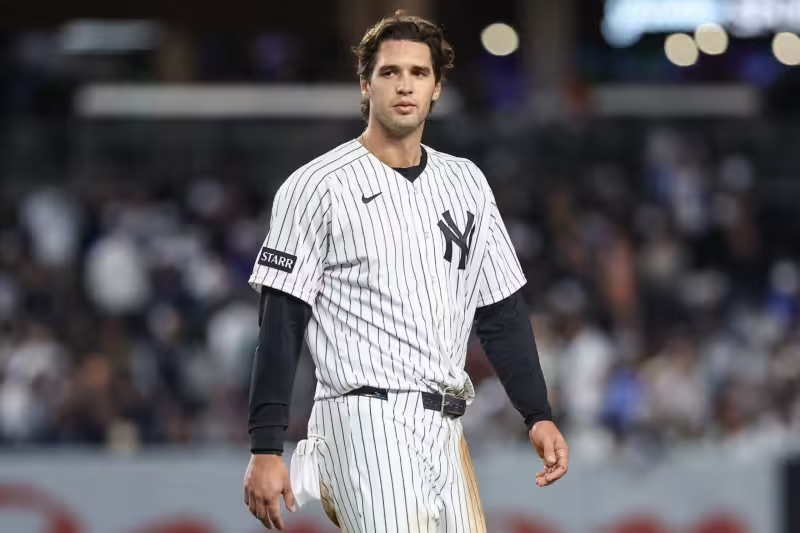
Spencer Jones returned to the New York Yankees and went 3-for-3 with an RBI double and two singles on Friday — yet the Yankees still dropped the game to Boston, 5-3.
Jones singled in his first plate appearance after being recalled, then hit the first extra-base hit of his major-league career with a two-run double to right field that produced his only RBI of the night. The box score underlined why the Yankees summoned him: he had racked up 13 homers, a.949 OPS and a 143 wRC+ at Scranton before the call-up, and at 6-foot-7 he offers the kind of left-handed power option New York is missing.

That immediate impact, however, sits beside an uncomfortable metric. Jones entered the stretch having struck out in 40% of his MLB plate appearances, and while Friday’s three-hit night showed he can make contact and cash in on mistakes, it did not erase swing-and-miss concerns that dogged his first big-league stint. He got ahead of two fastballs and drove a mistake the other way for his double; the other hits were singles that came on hittable offerings, not long, patient at-bats that erased the strikeout profile.


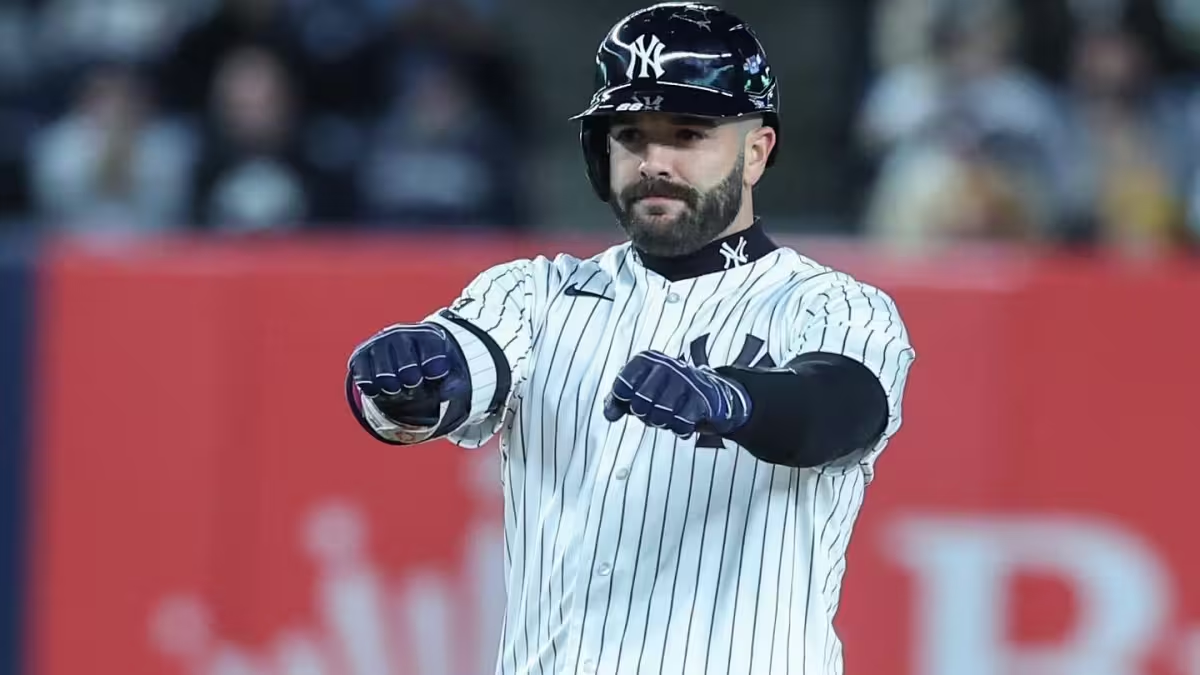
The timing of Jones’s audition matters: Aaron Judge is on the injured list with a rib stress fracture, and the Yankees explicitly recalled Jones to provide another left-handed power option in the outfield while Judge is sidelined. In that light, Friday was a preview of potential value — power shown in Triple-A translating into a clean extra-base hit in the majors — but not a full clearance that he can be a steady traffic-stopper in Judge’s absence.
The tension for the Yankees is practical. They need Jones to do three things to stick: give competitive at-bats, do damage on mistakes, and provide enough defense so the outfield doesn’t become a daily scramble. Friday supplied only the middle box checked. The game result — a 5-3 loss despite Jones’s 3-for-3 — is the blunt evidence that one game of contact does not solve a 40% strikeout rate or the defensive questions that come with inserting a 6-foot-7 outfielder into regular duty.
For New York, the next step is simple and unglamorous: watch the at-bats pile up. Jones will be judged not by a single double but by whether he can string together more nights like Friday without the swing-and-miss spike reasserting itself. If he can keep making competitive swings and convert a respectable share of mistakes into extra-base damage, the Yankees will have a useful left-handed option while Judge heals. If not, Friday will look like a good night in an otherwise inconclusive audition.
The central unanswered question now is whether Jones can sustain this adjusted approach against major-league pitching over multiple games — lower the strikeout rate and keep producing — or whether Friday will remain an outlier in a profile still defined by swing-and-miss.