



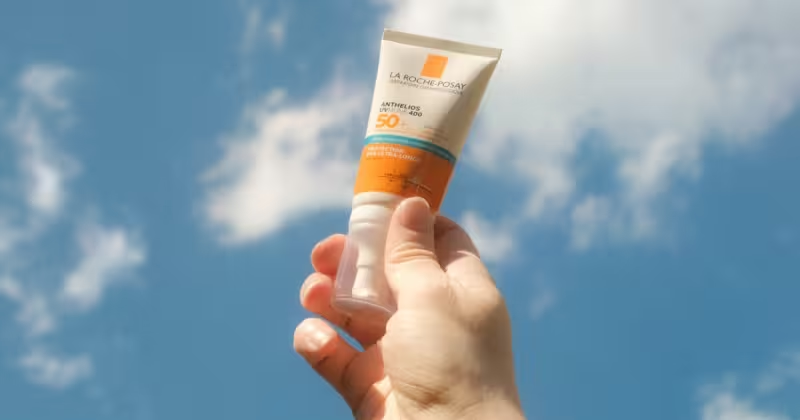
The Food and Drug Administration on Tuesday expanded its list of allowed sunscreen ingredients to include bemotrizinol, ending a more than 20-year stretch in which no new compound had been added to the agency’s sunscreen list.
The move opens the door for U.S. sunscreen products that use the chemical UV filter, which blocks harmful ultraviolet rays and is already popular in Europe, Australia and some Asian countries. Bemotrizinol is broad-spectrum, meaning it blocks both UVA and UVB rays, and the Environmental Working Group said it offers better protection against UVA in particular.



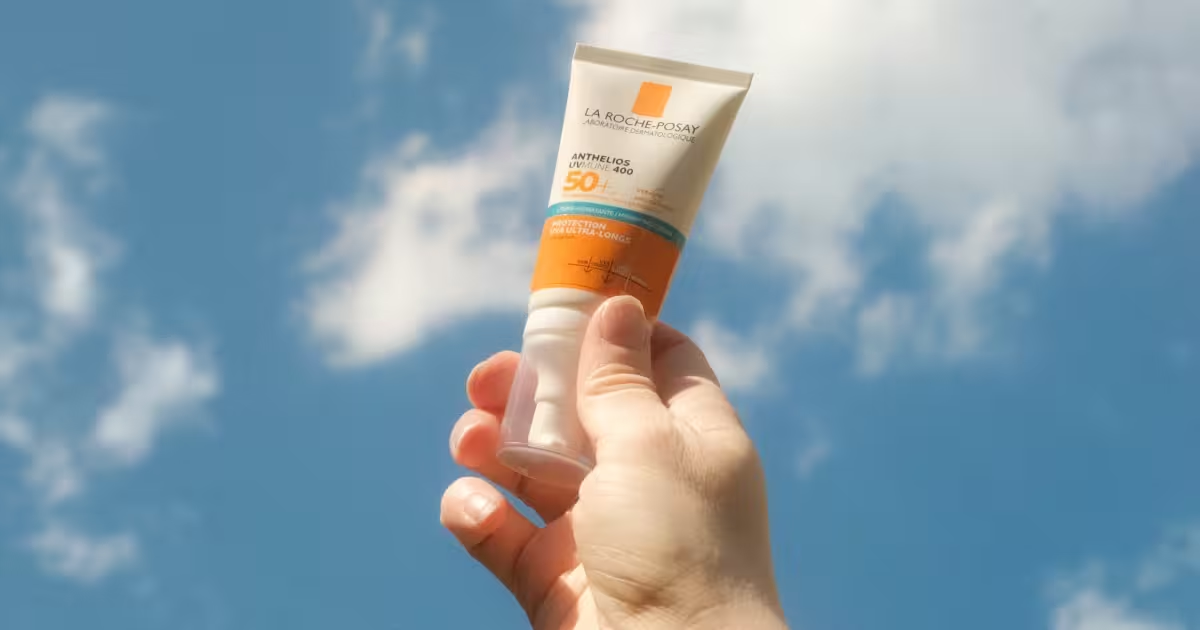
For American consumers, the decision adds a new option in a market where chemical sunscreens now available in the United States protect against either UVA or UVB, but none do both on their own. Mineral sunscreens with zinc oxide or titanium dioxide can block both, yet they often leave a white cast on the skin. Chemical sunscreens also break down in the sun and need to be regularly reapplied.
The FDA said bemotrizinol has low levels of absorption into the body, a point that sits against years of concern that some sunscreen ingredients may seep into the bloodstream. That detail matters because the agency’s approval comes at a moment when safety, coverage and convenience have all shaped the debate over which sunscreen formulas Americans can actually use.
Products with bemotrizinol are expected to be available by the end of the year, according to DSM-Firmenich. David Andrews called the FDA move “a great day for American consumers and everyone who has fought to improve sunscreen options and close the UVA protection gap in U.S. sunscreens.” The remaining question is which brands will bring the ingredient to market first, and what those bottles will look like when they do.



