



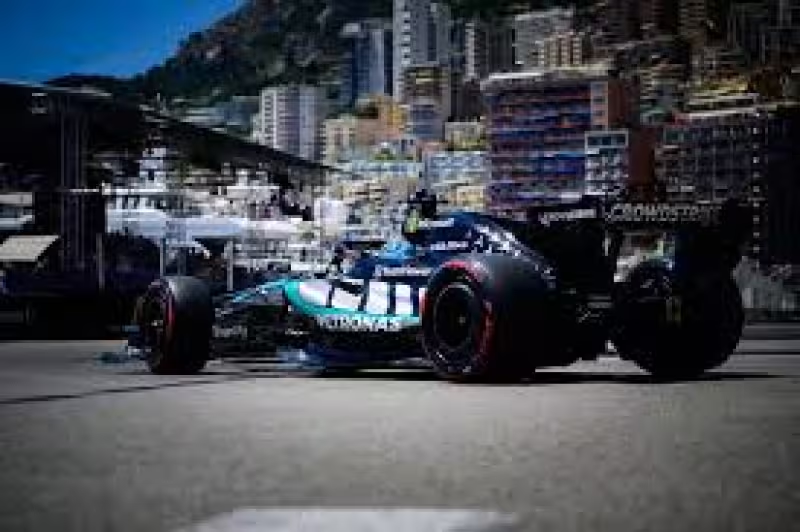
Liam Lawson delivered what Racing Bulls called a "near-perfect" qualifying in Monaco, overcoming a nervy opening phase to secure a valuable top-ten start at the 2026 F1 Monaco Grand Prix.
The result arrived after a fraught opening to the session: Lawson steadied himself after nervous early laps and delivered the runs that put him into the top ten, the team noting the session as effectively flawless — Racing Bulls: "near-perfect".

The clean finish matters for a team running the Visa Cash App Racing Bulls VCARB 03 RB Ford; Lawson had been on track in that car during practice in Monaco before finding the rhythm that counted in qualifying. On a street circuit where grid position is precious, a top-ten slot is a clear tactical advantage for Racing Bulls going into the race.
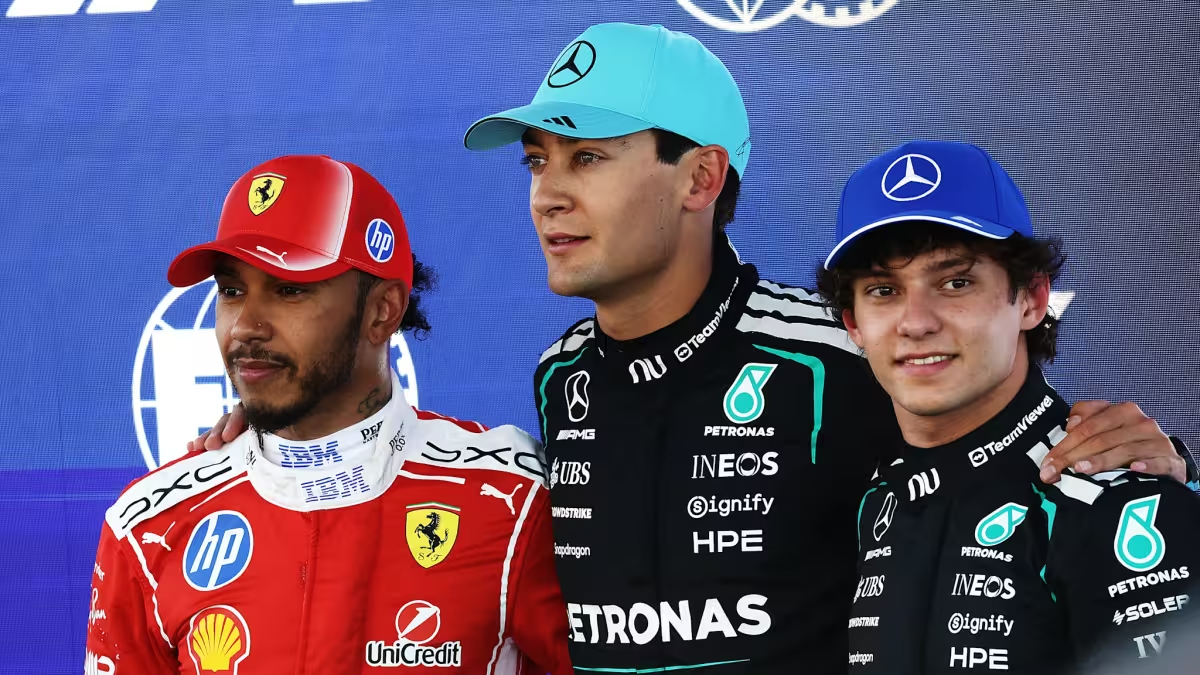
Practice also offered a reminder of how tight the field is this weekend. Kimi Antonelli emerged as Ferrari’s biggest threat in the final hour of practice, topping the timesheets and beating the Scuderia duo by more than three tenths — a margin that reads large on Monaco’s narrow lap and resets expectations for pace across the front of the grid.
The contrast between Racing Bulls’ "near-perfect" assessment and the report that Lawson endured a nervy opening raises a simple question about the character of the run. A near-perfect session implies near-total control from green; the record here shows recovery, adaptation and then precision. Both can be true — he recovered and then hit the marks — but the phrasing leaves open how much the result stemmed from pace versus salvage under pressure.
That ambiguity has consequences at a place where small differences compound. A car that needed to be resettled in qualifying can still start high and race well; it can also mask a weakness that rivals exploit off the line or through first-lap chaos. For Racing Bulls, the top-ten start widens options for the race but does not erase the question of how robust the performance will be when the lights go out.
The Monaco paddock carried other strands that shaded the weekend. Debate over elements of the 2026 rules and their enforcement continued to bubble up; for background on one recent clash, see the piece where Juan Pablo Montoya urged licence penalties and Max Verstappen fired back over the 2026 rules ( Those wider arguments affect how incidents are policed and how teams plan risk over a race distance.
What remains unresolved in the public summary is Lawson’s exact grid slot inside the top ten. The report confirms the top-ten outcome but stops short of a precise finishing position or lap times; that is the practical gap. At Monaco, starting seventh versus starting tenth is a materially different proposition for strategy and for the odds of converting qualifying into points.
The next concrete test is the race itself. Racing Bulls’ "near-perfect" label will be measured by whether Lawson can turn his recovery-style qualifying into clean opening laps and a points-paying result; until the detailed grid is published, the most consequential question is simple and immediate — where exactly within that top ten will he begin?



