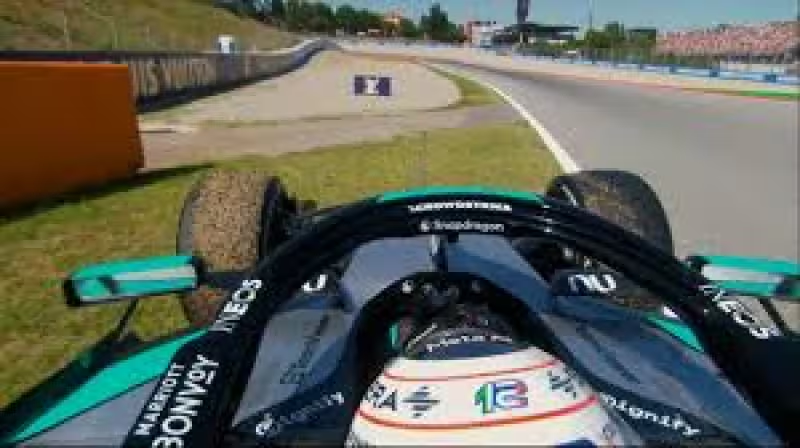
Kimi Antonelli’s charge for a podium finish at the 2026 Barcelona-Catalunya Grand Prix ended abruptly when his Mercedes developed a mechanical problem and he ground to a halt just four laps from the chequered flag.
Antonelli had only moments earlier completed an overtaking move on team mate George Russell to claim P2, turning what looked like a late-race reshuffle into a brief-lived advantage. The retirement removed a contender from the closing fight for the podium and changed the complexion of the finish in the race’s final laps.

The decisive evidence of how significant the late change was is simple: Antonelli had climbed to P2 before the failure, and then stopped with four laps remaining. That sequence — pass, then mechanical failure within moments — denied him a chance to convert the move into a result and forced Mercedes to accept an unplanned loss of track position at a critical point in the race.
Earlier phases of the Grand Prix set the scene for the late drama. George Russell had led away from Lewis Hamilton at the start, while Lewis Hamilton later pitted under the Virtual Safety Car in a move that was calculated to protect his advantage and keep him at the front. Those strategic shifts left the podium fight fluid in the closing laps, making Antonelli’s brief rise to second and sudden retirement especially consequential.
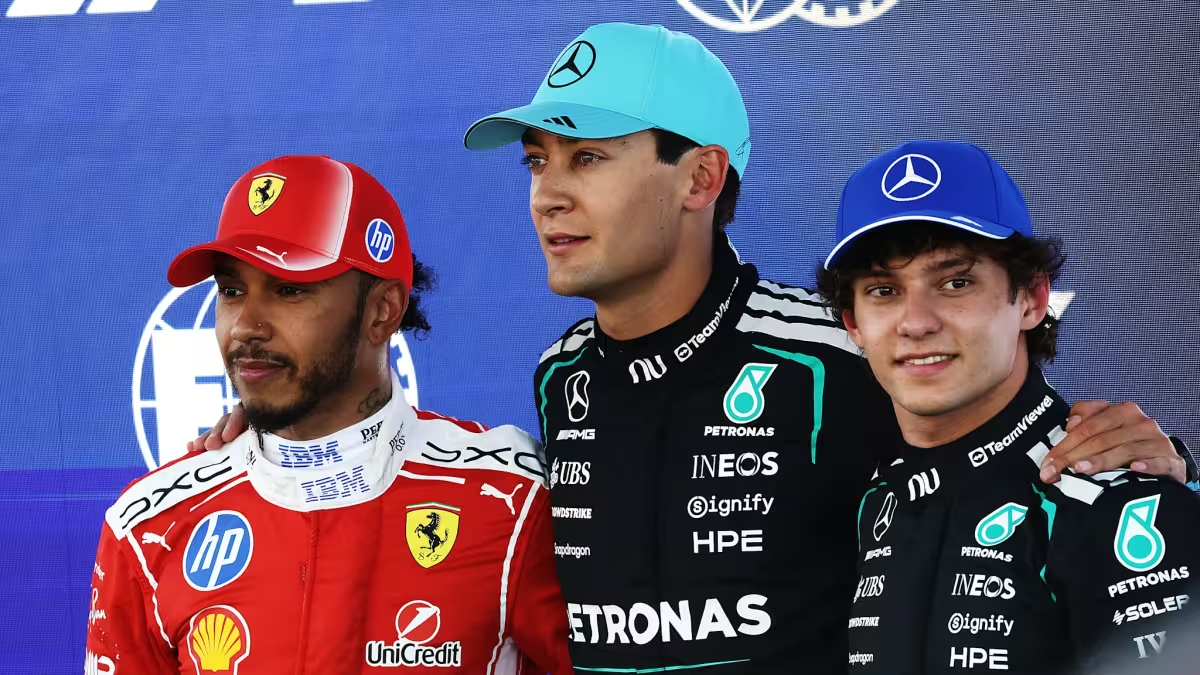
Qualifying had already produced notable moments: Russell crossed the line to seal pole position, and Charles Leclerc crashed out of Q3 — details that framed a race with multiple late twists. But nothing altered the immediate outcome more than Antonelli’s Mercedes faltering with four laps to go; the timing amplified the loss for the driver and for the team’s hopes for a strong finish at Barcelona-Catalunya.
The friction at the heart of the story is the contrast between the move and the stoppage. Antonelli’s pass on Russell was the kind of on-track aggression that ordinarily flips momentum toward a driver, yet the mechanical failure turned that momentum into a single, decisive undoing. The result is a rare, sharp mismatch between what a driver achieved on track and what he ultimately took away from the race.
What remains unresolved and most consequential now is the cause of the failure: what mechanical problem developed on Antonelli’s Mercedes that forced him to stop so close to the finish? That unanswered question will determine whether this is treated as an isolated defeat by luck or an issue with implications for future reliability, and it will shape how this late-race retirement is judged in the context of the season and the F1 Standings.
For fans and teams watching the standings and the championship picture, the practical effect is immediate: a driver who had just broken into P2 was removed from the fight with four laps to go, altering the distribution of points on offer that day. The single most consequential follow-up will be the explanation Mercedes provides about the fault and whether it points to a fixable fluke or a deeper problem that could affect results in coming races.