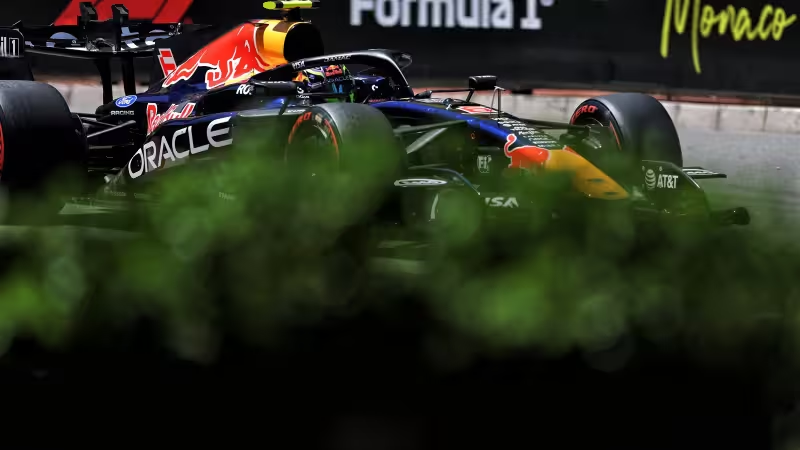
Isack Hadjar crashed his Red Bull at the exit of the Swimming Pool section during first practice for the 2026 Monaco Grand Prix, bringing the session to a halt with 25 minutes left and forcing marshals to recover the stricken car under a red flag.
The impact was immediate: Hadjar says the accident cost him more than half the planned running, leaving him short on laps and confidence. "I mean, I think I missed more than half a session. FP2, my car was repaired, and my confidence needed rebuilding, and just a horrific day," he said. Despite that, he later qualified fifth for the race, three places behind Red Bull team-mate Max Verstappen.

Monaco is a street circuit where every minute of track time is precious; crews use practice laps to find confidence, tyre windows and balance on a circuit that leaves little margin for error. Losing upward of half a session in FP1 at the Swimming Pool therefore mattered beyond headlines: it cut into the setup work Hadjar and his engineers could do on a track where drivers rely heavily on practised runs.
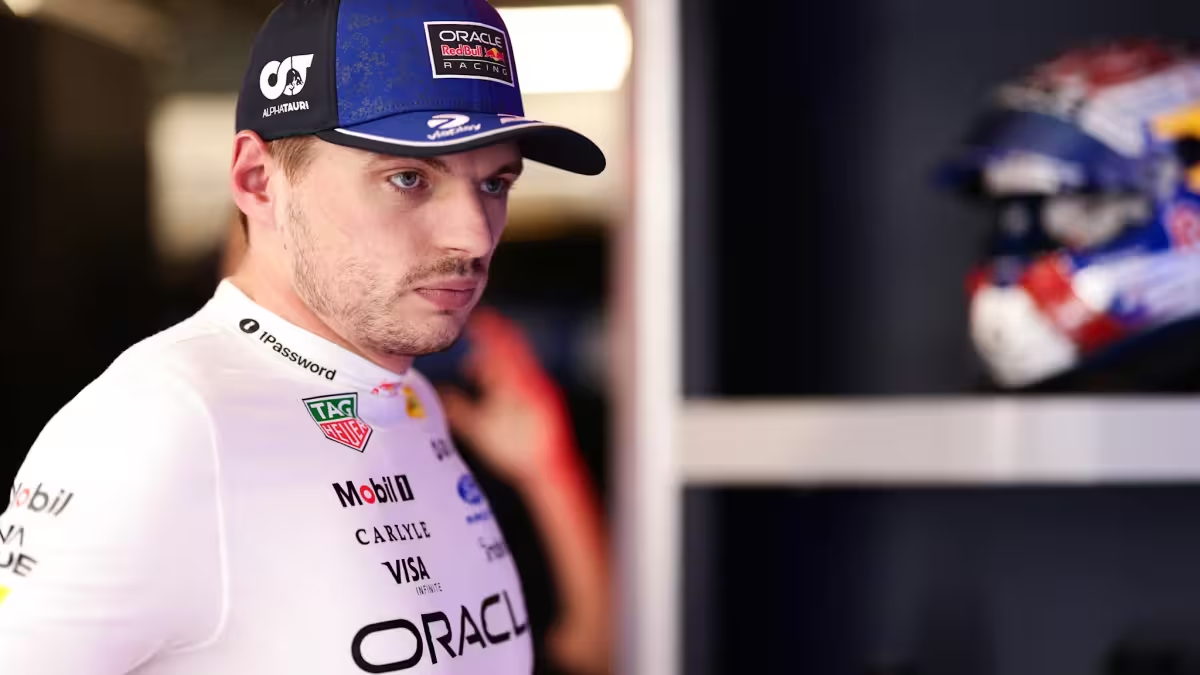
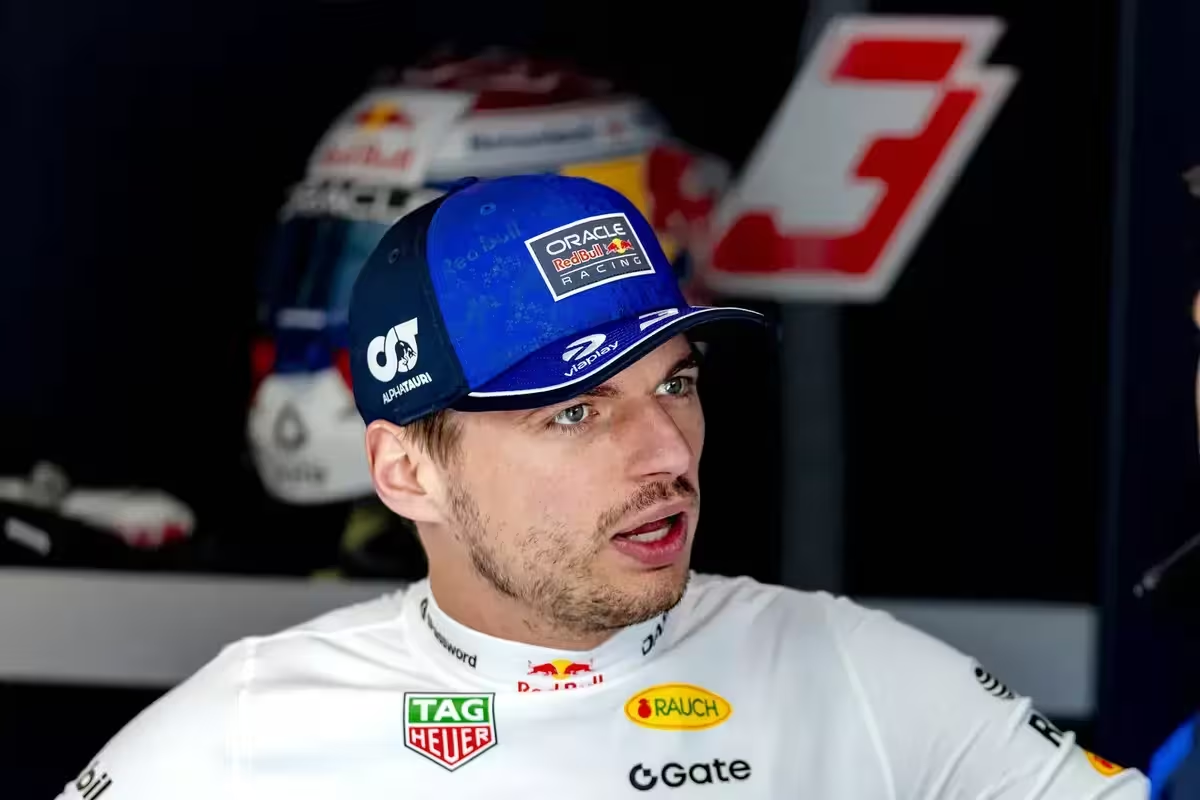
Hadjar himself framed the weekend as a mix of recovery and compromise. "Definitely mixed feelings," he said. "I think it was a very good comeback, but at the same time qualifying was too messy, and we did too many mistakes." He pointed to traffic and tyre management as early problems — "Traffic and tyres, so yeah, we started off on the wrong foot" — and admitted he left time on the table in qualifying: "Not the best way to build for Q3, and I left some time out there." He quantified the gap, saying he was about five tenths off the cars ahead.
The contrast is blunt: Hadjar calls FP1 "just a horrific day," yet he recovered sufficiently to put his car on the third row. He credited a repaired car and focused running in FP3 for limiting the damage. "But I made the most of FP3 this morning, and honestly, damage limitation, so I did well," he said.
The immediate consequence for the weekend was straightforward — Hadjar begins the Grand Prix from fifth on the grid — but a clear open question remains. The reports do not say how much, if any, race-trim performance he lost because of the FP1 crash and the shortened running, nor whether the confidence he rebuilt in FP2 and FP3 will hold under race conditions. His qualifying recovery looks like effective damage control; whether it converts into a genuine race result will be the measure of how costly that 25-minute interruption truly was.