



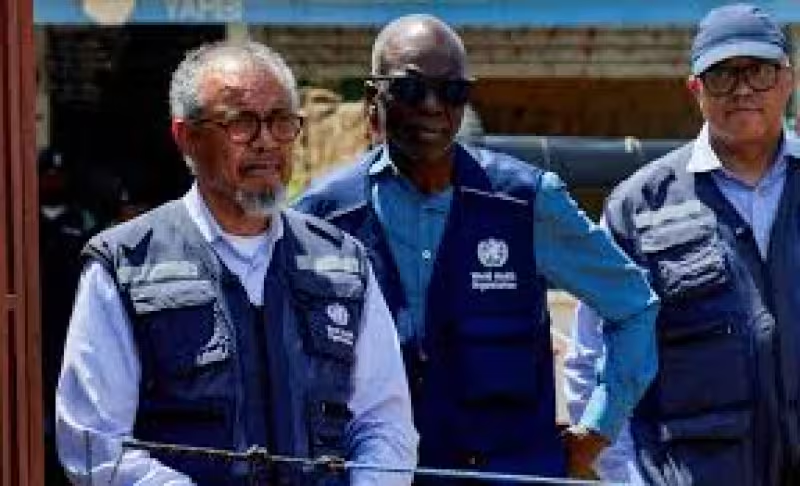
World Health Organization and the Africa Centres for Disease Control and Prevention launched an Ebola response plan on Friday to raise $518 million to contain a growing outbreak in eastern Congo and shore up readiness in neighbouring states.
The appeal, announced June 5, comes amid a surge of confirmed cases concentrated in Ituri province: at least 397 cases and 63 deaths have been recorded since Congolese authorities declared the outbreak on May 15. Congo is confronting the rare Bundibugyo type of Ebola in what is the country’s 17th Ebola outbreak since the virus was first identified there in 1976.

“Stop the outbreak where it is, support countries that are responding today and ensure that neighboring countries are ready to detect and act quickly if cases appear,” Tedros Adhanom Ghebreyesus said, summarizing the plan’s three objectives. He added a warning about the broader environment the response must navigate: “Misinformation is almost as dangerous as the virus itself and spreads just as fast. Earning and keeping the trust of communities is at the heart of everything we do.”
The Bundibugyo strain complicates the response. There is currently no approved vaccine or treatment for this type of Ebola, leaving health authorities to rely on classic outbreak tools: surveillance, case isolation, contact tracing and community engagement. The Africa CDC reported the case and death totals as part of Friday’s announcement that framed the $518 million figure as the funding target for immediate and regional work.
On the ground in Bunia, residents have been exposed to rumours and mistrust that officials say have fuelled resistance. A local radio station has started a daily 45-minute program at 10 a.m. to try to counter falsehoods and deliver health updates. The response has also been shadowed by attacks on health workers and persistent claims among some that the outbreak is a Western conspiracy. “I can never take the vaccine, I prefer to die because if the vaccine arrives, it can scare us even more,” said Samson Gerson, a 52-year-old father of seven, encapsulating why officials see community trust as their most fragile resource.
That gap between official strategy and community acceptance is the plan’s central friction. WHO and partners are pressing for rapid scale-up of response teams and laboratory capacity in Ituri, while also training neighbouring countries to spot cases early. But the absence of a licensed vaccine for Bundibugyo and the active spread of misinformation make high-impact interventions harder to deliver, and they leave the campaign vulnerable to delays if security and social access cannot be secured.
International interest in the outbreak has rippled into practical questions for travellers and governments — even searches about travel restrictions to Canada have appeared — but the plan does not focus on border controls. Instead it is pitched at stopping transmission at source and bolstering surveillance in surrounding states so any cross-border cases are detected and contained quickly. What the plan leaves unresolved is when the $518 million will be raised and how fast those new resources can be deployed to the field.
The next test is financial and social. If donors mobilize funds quickly and response teams gain community trust, the outbreak can be driven down by testing, isolation and contact work. If the appeal falters or outreach continues to meet suspicion and violence, the virus will have fertile conditions to spread beyond Ituri. The announced plan is precise in its price tag; its success will turn on whether money and local cooperation arrive fast enough to match the pace of the disease.



