Apple will announce iOS 27 at WWDC 2026 on June 8, with the keynote scheduled for 10 a.m. PT (1 p.m. ET) and the company expected to push a developer beta shortly after the presentation ends.
The update’s rollout will follow a familiar cadence: a public beta in July and a general release in September, timed to align with Apple’s hardware cycle and the reported launch of its first foldable iPhone that same month.

The latest iphone rumors suggest iOS 27 will be more than a feature drop; reports say Apple is treating the release as a reset focused on quality. reports the company’s primary aim is "quality and underlying performance," and engineers are said to be combing through the operating systems for bloat to cut and bugs to fix to improve battery life and overall stability.
At the same time, iOS 27 is expected to lay foundation work for a new device class. The foldable iPhone slated for September is said to have an approximately 7.8-inch inner display and a 5.5-inch outer display, and Apple reportedly plans specific software changes — windowing that allows two apps to run side by side, redesigned internal app layouts for larger screens, and tooling third‑party developers can adopt to update their UIs.
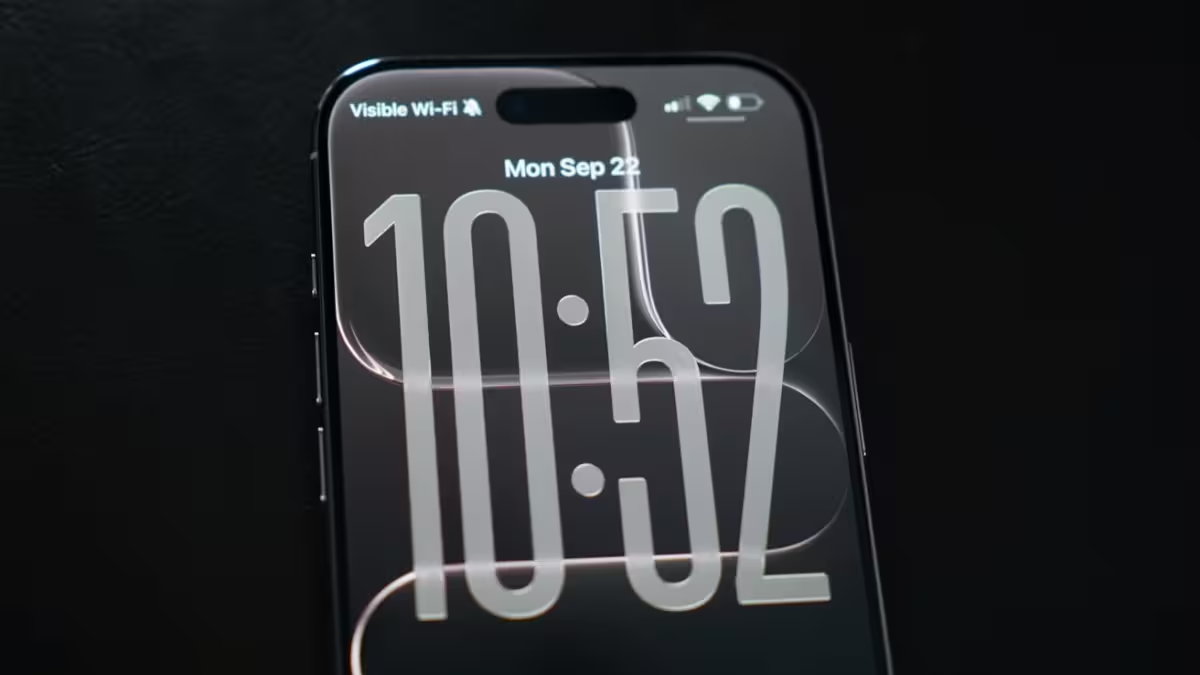

Artificial intelligence and Siri are prominent in the rumor mix. Apple has reportedly finalized a deal with Google to use Gemini models to power new Siri and Apple Intelligence features, and reporting says iOS 27 will include a standalone Siri chatbot app with a grid of conversations, file and photo uploads, and auto‑deleting chats. Multiple outlets describe Siri as completely redesigned, more personalized and more aware of what’s on screen.
That combination — a concentrated push to strip away bloat and cut bugs while shipping major new AI and foldable-phone features — creates a built‑in tradeoff for the update. Apple must tighten the platform and improve battery and responsiveness even as it folds in larger system services, machine‑learning back ends and new windowing APIs that could increase complexity rather than reduce it.
For users and developers the immediate steps are clear. Watch the WWDC keynote on June 8 at 1 p.m. ET for the full iOS 27 reveal; expect the first developer seed to appear shortly afterward so app makers can start testing the new layouts and windowing features. Public testers should see a July beta, and the wide release is expected in September alongside the iPhone Fold hardware.
The early betas will be the place to check whether Apple’s quality-first push pays off. Testers should probe battery life and responsiveness after reported bloat reductions, exercise the Siri chatbot’s file and photo upload behavior and conversation controls, and try the new split and multiwindow behaviors on larger displays. Apple’s own apps will likely demonstrate the foldable adaptations first, with third‑party developers following the developer beta window.
The most consequential unanswered detail is compatibility: Apple has not published which older iPhone models, if any, will lose support with iOS 27. Expect that information to appear in the developer documentation or in the beta builds that roll out after the keynote. Until Apple publishes a compatibility list, the practical impact of iOS 27 on many users will remain the single question that determines whether this release feels like a reset or a source of friction.