




The U.S. military said on Saturday that it shot down two Iranian attack drones that threatened international maritime traffic in the Strait of Hormuz, hours after reporting it had already downed four more the day before. The fresh intercepts came as the armed forces tracked a widening exchange of strikes tied to the conflict between Iran and Gulf allies.
U.S. Central Command said the one-way attack drones threatened shipping in one of the world’s most sensitive waterways, a passage that carries oil and commercial traffic between the Gulf and the Arabian Sea. On Friday, the United States said Iran fired seven missiles at Bahrain and Kuwait; CENTCOM said six were intercepted and the seventh missed its target.

The battlefield pressure is now moving well beyond the launch sites. The same escalation has put Bahrain and Kuwait under direct threat, while international maritime traffic in the Strait of Hormuz faces the risk of more attacks as each side keeps testing the other’s limits.
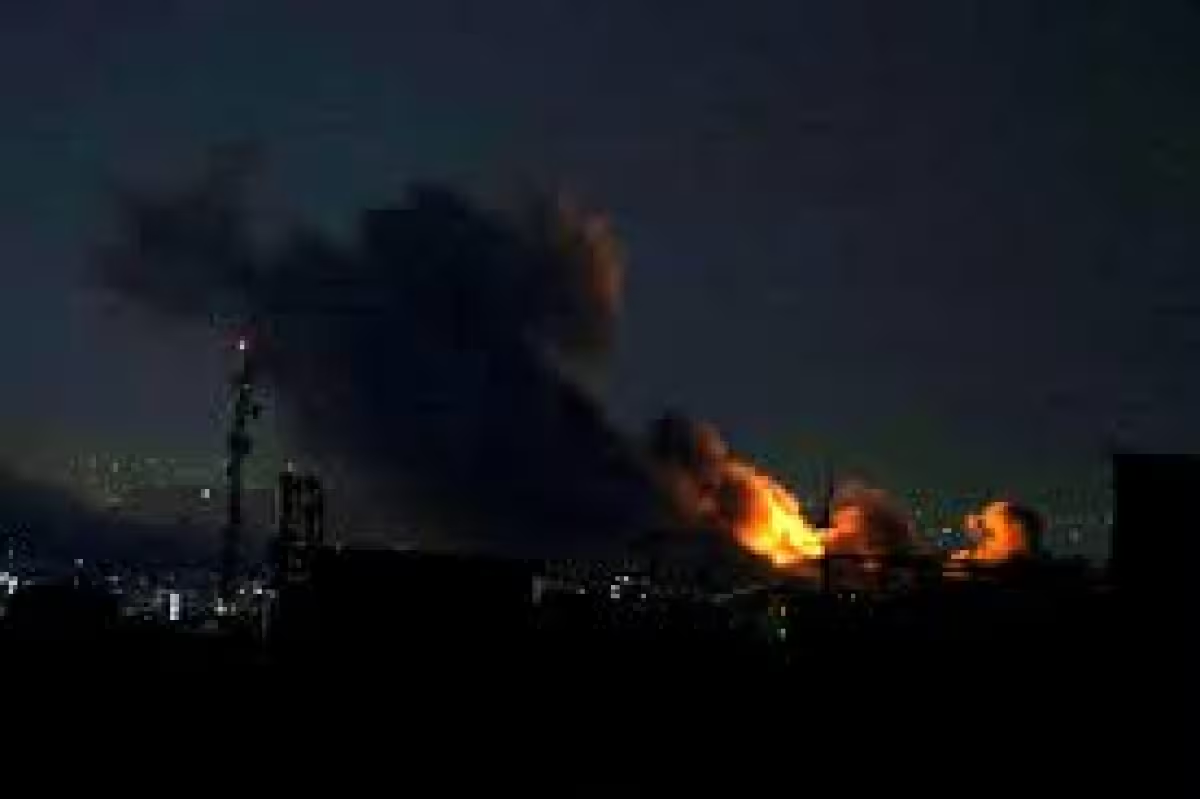
That military strain is colliding with faltering diplomacy. Tehran walked away from negotiations earlier in the week and said it would suspend “talks and the exchange of texts through mediators,” even as Pakistan’s interior minister, Mohsen Naqvi, was visiting Iran on Saturday for talks with Foreign Minister Abbas Araghchi. Pakistan has served as an intermediary for peace talks between the United States and Iran, but the latest rupture leaves those channels in doubt.
There are also practical questions beyond the next strike. A source familiar with Scott Bessent’s thinking said the Treasury Department wants to use Iranian assets to help Gulf allies repair damage caused during the war, and Bessent has directed the department to seek detailed cost estimates from those governments. It is still unclear which assets would be tapped, including whether they are cash held in frozen bank accounts or hard assets such as oil tankers.
For now, the pattern is clear: drone attacks, missile launches, and suspended mediation are running in parallel. The next official step is likely to come from the Treasury on potential repair funding, while the military remains on watch for further threats in the Strait of Hormuz and beyond.



