



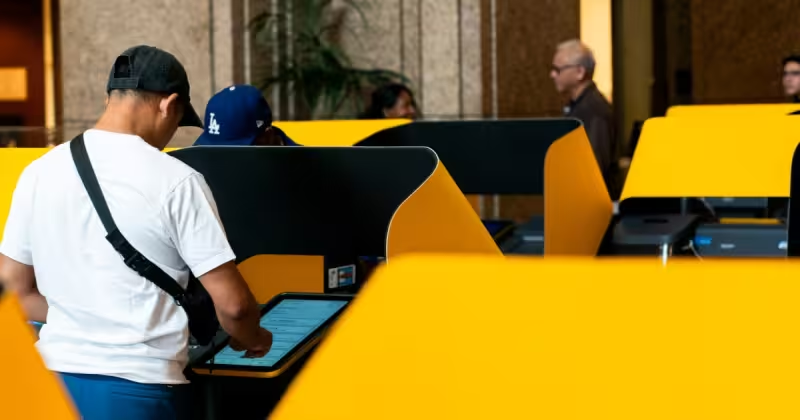
A federal prosecutor in California said on Friday that authorities have launched multiple electoral fraud investigations tied to the state’s recent elections, marking the first public confirmation of active federal scrutiny after social-media claims of wrongdoing.
Bill Essayli said on X on Friday morning that his office was pursuing "multiple election fraud investigations alongside the FBI," though he did not provide details about what specific races, allegations or individuals those probes cover. Essayli added, "We will follow the evidence wherever it leads and prosecute any violations of federal election law to the fullest extent," and he criticized California’s mail voting in his post.

The announcement came as a federal prosecutor from the U.S. attorney’s office visited the Los Angeles County ballot processing center on Friday morning. The L.A. County registrar’s office said it had been notified late Thursday that the U.S. attorney’s office would send a government attorney to observe ballot processing activities. The individual was given an overview of the public observation program and took part in a walkthrough of ballot processing operations.
The registrar’s office emphasized that ballot processing is open to public observation and that election officials routinely host observers representing politicians, advocacy groups or members of the public. The Justice Department did not immediately respond to an inquiry about the prosecutor’s visit.
The timing followed President Donald Trump’s posts on Truth Social on Thursday claiming without evidence that Democrats were trying to steal the California primary elections. Trump wrote, "There’s BIG cheating by the Dumocrats in California. Votes are all tied up. May not be in for weeks," and added, "Under investigation by the U.S. Attorney’s Office in Los Angeles. Why the vote counting DELAY???" The claims were made as counties continued counting ballots after Tuesday’s primary.
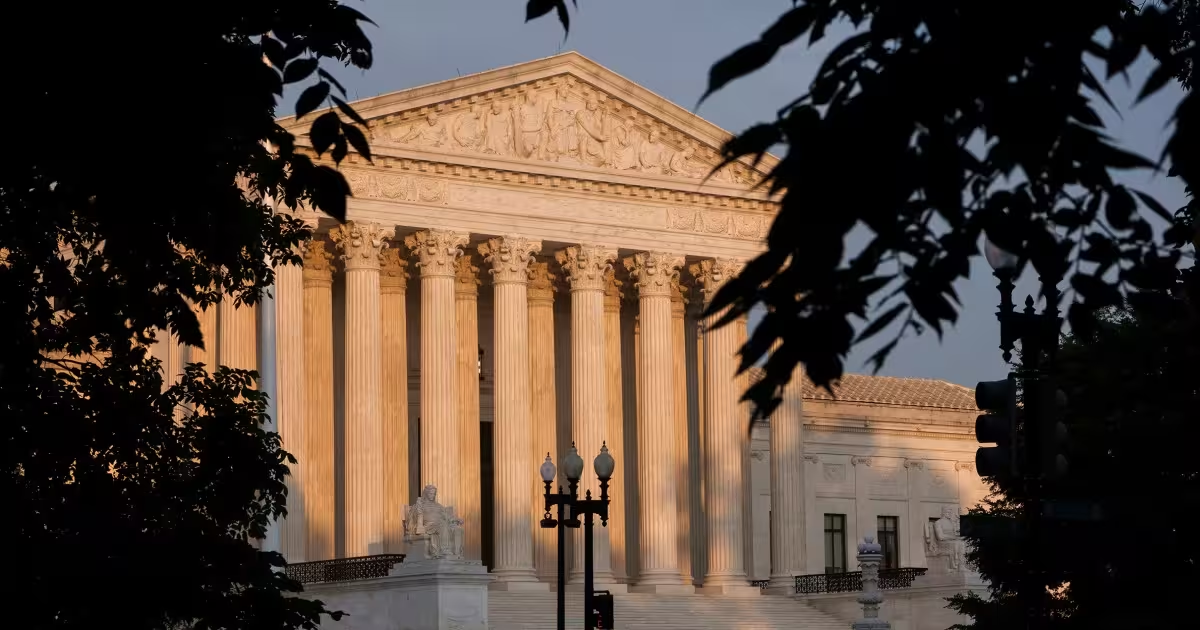
California’s vote-by-mail system helps explain the delays: ballots postmarked on or before election day and received within seven days after the election are eligible to be counted, and competitive races can take several days to produce a winner. Mail ballots often favor Democratic candidates, and the state’s top-two primary system advances the two highest vote-getters to the November general election regardless of party.
The ongoing count already has practical consequences for specific campaigns. As of Friday evening, NBC News projected that Democratic gubernatorial candidate Xavier Becerra will advance to the general election, with Republican Steve Hilton and Democrat Tom Steyer competing for the second spot. In Los Angeles, voters have seen late results before: in 2022, Mayor Karen Bass was not announced as the winner until eight days after election day; Bass is seeking another term and has advanced to the November election, NBC News projects.
The most consequential fact in Friday’s disclosure is what remains unsaid. Essayli’s public statement and the observed visit confirm federal involvement, but the prosecutor offered no specifics about which elections or which alleged practices are under review. That gap is especially stark because Trump’s public accusations on Thursday were unsubstantiated in the posts provided and offered no evidence to identify targets or irregularities.
Investigations of this sort typically move in stages: evidence collection, interviews, and then potential charges if the evidence supports them. Essayli’s promise to "follow the evidence" establishes the office’s standard of course, but it does not indicate whether any prosecutable violations have been found. For now, election officials continue processing and counting ballots under state law, observers are permitted at processing centers, and federal agents are gathering information.
The next concrete steps are twofold and immediate: the U.S. attorney’s office and the FBI will continue their inquiries, and county offices will finish counting ballots that are legally eligible to be tallied in the days after the election. What remains unresolved—and what voters and candidates are most likely to ask—is which specific elections, allegations or pieces of evidence the announced "multiple" investigations encompass. That unanswered question is the clearest line between the federal announcement and any future legal action.



