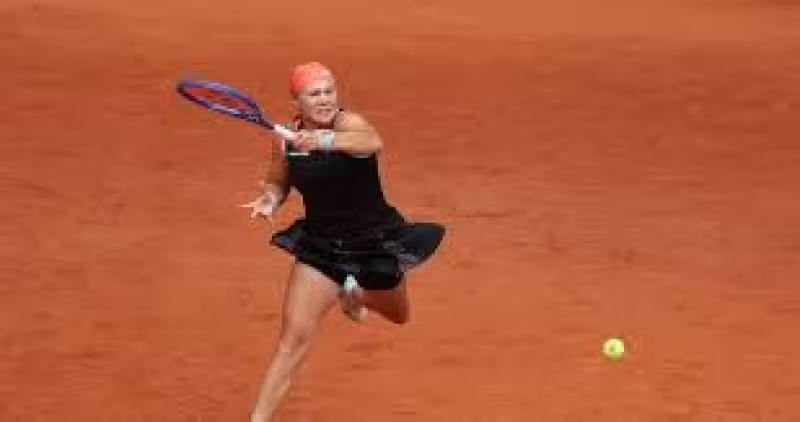
Aryna Sabalenka was eliminated from the French Open on Wednesday, losing to No. 25 seed Diana Shnaider 3-6, 7-5, 6-0 after winning the opening set.
Shnaider closed the match by winning the final 10 games, turning a one-set deficit into a straight-lines finish that ended Sabalenka’s run in Paris and sent the Russian into the semifinals.

The scoreline underlines the abruptness of the turnaround: Sabalenka took the first set, narrowly dropped the second 7-5, then failed to win a game in the deciding set. Wednesday’s loss also marked the end of Sabalenka’s ninth French Open main draw appearance.
For perspective, Sabalenka is the world No. 1 and has been a leading force on the tour, but her results on clay do not mirror her hard-court success. She has won three clay-court titles — all in Madrid — and carries a 3-8 career finals record on clay compared with 21-10 in finals on hard courts and 0-2 on grass.
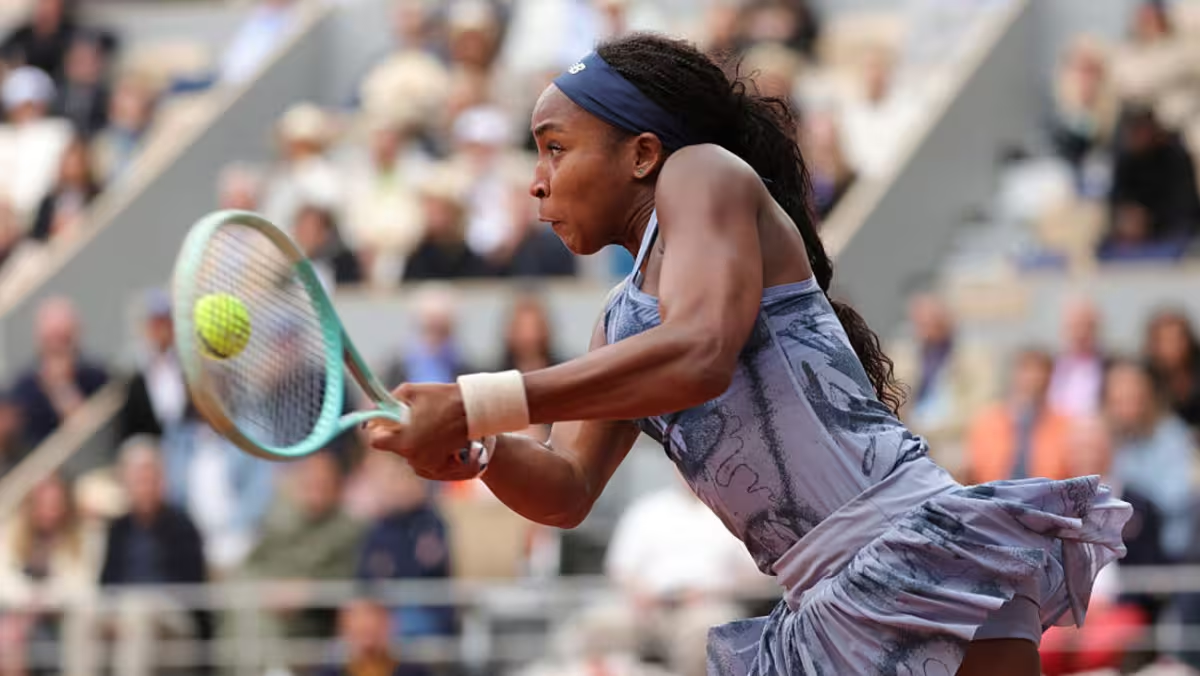
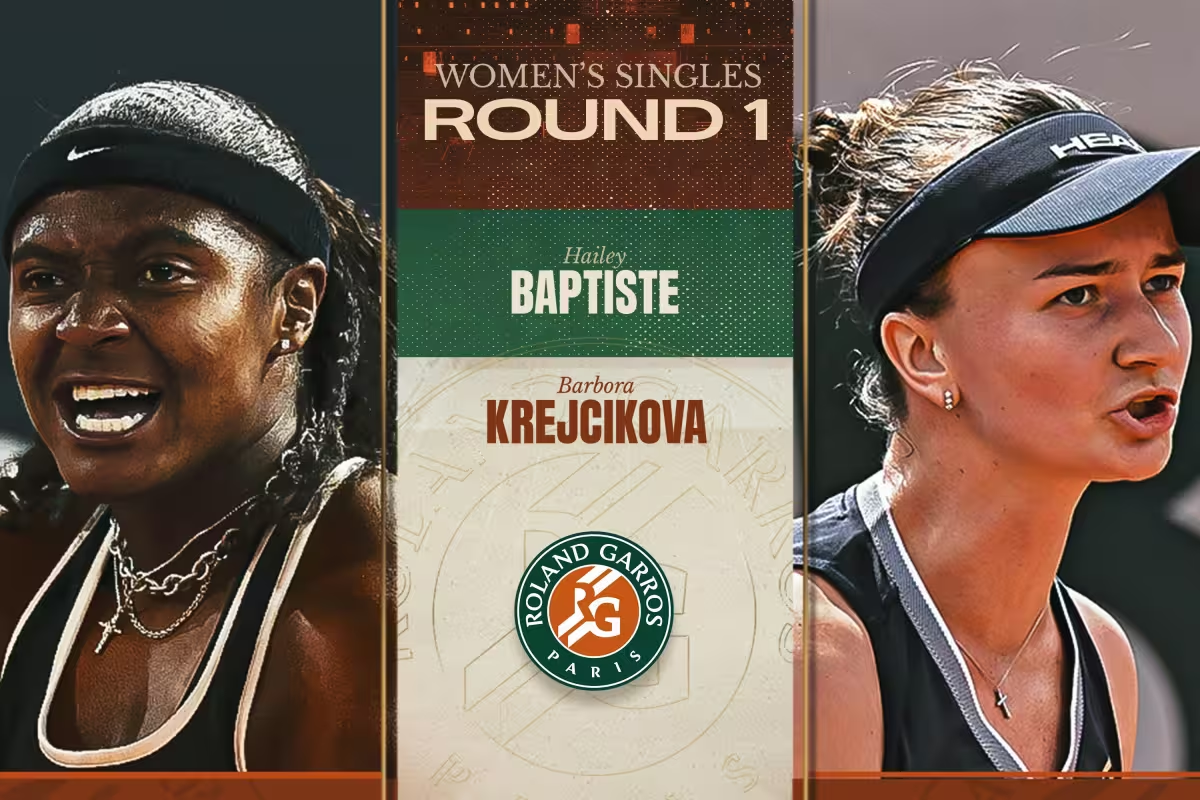
Those numbers have been visible in recent months. Sabalenka lost in the Italian Open third round to Sorana Cîrstea and was beaten in the Madrid quarterfinals by Hailey Baptiste despite holding six match points. She also reached the French Open final at the same court in 2024, losing to Coco Gauff.
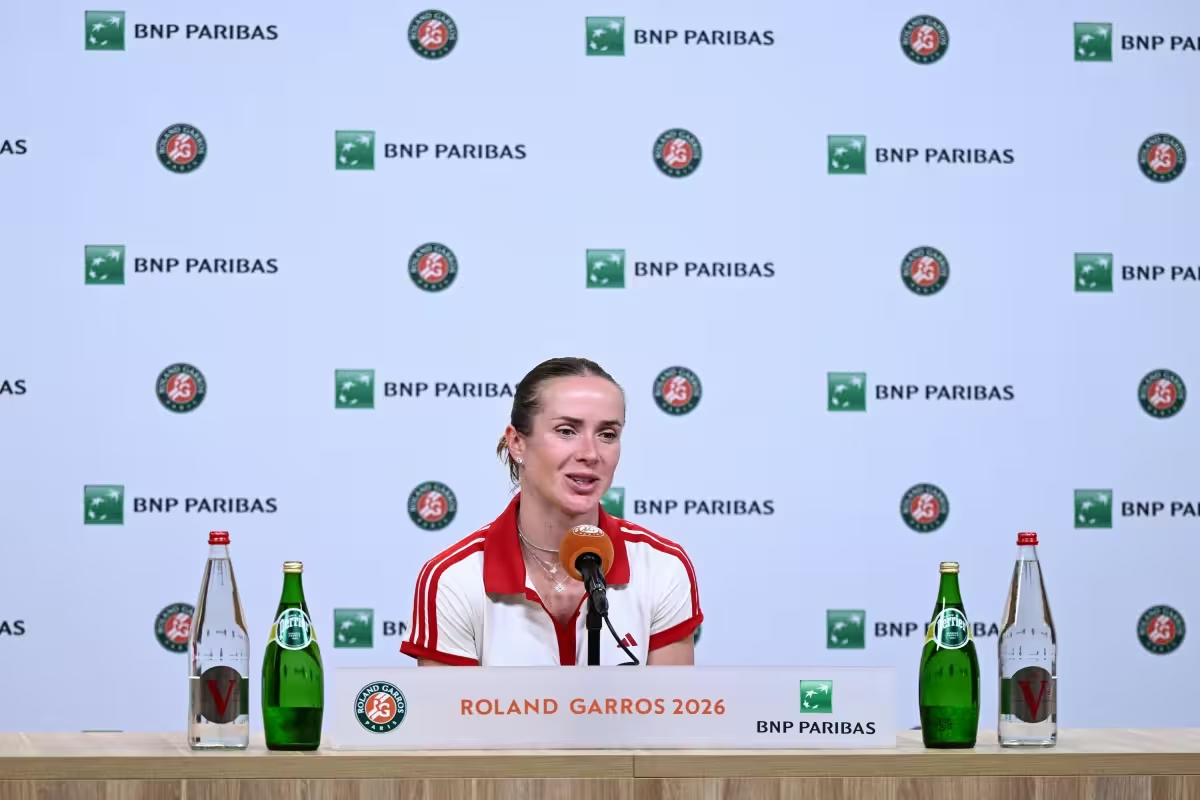
The pattern is clear on paper and on court: a player who can dominate on hard courts and has produced Grand Slam runs — including finals appearances across 2025 at the Australian Open, French Open and U.S. Open and a U.S. Open title in 2025 — still struggles to close out big matches on clay. Wednesday’s bagel set and the streak of losses in decisive moments add a new line to that ledger.
Paris this year remains a complicated stage for Sabalenka. It took her six tries to reach the second week of Roland Garros, and this elimination continues a search for a clay major that has so far eluded her despite repeated deep runs elsewhere. Her grass results also lag behind her hard-court form: she reached the Wimbledon semifinals in 2021 but has just two grass finals to date, the most recent in 2022.
For readers following other contenders in Paris, coverage of Iga Swiatek’s tournament run is available here: Emerson Jones Tests Four-Time Champion Iga Swiatek in Paris First Round —
The practical consequence of Wednesday’s result is immediate: Sabalenka’s campaign in Roland Garros is over, and questions about how — or whether — she will adapt her game to slow clay conditions have only sharpened. Her three clay titles have all come in Madrid, where conditions are generally faster than at Roland Garros; the contrast between those wins and repeated late-match lapses in Paris points to a tactical and perhaps surface-specific gap.
The single most consequential unanswered question now is whether Sabalenka can translate the power and momentum that brought her hard-court majors into consistent success on clay and grass. Until she wins a significant title outside the faster conditions of Madrid, her status as the world No. 1 will continue to sit alongside an unfinished chapter at Roland Garros.