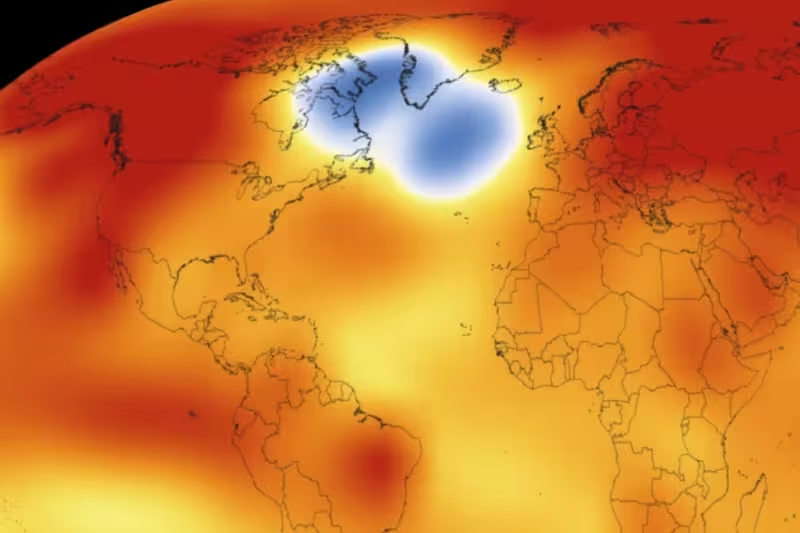
The Atlantic patch south-east of Greenland that has resisted global warming for more than a century may be cooling because the ocean circulation feeding it is already weakening. New reanalyses of weather and ocean observations suggest the so-called cold blob has lost as much as 1°C over the past 150 years, and that the Atlantic Meridional Overturning Circulation, or AMOC, is carrying less heat northward than it once did.
That matters because the AMOC is the conveyor belt that moves warm, salty water from the Gulf of Mexico toward the north Atlantic and on toward Europe. If it weakens far enough, scientists say, Europe could face much colder conditions and rainfall patterns across Africa and Asia could be thrown off, with monsoon rains that support agriculture under pressure. Some research has warned that the system could cross a tipping point within decades, though scientists still have only 22 years of direct measurements to judge how fast it is changing.

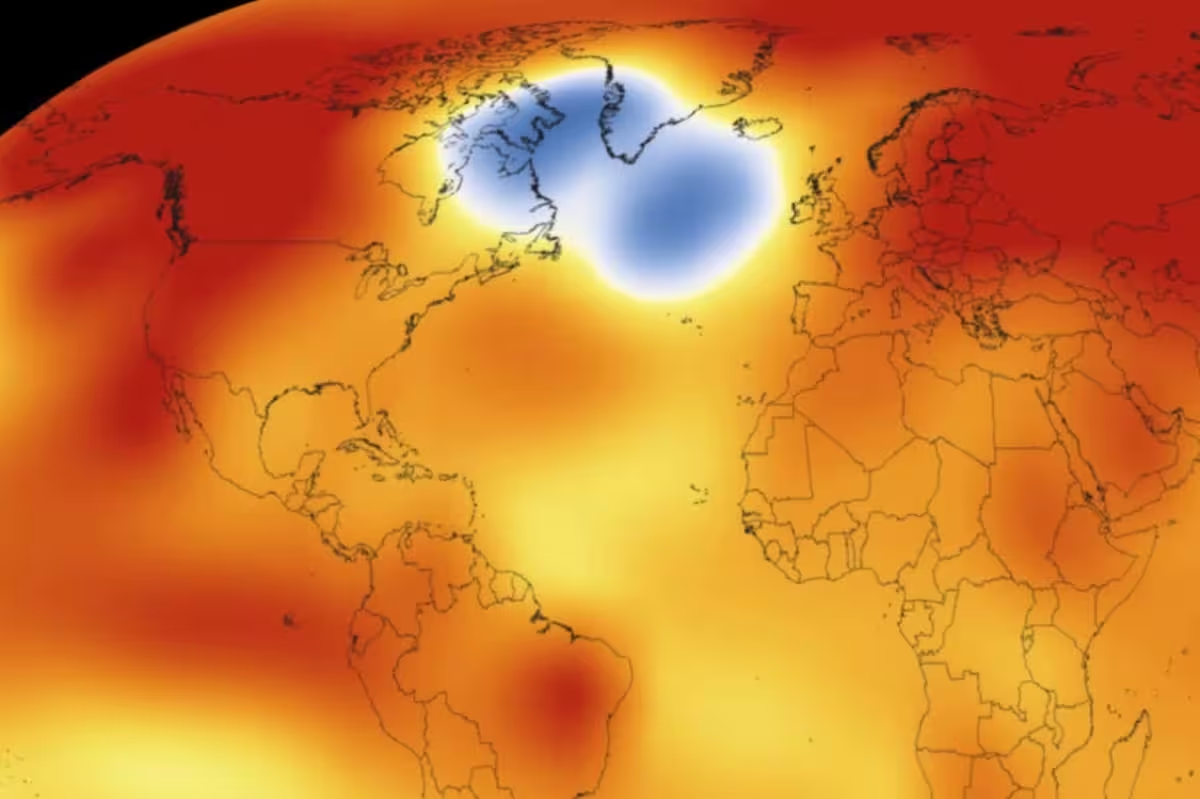
The new analysis does not treat the cold blob as a surface oddity. Researchers led by Stefan Rahmstorf used climate reanalyses built from direct weather observations from satellites, buoys and ships, and found that heat loss from the ocean surface in the cold blob has declined since 1955. They also found cooling down to 1,000 metres below the surface, a pattern that points to a shift in the ocean itself rather than a temperature patch created only by the air above it.
That finding lands in the middle of a long dispute. In 2022, Chengfei He and colleagues argued that rapid Arctic warming had reduced the temperature difference between the pole and the tropics, helping push the jet stream northward into the cold blob region. Other modelling has placed most of the blame on the atmosphere, not the ocean. Rahmstorf said winds and clouds account for only a modest fraction of the warming hole, and that the data show the cold blob is caused by the ocean.
The implications reach well beyond one patch of water. A weakening AMOC would mean less heat delivered to the north Atlantic, reinforcing the cold blob and adding weight to the idea that Atlantic circulation has been changing for decades. The open question is how close the system may already be to a tipping point, and whether the cold blob will keep intensifying as Greenland continues to shed freshwater into the ocean and slow the sinking of dense water that helps drive the circulation.