



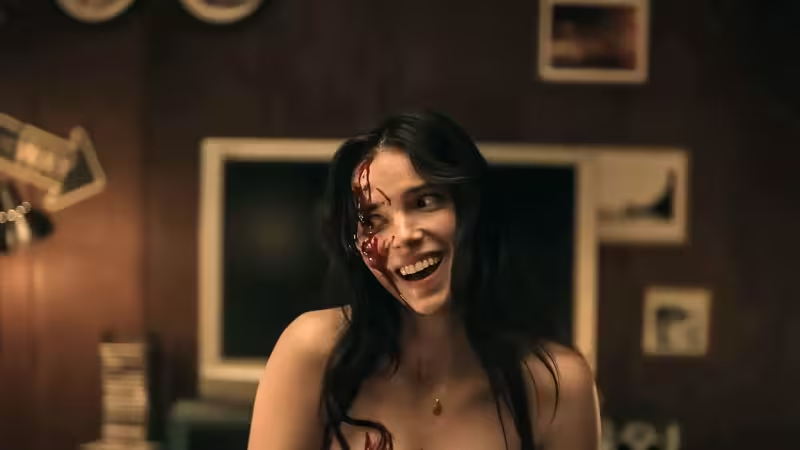
When Inde Navarrette thinks back to the first thing that truly frightened her, she still sees two peekaboo dolls in her Tía’s living room: "My Tía had two Chucky dolls, Chucky and Chucky's Bride, that were peekaboo dolls." The memory, she said, goes back to when she was probably 5 — an early terror that later became the seed of a career built on playing scared, clever and complicated women.
Navarrette, a 25-year-old Mexican-Australian CW veteran, is in the headlines now because Curry Barker’s indie horror Obsession landed at TIFF and has been climbing since release — a climb she remembers by phone: "that was one of the best phone calls I've ever received." She calls the film doing great in its first week and continuing to go up the clearest evidence that audiences are connecting with the movie and with her performance as Nikki Freeman.

The numbers and the festival notice are the weight behind the moment: Obsession is a zeitgeist-seizing indie with a Monkey's Paw–inspired premise, and Navarrette plays Nikki, a character described in the film as a victim trapped inside an antagonist’s body. Michael Johnston co-stars as Bear, and Barker directed the piece that has listeners and viewers arguing about who to blame and who to pity.
Navarrette’s horror education comes through in the way she talks about watching films with family and stumbling into different subgenres. She remembers Nightmare on Elm Street viewings with cousins, says Rob Zombie’s films taught her a campier, more manageable take on horror, and confesses that psychological pieces hit different: "I watched Hereditary, and I looked up every time I walked into a room because I just… I knew Toni [Collette] was going to be on my roof." Those touchstones help explain how she built a vocabulary for fear that could be used on camera.

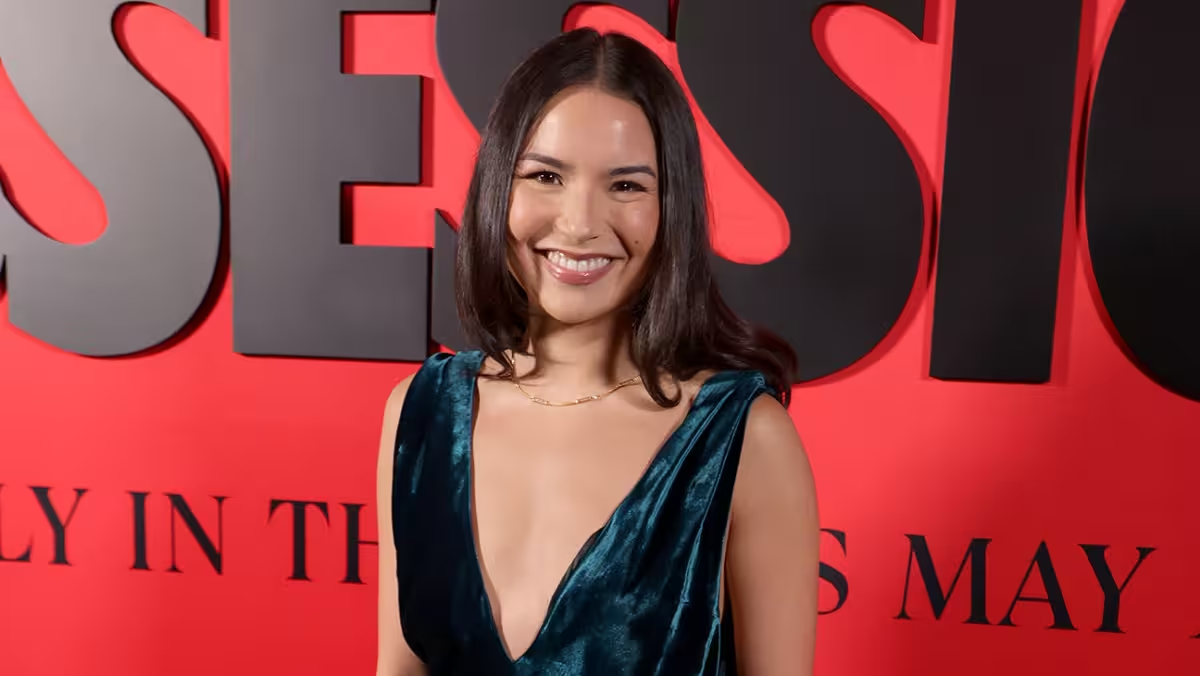
But the interview’s most telling detail is not a movie credit; it’s how Navarrette prepared. A supplementary account of the shoot says she tried creepy mirror exercises at home while getting into Nikki’s head. She also told reporters she had never read a character like Nikki before and that the familiar "crazy-girlfriend or jealous-girlfriend" trope had been done differently here. "I hadn't seen it in this way," she said, describing an impulse to keep Nikki tethered to sympathy even as the screenplay turns violent and bizarre.
That sympathy is the story’s friction. Obsession markets Nikki as terrifying; many viewers encounter a horrifying body-swapping antagonist. Navarrette insists the performance is a portrait of someone wronged — a victim wearing the antagonist’s skin — and she said she wanted to portray Nikki as she first envisioned the character when she read the script. The contrast between poster imagery and Navarrette’s intent has become part of the conversation around the film.
The collision of performance and premise raises an open but immediate question about authorship. How much of Nikki’s effect on audiences is the film’s body-swapping engine, and how much is Navarrette’s choice to humanize the role through small preparation rituals and a specific reading of the script? The facts we have are clean: she prepared deliberately, the film has a striking gimmick, and festival and early-release response have amplified both.
Navarrette has described the TIFF call as a career high. She has named her earliest fears and the films that taught her how to perform them. She has also insisted, quietly and repeatedly, that Nikki is someone to be understood rather than merely feared. The single consequential unanswered question now is whether awards-season chatter and audience debates will credit the film’s premise or the performance that shaped how audiences saw that premise — and which of those two will stick to Navarrette as her breakout moment.



