



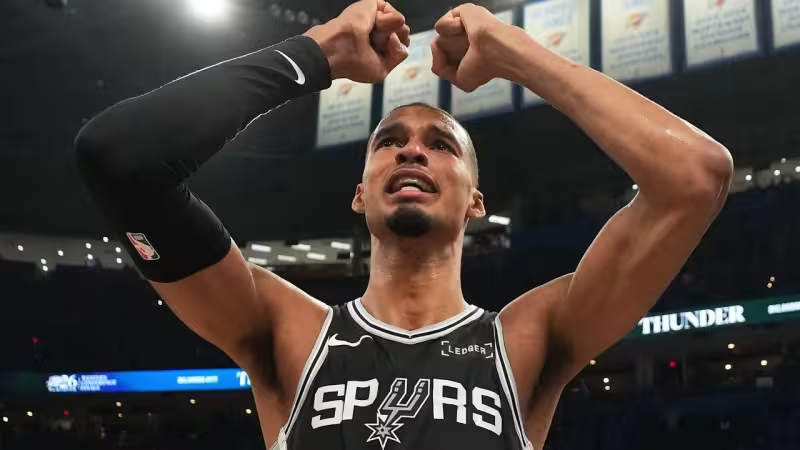
The San Antonio Spurs closed the Western Conference Finals with a 111-103 victory in Game Seven over the defending champions, but the series will be remembered for how Victor Wembanyama began it: 41 points and 24 rebounds in a double‑overtime Game One.
Wembanyama’s opener was rows above routine numbers — 41 and 24 in a postseason game is the kind of single performance that shifts opponents’ game plans. It landed after he spent ten days training with monks at a Shaolin temple in China, a preparation that became part of the postseason narrative. Measurables that often read like hyperbole — an 8‑foot wingspan and a nearly 10‑foot standing reach — translated into paint dominance that the Spurs rode; the team was statistically at its best when he was on the court during the finals.

By the time the series reached Game Seven, the shape of those advantages had shifted. Wembanyama finished that deciding game with 22 points, 2 assists and 7 rebounds — an effective line, but modest relative to his opening night. That contrast is the clearest friction in the series: a player who can produce a performance that recalibrates expectations, then post a quieter stat line when the prize was decided.
The Thunder entered the series with their own realities. Shai Gilgeous‑Alexander had accepted his second straight Most Valuable Player award days before Game One, yet Oklahoma City was outscored when Gilgeous‑Alexander was on the floor during the finals. The Thunder also had to adapt without Jalen Williams, who missed Game Seven with an injury, narrowing Oklahoma City’s options against Wembanyama’s length and the Spurs’ rotations.
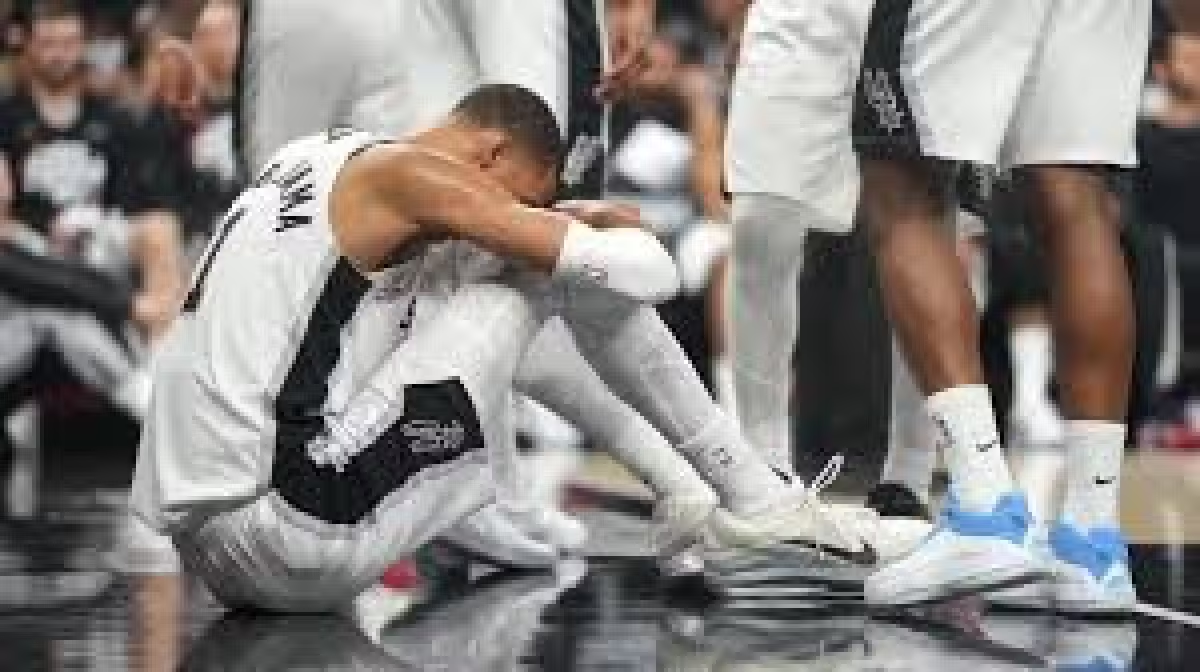
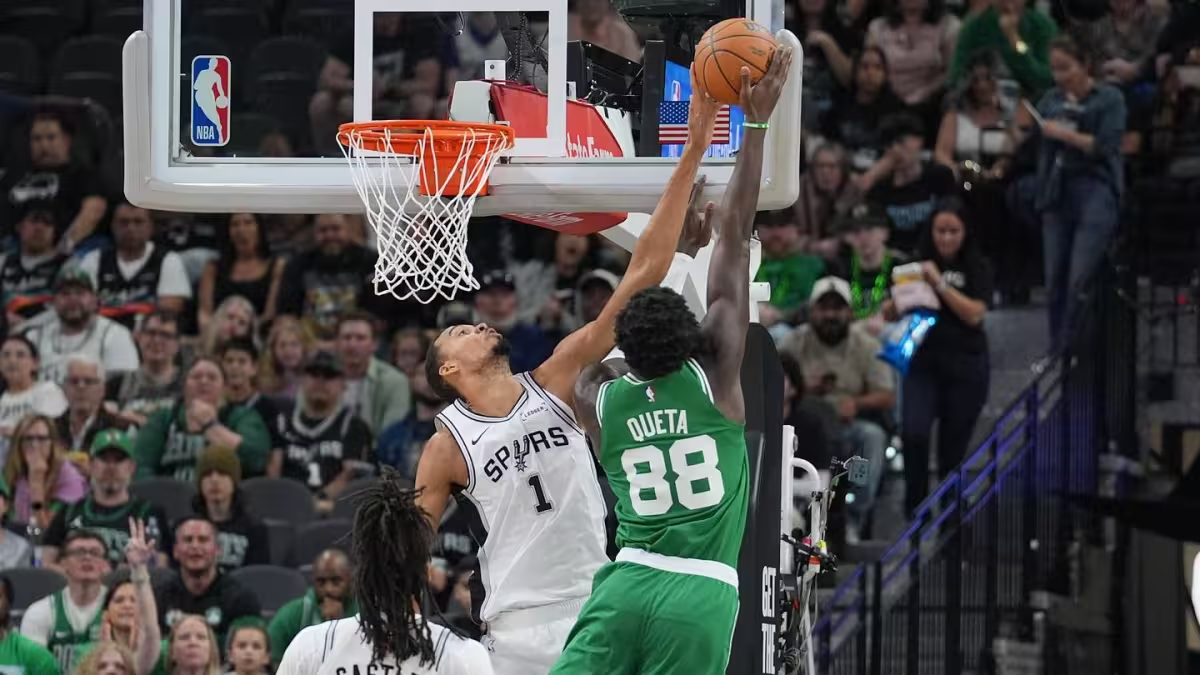
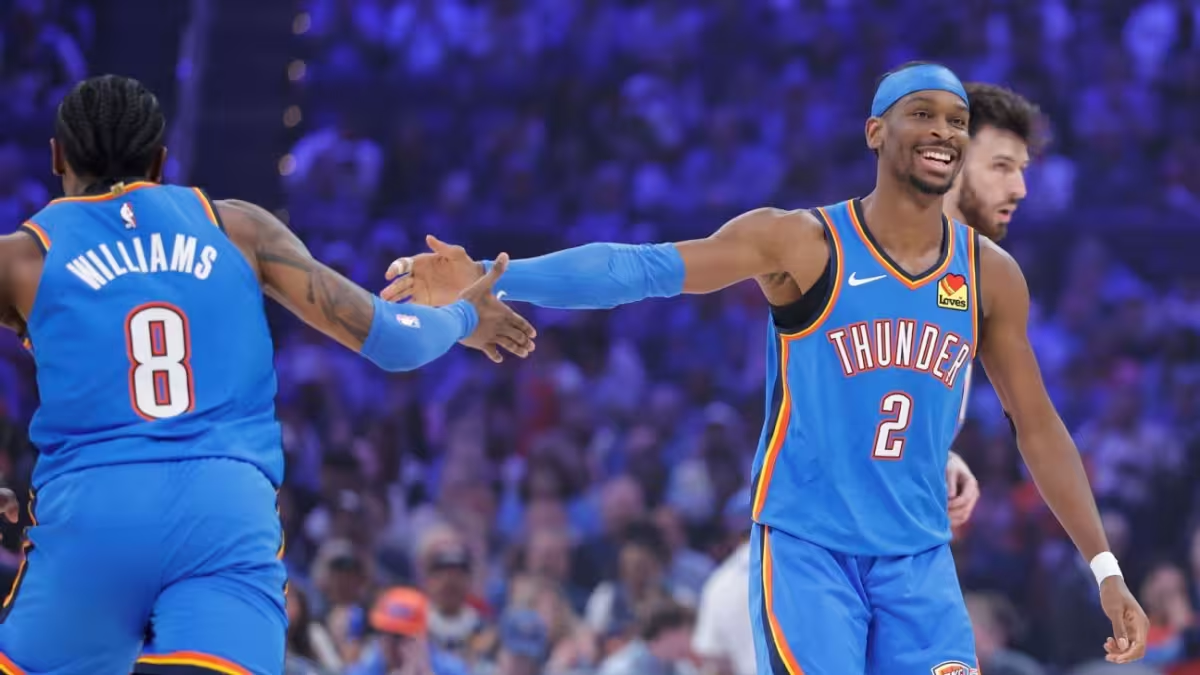
Those matchups mattered because the series never settled into a single script. Opposing ball handlers repeatedly altered drives when Wembanyama loomed in the paint — a kind of defensive distortion that traditional stats struggle to capture. Analysts noted that the Spurs’ best splits came with him in the game, a sign that his on‑court presence did more than tally rebounds and blocks; it changed shot selection and tempo.
That makes the double‑OT opener both a proof point and an open question. On one hand, a 41‑and‑24 performance in the postseason — in just his third NBA season — signaled a new ceiling for how a single two‑way player can influence a series. On the other, the 22/2/7 line in Game Seven showed that opponents can force different outcomes across a series, particularly when a supporting cast is stretched and key opponents are hobbled.
Comparisons and shorthand followed: viewers and commentators dropped legendary names like Kobe Bryant into the conversation as they tried to frame what they had just witnessed. Those echoes capture the cultural weight of the moment, but they do not resolve the practical question the Spurs now face — can San Antonio extract Wembanyama’s maximum advantage on a nightly basis, or will elite defenses and missing pieces make his explosive nights rare?
The clearest answer remains unwritten. Wembanyama’s Game One proved a peak the league must account for; Game Seven proved peaks can be contained. What matters next is whether the Spurs can build a consistent strategy around the advantages he creates, or whether opponents will continue to bend the series into games where his box score looks conventional while his impact is still felt in subtler ways.



