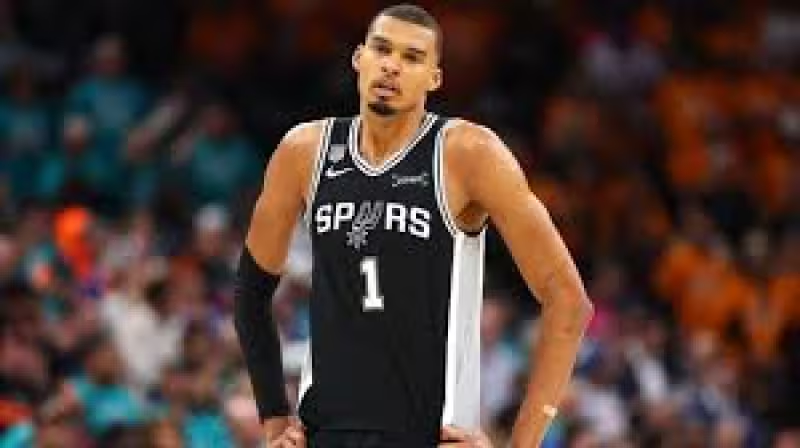
The Spurs lost Game 1 of the 2026 NBA Finals 105-95 to the New York Knicks on Wednesday night, and Victor Wembanyama spent Thursday afternoon insisting the remedy is simple: play the same basketball that won them games all season.
Wembanyama, who finished Game 1 with 26 points, 12 rebounds and three blocks, said bluntly, "I was bad tonight. It's not more complicated than that," and added repeatedly that the team "don't need to do anything incredible" — just "play our game" and "be normal." He was 6-for-21 from the field and 2-for-9 on 3-pointers, and he committed six turnovers in the loss.

The weight of those numbers matters because they helped define how the Spurs lost: San Antonio shot 36% overall and 25.6% from three, and the team generated only 16 assists on 32 made field goals. The Knicks, conversely, converted second chances into 23 points off 10 offensive rebounds — a margin that proved decisive in a game the Spurs could not afford to drop at home.
Context sharpens the stakes: Game 2 is Friday at 8:30 ET in San Antonio on ABC, and a second defeat would put the Spurs down 2-0 before the series moves to New York for Games 3 and 4. Wembanyama told reporters the formula that has worked all season still applies: "It's almost not like I have anything to figure out. It's almost like I have to play normal, not even good," and that "normal means trusting each other, trusting the basketball gods, trusting the game plan, executing, and not relying on talent so much to make shots or to save the day."


That insistence collides with what actually happened on the floor. NBA.com tracking data shows Wembanyama was 2-for-11 from the field and committed five turnovers when Karl-Anthony Towns was the primary defender, evidence the Knicks found ways to take away his usual options. Spurs coach Mitch Johnson did not sugarcoat the offensive failings: "The way we played offensively in terms of a team and our brand, we didn't play with the pass enough (and) we didn't put enough pressure and force on the rim in the paint," he said, adding, "We have a lot of room for improvement on that moving forward."
Practical adjustments are clear from those comments and the box score: San Antonio must increase ball movement to lift assist totals above 16 on 32 made shots, clean up turnovers that ballooned after Towns started guarding Wembanyama, and limit the offensive rebounds that created 23 second-chance points for New York. Wembanyama pinpointed mindset as well as mechanics, saying the Spurs "need to approach the game with a better mental state."
What to watch Friday: whether the Spurs can rediscover the passing and paint pressure Mitch Johnson called for, and whether Wembanyama can avoid the Towns-era mismatch that left him 2-for-11 in those minutes. If San Antonio improves its assist rate, trims turnovers and keeps New York off the offensive glass, the box-score math that produced a 10-point loss can be reversed.
Can the Spurs make those changes quickly enough to avoid a 2-0 hole? Yes — but only if they execute the basic game plan they described. Wembanyama’s insistence on being "normal" is not a platitude; it’s a prescription: more passes, less hero ball, better rim defense and a calmer mind. If those pieces fall into place Friday night, the Spurs keep the series alive; if they don't, the Finals head to New York with San Antonio already playing from behind.