



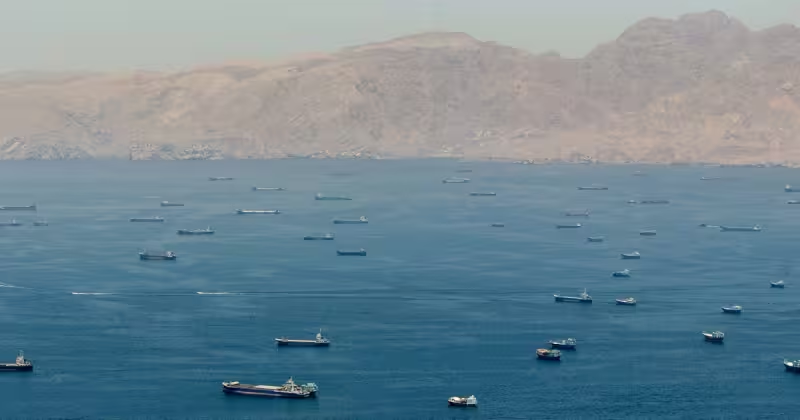
The U.S. military said Friday it shot down four Iranian drones launched toward the Strait of Hormuz and then struck Iranian coastal surveillance radar sites in response.
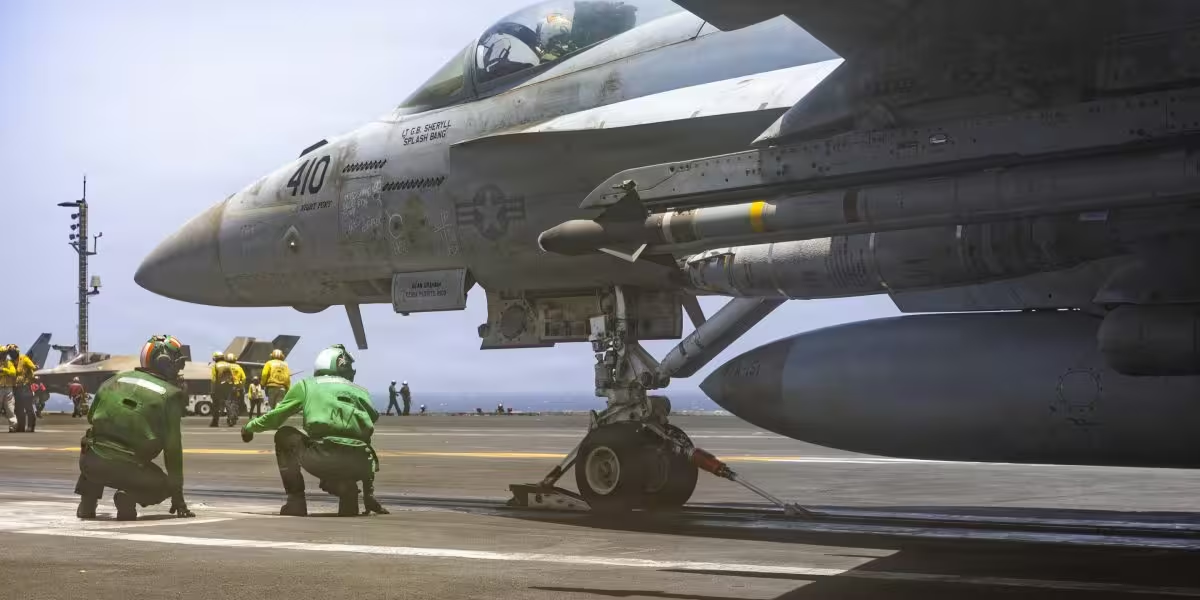
U.S. Central Command said the unmanned attack drones “posed an immediate threat to regional maritime traffic,” and that U.S. forces hit radar sites, including one on an island in the strait, “to defend against further attacks.” The strikes were described as measures to blunt an imminent danger to ships in a corridor vital for global oil and natural gas shipments.

The exchange follows a week that already stretched a fragile truce: earlier this week Iranian drones heavily damaged a passenger terminal at Kuwait’s main airport, killing one person, wounding dozens and briefly closing the facility. The U.S. action on Friday adds a U.S. military response to a string of recent attacks that have directly affected civilian and commercial movement across the Gulf region.
The Strait of Hormuz sits at the center of the confrontation. A narrow maritime chokepoint, it funnels a large share of the world's crude oil and natural gas; any hostile activity there can ripple through energy markets and commercial shipping. U.S. forces in the region said they are enforcing a blockade on Iranian ports in response to what they called Tehran's chokehold on the corridor.


Diplomatic efforts are already under strain. A week ago U.S. and Iranian negotiators reached a tentative agreement to extend a ceasefire by 60 days and begin a new round of talks on Iran's nuclear program, but Iranian officials have shown no public sign of signing off on the deal. The Israeli military, meanwhile, struck parts of southern Lebanon on Friday, issued evacuation warnings for nine villages and reported nine people killed in six locations — underscoring how multiple fronts are colliding as negotiators try to lock in a pause in fighting.
The U.S. military framed its actions as an immediate defensive response; President Donald Trump struck a different tone on Friday, telling reporters that “the situation with Iran seems to be going quite well.” In an interview he also said the negotiations were slow because “it’s a very hard thing for them,” and he has publicly called for unspecified changes to the tentative ceasefire agreement. That juxtaposition — a military claim of imminent threat followed by the president's optimistic assessment of the talks — sharpens uncertainty about whether the strikes will stiffen Iran's negotiating posture or prompt further reprisals.
Operationally, the U.S. strikes targeted coastal radar installations that can cue drones and other weapons toward shipping lanes and bases. Hitting a radar site on an island in the strait was intended, U.S. Central Command said, to reduce the risk of follow-on attacks; whether it succeeds in deterring more drone launches is unclear. For mariners and markets already watching sudden disruptions, the incident is a further reminder that military moves can quickly alter the calculus in the strait.
What happens next is the open question. The tentative 60-day extension of the ceasefire was meant to buy time for broader talks; with Iranian officials not publicly committed and the U.S. calling out immediate threats, the strikes increase pressure on both negotiators and local commanders. If retaliatory attacks resume, the corridor's security — and the viability of the agreement to pause hostilities — will be tested. FilmoGaz is following the situation, as analysts track both the military radar picture and diplomatic signals: see our Tornado Radar briefing at and recent Doppler Radar coverage at for related monitoring updates.



