“He told me to shut the hell up … he told me to shut up or be quiet, and he told the rest of the team to be quiet and leave the officials alone,” Mike Brown said Wednesday, describing a blunt intervention from assistant coach Rick Brunson that Brown credits with snapping the Knicks out of a funk during Game 1 of the 2026 NBA Finals.
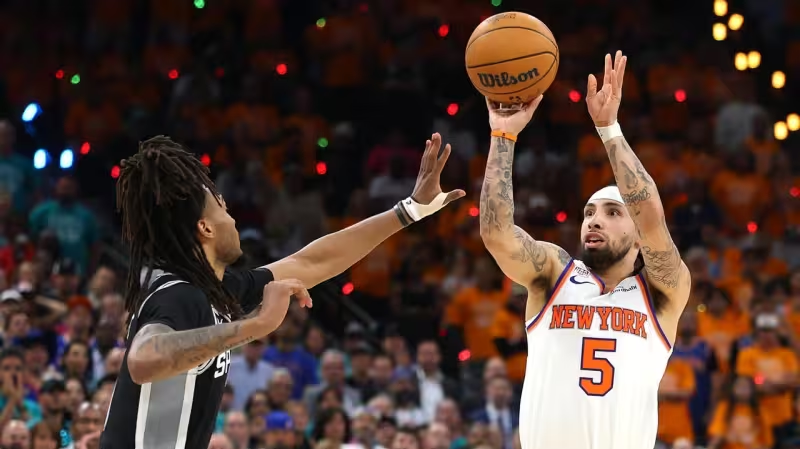
Brown said the exchange came at a crucial moment as New York fought back in San Antonio. The Knicks trailed 55-48 at halftime, fell behind by 14 in the third quarter and, after the reset Brunson forced, tied the game at 76 through three quarters before finishing with a 105-95 victory to take a 1-0 series lead.

The numbers underline the turnaround. Jalen Brunson scored 30 points, the bench outscored San Antonio’s reserves 28-20, and Landry Shamet led the second unit with 13 points. Jose Alvarado, acquired Feb. 5, stepped in in the second quarter and scored seven points to help steady the team while Jalen briefly left the floor after an accidental collision; the Knicks bench had outscored opponents by 77 points through 15 playoff games and ranked first in the postseason at plus-5.1 per game.
Brown, 56 and coaching on the NBA’s biggest stage, said Brunson’s line cut through ongoing complaints about officiating — complaints that had the team escalating a few minutes earlier. “It was great of him because we were all kind of losing our mind, and I did it. Rest of the guys did it, and it helped us put our energy elsewhere, especially in the second half,” Brown said, framing Brunson’s admonition as the reset that let New York refocus on basketball instead of whistles.
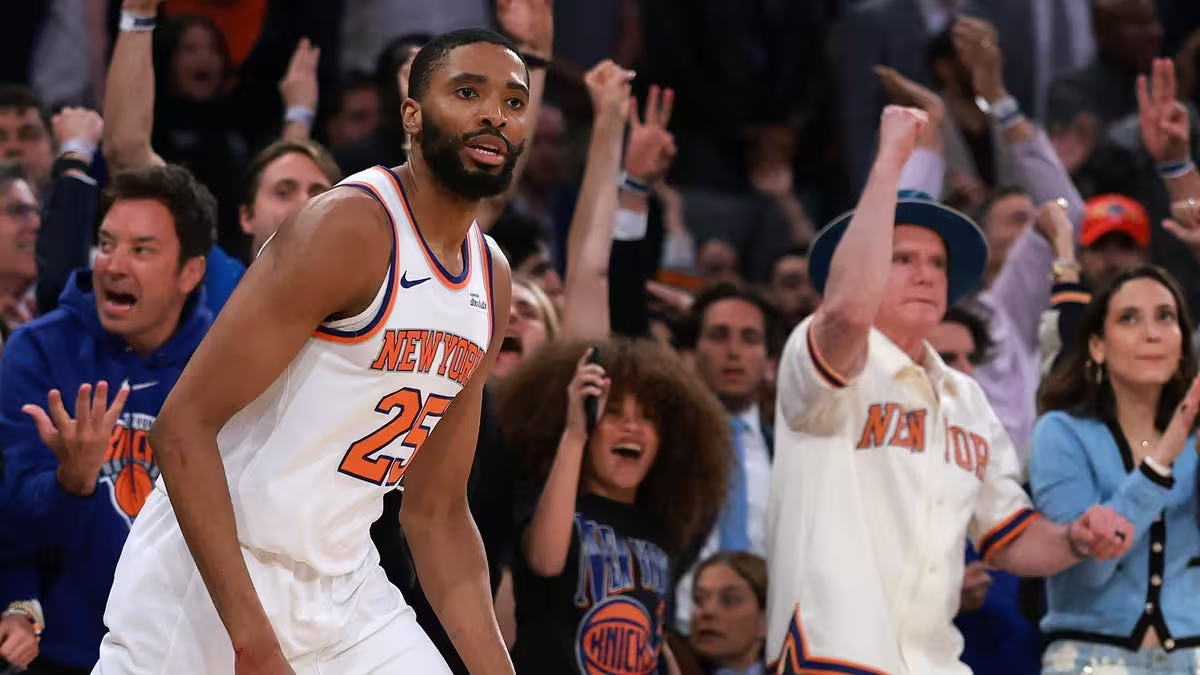
The source of the ire was specific: Brown noted the team had been upset by missed whistles on Harrison Barnes crashing into Jalen Brunson’s knee and by Brunson turning his ankle on a Luke Kornet foot. Those moments, Brown said, fed a broader tendency to argue calls — exactly the habit Brunson targeted when he told his head coach to quiet down and ordered the locker-room to stop jawing at officials.
That intervention carried extra weight because it came from a coach with franchise ties. Rick Brunson, an assistant on this Knicks staff, played for New York in the 1999 Finals; his voice in the huddle has a history with the club and, Brown suggested, a style that can override a team’s instinct to chase officials instead of possessions.
Players noticed the effect. Jose Alvarado — who remarked after the game, “My second thought is this is what I do. I have worked since I was a kid for this moment, this is something I live for and I just want to take advantage of it and do what the team needed. And I hope I did that.” — provided a concrete lift when Brunson’s order bought the bench and starters the composure to complete the comeback. Shamet, speaking of the reserves, said simply, “Our bench unit, we have a really unique group,” underscoring how the second unit’s steadiness mattered after the reset.
Brown’s description of the locker-room meltdown matters because it reveals a tension within the team’s identity: New York nearly lost control of its response to officiating at the very moment the comeback required discipline. Brunson’s intervention was a forceful, in-game fix — not a strategic timeout or a schematic tweak — and Brown credited it with helping the Knicks redirect their energy on the floor rather than on the whistle.
What comes next is the central open question: will that blunt nudge change how the Knicks handle perceived slights from the officials for the remainder of the series? Game 2 is scheduled Friday night in San Antonio, and the most consequential unresolved issue from Game 1 is whether Brunson’s one-line demand to Brown will become a repeatable tool for maintaining composure — or a momentary lurch that the team must re-find when the whistles start to sting again.