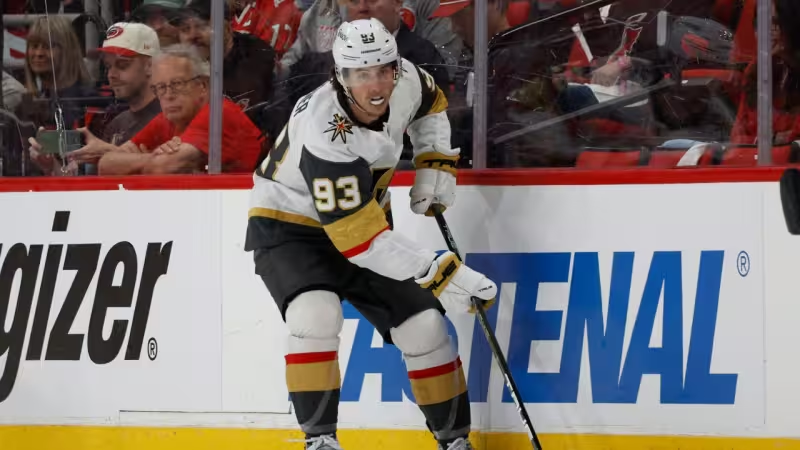
Mitch Marner threw his body into the lane in the dying seconds of Game 1 of the Stanley Cup Final, and his teammates noticed: Mark Stone and several others skated straight to him at the final buzzer after the Hurricanes' 5-4 win that put Carolina up 1-0 in the series.
Stone stopped at Marner to thank him, saying, "I think he was just kind of in the way, that's why we got to him first, so I had to stop and say, 'Thanks, good job,'" a rare, pointed compliment in the immediate chaos of a close Cup game.

That was not the entirety of Stone's praise. He described what happened on the play — "I mean, you do whatever you can to keep the puck out of the net, and Mitch kind of got picked there off the draw, and just kind of sold out (to make the block)." He added a broader endorsement: "He's come as advertised; he's done anything he can to help this team win," and summed up the moment as proof of Marner's team commitment: "It just shows the buy-in that he has."
The single play carried outsized importance because of where it came. The Hurricanes left Raleigh with a 1-0 series edge after a 5-4 game that could have swung either way, and the stakes of taking the next game are steep: teams that take a 2-0 lead in a best-of-seven Final go on to lift the Cup 91 per cent of the time (50-5 series record), and teams that do it on the road have finished the job 83 per cent of the time (10-2).



Those numbers are the simplest reason Stone's shout-out landed. A blocked shot in the closing seconds preserved a win; preserved wins stack into series leads that, historically, are nearly fatal to the trailing club. Marner, who has been credited with doing a bit of everything in these playoffs, made a defensive gamble that earned immediate recognition from opponents and teammates alike at the buzzer.
Still, the praise sits against a clear friction: it arrived while Vegas was trailing the series. Carolina's victory left the Golden Knights behind, not ahead, and the question hanging over the exchange is whether individual sacrifice can be translated into sustained momentum. Coach John Tortorella refused to treat a road split as acceptable before the teams met again, saying bluntly, "You win one, you want to win the next one. That, to me, is common sense," and adding, "You don't want to let any momentum slip away."
The next game is the immediate test. Marner's block was a high-leverage act in Game 1 and the kind of play Stone highlighted when he skated over to deliver his gratitude; whether that snap judgment of effort turns into a series-changing swing is unresolved. If Vegas cannot respond and avoid a 2-0 hole, the historical math suggests the path back narrows dramatically.
For now the sequence is simple: Marner made a season-defining stop at the buzzer, drew public praise from a top opponent, and left the series with Carolina holding the advantage. The clearer question going forward is not whether Marner bought in — Stone made that plain — but whether that buy-in will translate into the wins needed to keep the Final competitive.