



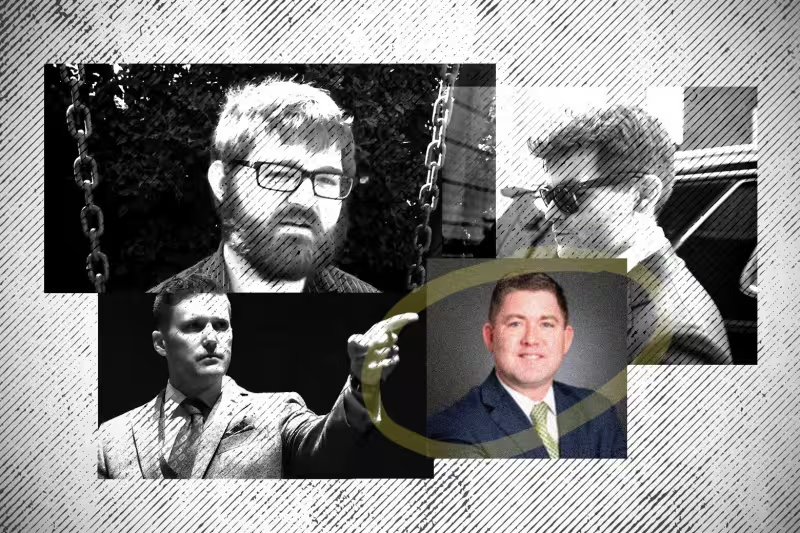
Kip Talley said in a group chat with Nick Fuentes and Richard Spencer that he used his congressional position to try to help free Charles Johnson from prison. The messages, first reported by a national magazine, put the chief of staff to Rep. Mike Collins at the center of a new controversy over contacts between top Republican political aides and prominent white nationalists.
Talley wrote that he was going to use “the levers of the legislative branch” to check into Johnson’s detention and later told the chat he was “reaching out to my people at FBI and DOJ” to try to get him out. Johnson was incarcerated from November 2025 to February 2026, and Talley’s messages were sent in December 2025, before he was promoted to chief of staff in January 2026. Collins is the front-runner to be Republicans’ Senate nominee in Georgia, which gives the episode immediate political weight beyond the private chat in which it surfaced.

Talley said he was acting only in a personal capacity after hearing that an acquaintance he had known for years was being mistreated in custody and denied basic medical care. He also said he was simply trying to help a suffering inmate connect with counsel, and that he did not act at the direction of Collins, use official resources, or coordinate with anyone else in the chat. That distinction may matter politically, but it does not erase the basic problem: Talley said he was using the authority of his office while also insisting the effort was private.
The group chat was titled “Research Group—Johnson ’28?” and was organized by Charles Johnson, who has long been described as a notorious internet troll, Holocaust denier and racist. Fuentes also commented favorably about Johnson on his regular livestream and in a public Telegram group, while Richard Spencer was among the participants in the chat. Johnson has previously made Holocaust-denying statements and was banned from Twitter in 2015 after asking followers to help him “take out” Black Lives Matter activist DeRay Mckesson.
Collins’ office declined to comment on the record, leaving the campaign to absorb the fallout from an aide’s own words. The sharper question now is not whether Talley liked Johnson’s cause, but whether he actually contacted federal officials or invoked congressional influence on Johnson’s behalf. Those facts are not confirmed in the messages that have surfaced, and until they are, the episode remains a public dispute over what a senior aide said he was willing to do in the name of a private relationship.



