



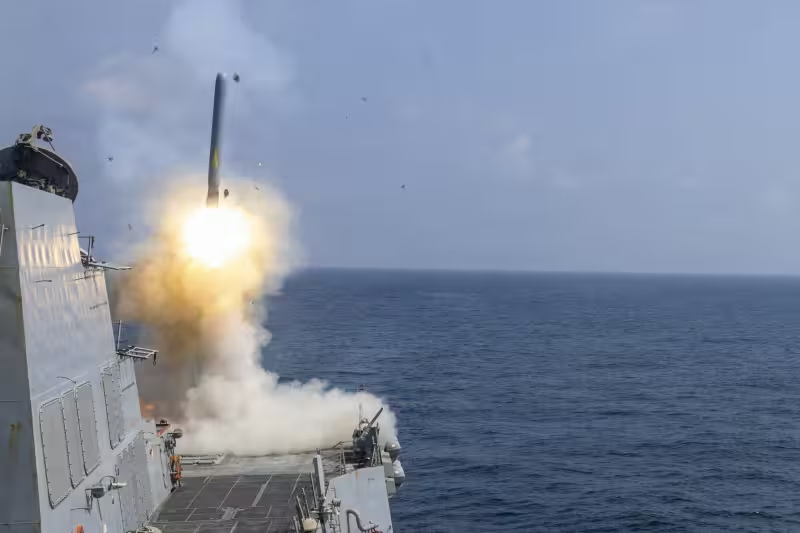
The United States has begun telling a number of allies and partners that expected weapons deliveries will be slowed so Washington can prioritize rebuilding its own munitions stockpiles.
The move, announced in recent weeks to affected governments, has sent shockwaves through defense communities in Europe and Asia and landed just after a presidential executive order in early February that elevated U.S. national production interests in arms sales. That order created a new list of platforms to promote and said countries that invest more in their own defense would receive priority; the administration has not yet rolled out the implementing changes.

Behind the pause is a clear operational explanation: high-rate munitions use during recent operations exhausted inventories. Operation Epic Fury saw U.S. forces launch more than 1,000 Tomahawk missiles and expend an estimated 1,060 to 1,430 Patriot rounds, and analysts say similar drawdowns occurred for SM-3, SM-6 and THAAD interceptors. A CSIS report warned returning to pre-war Tomahawk stocks could take until the 2030–2031 timeframe and that Patriot inventories may not recover until mid-2029.
At the same time Washington has approved foreign military sales cases at a brisk clip this year — a record pace of approvals that includes dozens of deals totaling tens of billions of dollars. State Department notifications this year have included 29 deals worth roughly $47 billion, underscoring a disconnect: approvals are flowing while deliveries are slowing.
The policy tension is obvious. "What we’re going to see is the inevitable tension between the administration’s stated desire to have our allies buy American and buy more … and likewise the need to put ourselves first to replenish stockpiles," said Tom Karako, capturing the tradeoff driving current decisions.


Practical consequences are immediate for partner militaries that have already committed funds and planned force structures around U.S. shipments. The administration’s decision to move some allies back down delivery queues fits a broader pattern of concern about reliability that has circulated among defense planners over the past year, even as analysts say there has yet to be any sense of a major shift away from buying American weapons.
Officials argue the slowdown is temporary and part of a larger industrial strategy: the administration is pursuing plans to ramp up production of 14 critical munitions over the coming years to reduce future shortages. But those production increases will not erase current gaps quickly; CSIS's return-timeline estimates make clear the shortfall endures for much of the next decade.
The immediate gap is practical and specific: which shipments are delayed, which customers are affected and when deliveries will resume remain largely unspecified. The administration has signaled priorities but has not published the rollout of the executive order’s new rules or a timetable for moving cases back into delivery. That leaves allied procurement offices managing budgeted purchases while awaiting firm logistics dates.
For readers tracking implications in Europe — including Germany — this policy turn adds uncertainty to defense planning already juggling readiness, procurement and budgeting; for context on life and policy in Germany, see related coverage such as Germany World Cup Squad: Neuer rested for Finland as Baumann to start and practical matters like Tax Filing Deadline nears for Americans in Germany as June 15 approaches Broader cultural pieces appear alongside security coverage, including commentary on media figures
The clearest unanswered question now is timing: when will the administration publish the final criteria from the early-February executive order and translate that guidance into firm delivery dates for allies whose programs have been slowed? Until that schedule is public, partner governments must plan for delayed shipments even as they continue to approve purchases and sustain force requirements.



