



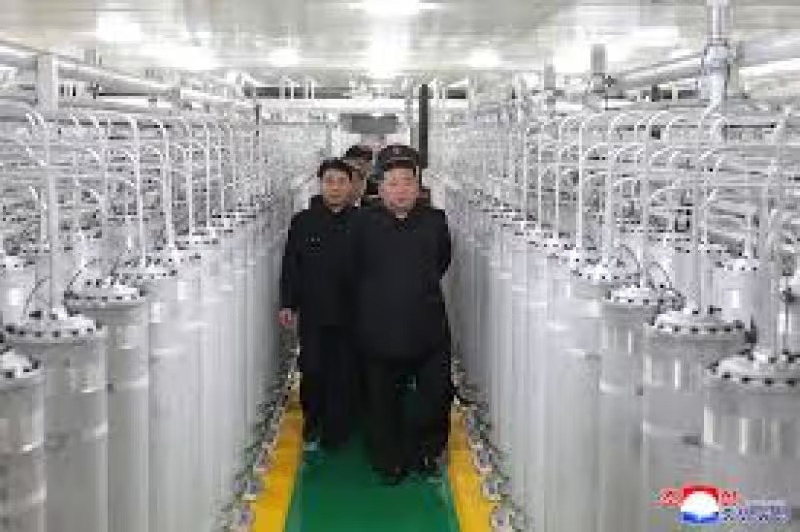
North Korea on Thursday publicly unveiled a new facility to produce nuclear bomb fuels, and Kim Jong Un said the country will bolster its nuclear forces "at an exponential rate."
State media released photos showing what appeared to be a large centrifuge hall and called the plant built with "more sophisticated technology." The facility is likely used to enrich weapons‑grade uranium, and KCNA said Kim visited the site on Wednesday to study its operation indices and a long‑term production plan.

Photographs published by state media showed Kim walking through narrow aisles lined with dense rows of silver tubes and pipes, and an image of him briefing senior officials over a blurred graphic laid across a table. Kim said "the urgency for bolstering up the country's nuclear war deterrent, both in quality and quantity, has grown because of confrontations with the most ferocious enemies," and cited other unspecified threats as reasons to fast‑track nuclear capability.
KCNA also reported Kim's claim that North Korea's weapons‑grade nuclear materials production capacity "has more than doubled compared with five years ago." After the visit, the agency said Kim and other top officials "confirmed the order of priority for implementing the ambitious future plan designed to beef up our state's nuclear forces at an exponential rate."
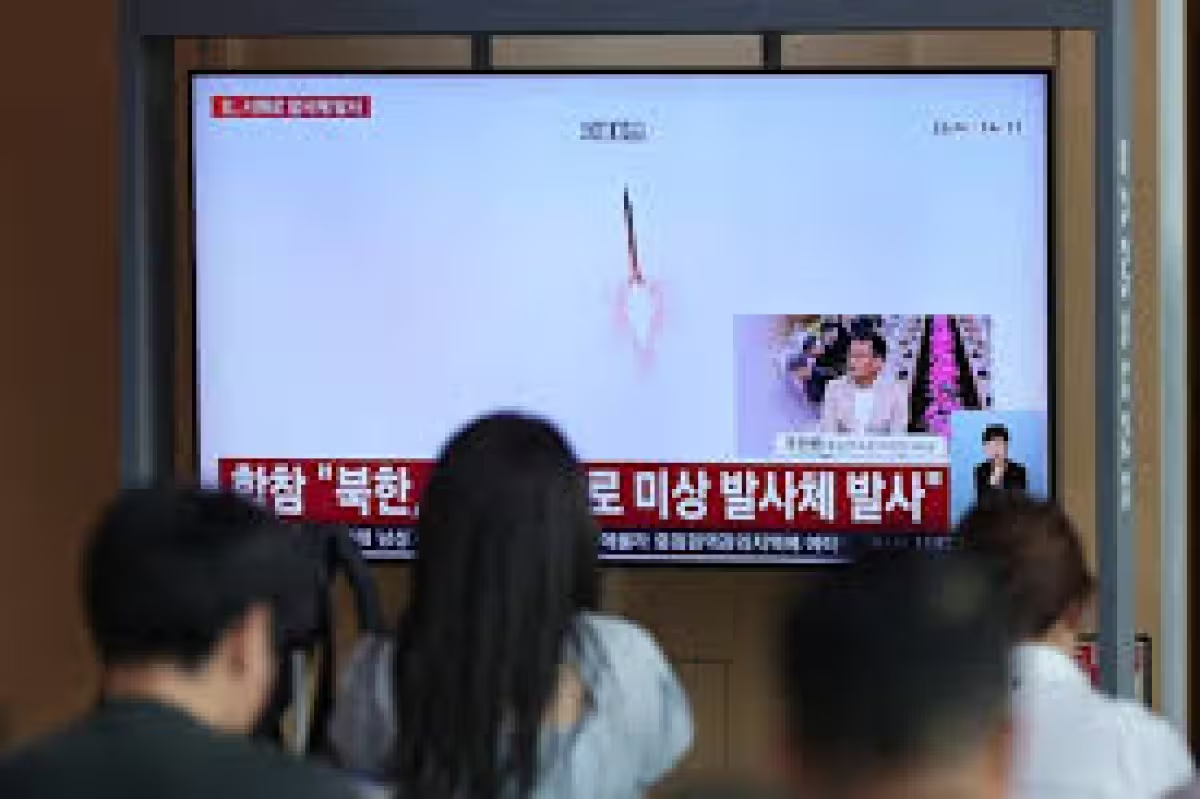
The disclosure arrives less than two years after North Korea unveiled another covert uranium‑enrichment plant in September 2024, and follows a broader, decade‑long effort to enlarge and modernize its arsenal since diplomacy with President Trump collapsed in 2019. South Korean officials have previously said Pyongyang was operating multiple enrichment sites, and the country already maintains facilities at Yongbyon capable of producing both highly enriched uranium and plutonium.
That official portrayal sits against clear gaps. KCNA did not disclose the facility's precise location or when it began operating, and Kim's production‑capacity claim cannot be independently verified from the images and statements released. In April, International Atomic Energy Agency Director General Rafael Grossi said his agency had confirmed a rapid increase in activities at North Korean nuclear facilities, but independent on‑the‑ground confirmation of the new plant's output and timeline is absent.
The immediate consequence of the public unveiling is straightforward: Pyongyang has signaled an intent to expand its ability to produce weapons‑grade material and has showcased infrastructure that state media says is more advanced. That combination of publicity and technical detail will complicate diplomatic efforts to limit or slow further expansion, because disclosure may be intended as both domestic demonstration and external warning.
KCNA's account says officials set priorities for a sweeping build‑out, but the government offered no public schedule for the plan's next milestones. The most consequential unanswered fact remains the facility's precise location and when it entered service — information that would determine how quickly the plant can add to North Korea's nuclear materials stockpiles and how external monitors might detect and measure that output.



