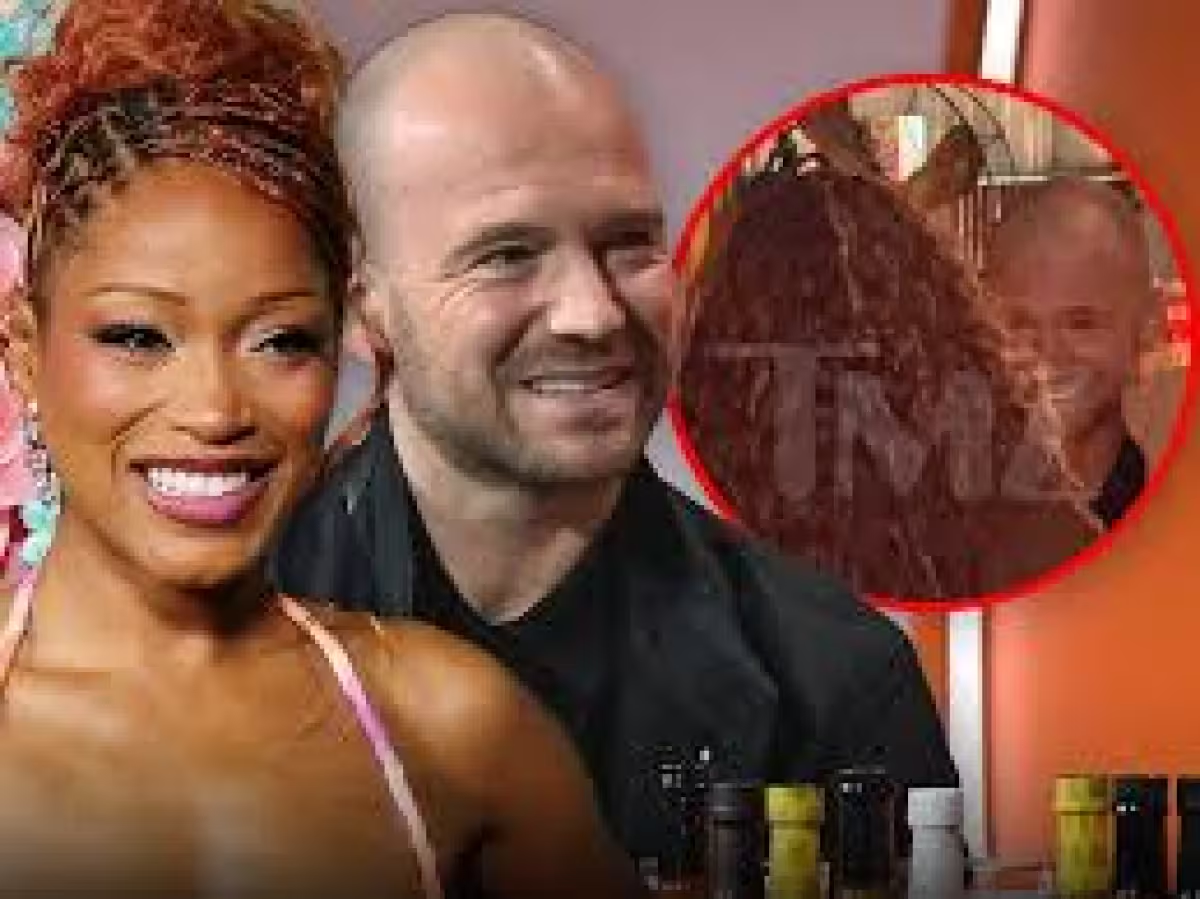
Keke Palmer plays Corvette in Boots Riley’s new film I Love Boosters, a story about an Oakland design aspirant who runs an all-female shoplifting crew that hits high-end San Francisco stores. Boots Riley has been talking about the film’s blunt thesis: theft is not a peripheral crime but a symptom of the economic system that produced it.
Palmer’s Corvette is a sharp, fashion-obsessed design aspirant who squats inside an abandoned fried chicken shack and is haunted by a 13ft-tall literal boulder of debt. She leads the Velvet Gang — an all-female shoplifting crew that funnels the stolen goods back to Corvette’s working-class Oakland community. On screen, the thefts are choreographed as both survival and style: high-end boutiques in the Bay Area are the targets, and the goods circulate back into neighborhoods stripped by precarity.

That circulation is the weight of Riley’s argument. The director, who described himself plainly — “I’m a communist,” — tells the story through characters rather than manifestos, and he speaks for the film offscreen as well. “Theft is not outside of capitalism; it’s what capitalism was built on – and not even, like, metaphorically,” he said, framing the Velvet Gang’s crimes as historically and economically legible actions rather than mere moral failings.
Riley links his fiction to a specific, messy reality. He pointed to a Walgreens in the Bay Area as an example: the chain publicly said shoplifting was forcing some closures and restructures, he noted, and then a later recording showed executives telling shareholders that shoplifting had nothing to do with those decisions. “We found a clear example of that here with [Walgreens] in the Bay Area saying shoplifting was causing them to close and restructure – and then a recording of [executives] telling shareholders that, really, shoplifting had nothing to do with it,” Riley said, and he added, “I don’t buy the idea that retailers have to raise their profits because of shoplifting; they’re just using it as an excuse.”
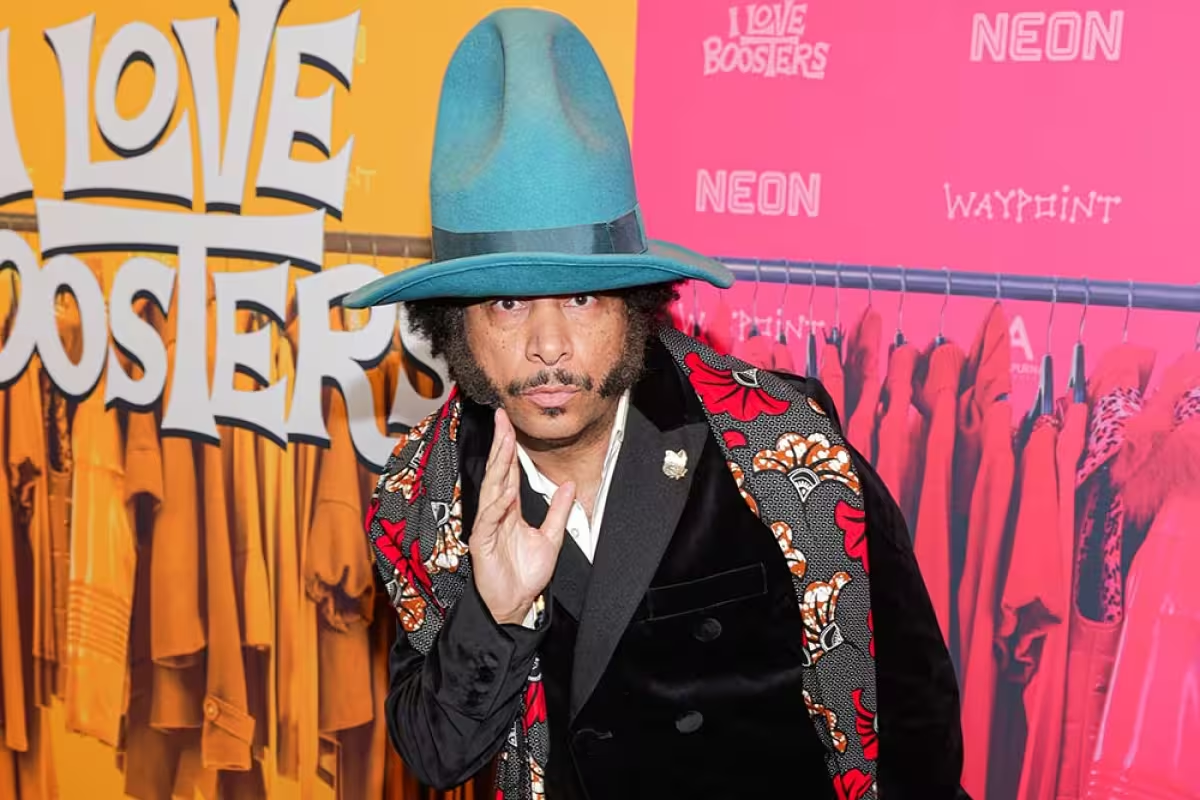

The film stages that claim dramatically. Demi Moore plays Christy Smith, a haute couturier who treats fashion as a form of population control and declares war on the Velvet Gang. The collision between Smith and Corvette is literal and ideological: couture as gatekeeping versus theft as redistribution. Riley widens the frame with surreal touches — a Chinese factory worker played by Poppy Liu teleports into the situation, and Don Cheadle appears in a fat suit — that keep the film from reading as straight realism and push its critique toward fable.
Context matters: I Love Boosters follows Riley’s 2018 film Sorry to Bother You, and both films use satire and surrealism to examine labor, value and power. In Riley’s view the new film continues that line of inquiry by asking who gets to define theft and who gets to profit from its criminalization.
The tension in I Love Boosters is not merely stylistic. The film asks viewers to confront a messy discord between public rhetoric and private accounting: retailers and executives may invoke shoplifting to justify policies and closures, while the documents and recordings behind closed doors tell a different story. That gap is the moral knot of the movie — and the friction the narrative returns to again and again.
Riley’s answer is unapologetic. By placing Keke Palmer at the center — a woman who lives in debt and in a city where the products she covets are kept behind velvet ropes — the film argues that theft, when seen in context, reads less like an aberration than like another outcome of a system that markets desire and hoards access. If I Love Boosters asks whether shoplifting can ever be humane, it answers by dramatizing the conditions that make it inevitable and by forcing audiences to decide which side they call criminal.