

























Trump gets his Board Of Peace, even as bigger countries steer clear

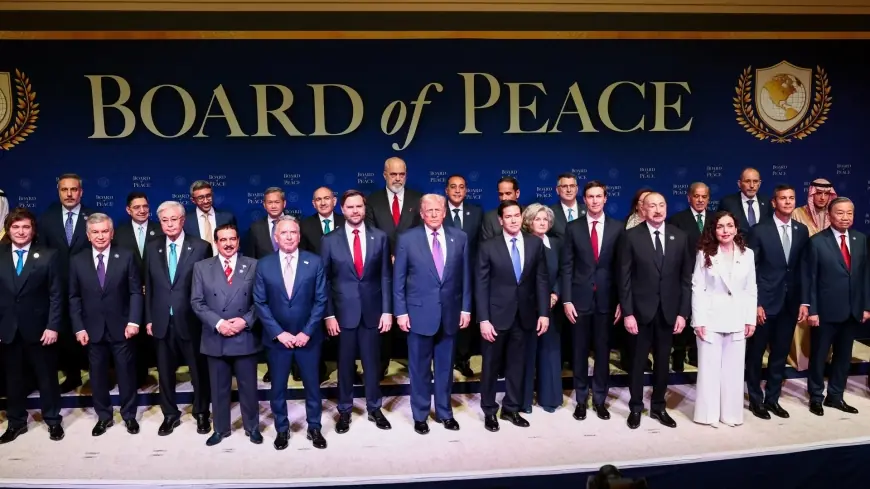
President Trump emceed the inaugural meeting of his new international body in Washington, presenting the Board Of Peace as a vehicle for reconstruction and diplomacy. Members at the first session expressed optimism about peace and rebuilding in Gaza, but the board of peace faces immediate questions about funding, membership and how it will handle unresolved challenges in the enclave.
Board Of Peace faces its first test on Gaza
The gathering put Gaza squarely at the center of the Board Of Peace’s first public test. Delegates and members expressed optimism about prospects for rebuilding and peace in the territory, and a series of multibillion-dollar pledges were announced at the session. Nonetheless, doubts remain about the board of peace’s capacity to address the enclave’s unresolved issues, including how pledged funds will be sourced and governed.
The president announced a pledge that the United States would provide $10 billion in aid for Gaza; there was no clear explanation at the meeting for where that money would come from or whether it had congressional approval, and White House officials did not respond to requests for comment on those points. Other nations also pledged aid, but specific implementation plans and timelines were not established at the inaugural gathering.
Inaugural meeting, membership rules and notable absences
The Board Of Peace convened its first session in Washington; the event doubled as a showcase for the new body and for its founder. The initiative was presented as a new international organization created and overseen by the president. One novel feature announced at the meeting was a financial path to permanence: nations willing to contribute $1 billion could purchase a permanent seat on the board.
Attendance illustrated a clear split in global response. Several countries accepted invitations to join the board, including Morocco, Egypt, Israel, Saudi Arabia, Turkey, Belarus, Kazakhstan, Mongolia, Pakistan, Indonesia and Vietnam. The meeting also noted participation or recognition of other leaders, with specific mention of the prime minister of Albania and the Argentine leader. At the same time, longstanding U. S. partners from Britain, France, Canada, Germany, Norway and other traditional allies did not attend the inaugural gathering.
Unorthodox tone and strategic signals at the launch
Observers at the meeting described a highly unconventional event for an international forum. The session blended policy announcements and pledges with political theater, and the president used the platform to deliver a wide-ranging set of remarks. The meeting’s tone, combined with concurrent moves of military hardware near a separate regional adversary, underscored a mix of diplomacy and coercive signaling that will shape early perceptions of the new body.
Operational details were thin. Delegates left the inaugural session with financial pledges on the table but without agreed mechanisms for accountability, oversight or dispute resolution. That combination—big pledges, limited structures and notable absences among major allies—frames the immediate challenge for the Board Of Peace: turning headline commitments into coherent, accountable action while persuading skeptical partners to engage.
What comes next
Expect the board’s next steps to focus on fleshing out governance, funding clarity and operational plans for Gaza reconstruction. Given outstanding questions about where major pledges will be sourced and how they will be vetted, details may evolve as participants try to convert pledges into deliverable programs. Recent developments indicate a high-profile launch but leave open whether the Board Of Peace can translate that launch into sustained, broadly supported international cooperation.