





















Mens Curling Final: Britain Reach Gold-Medal Match After Mouat’s Run-Back Masterstroke

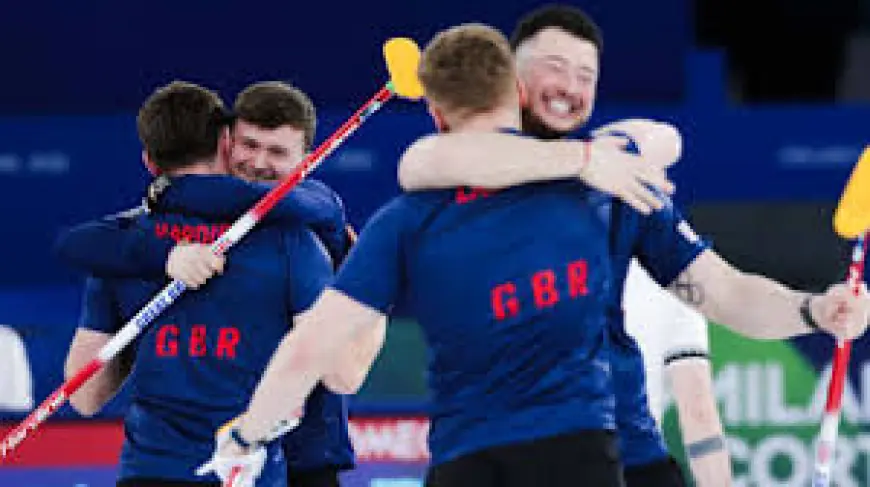
Great Britain advanced to the mens curling final with an 8-5 semi-final victory over Switzerland, setting up a gold-medal match against Canada on Saturday. The result mattered immediately: a single spectacular shot by Bruce Mouat and a crucial late rally turned a tense contest into a guarantee of at least a silver for the British quartet.
Mens Curling Final: What happened and what’s new
The British men edged the Swiss 8-5 to secure a place in the championship game against Canada. The match shifted decisively in the sixth and seventh ends: Britain stole the sixth when Switzerland missed a hammer opportunity, then Mouat executed a highly difficult run-back triple takeout in the seventh that deprived Switzerland of a multi-point return and instead left them needing just a draw to score one.
Britain converted the momentum with two points in the subsequent end to move ahead 6-5 going into the 10th. The Swiss squad had entered the knockout stage unbeaten in the round robin and had been guided by an experienced coach, making the victory a notable upset in the elimination phase. The British progression owed something to the narrow margins of the group stage as well: qualification into the semis owed in part to a late group-stage result that helped Britain through the round-robin standings.
The match drew a lively arena atmosphere, amplified by a large cohort of Scottish supporters whose singing, bagpipes and unconventional instruments contributed to the feel of the contest. The semi-final outcome sends the British team, who carried a previous Olympic silver as a benchmark, into a single-match decider for gold.
Behind the headline
The four players at the heart of this run – Bruce Mouat, Grant Hardie, Hammy McMillan and Bobby Lammie – have been an established unit for several years and explicitly set Olympic gold among their goals when they formed. Since the prior Games they have accumulated multiple top-level victories, including world and continental titles and a strong record on the professional circuit, creating expectations that they could convert prior podium finishes into the top prize.
That track record was tempered during the current tournament by a shaky round-robin phase that left their knockout fate uncertain until late in the group stage. The semi-final win therefore represents both a performance peak at the most consequential moment and a rescue from earlier tournament inconsistency.
Key stakeholders include the four players whose reputations and careers are on the line, the Canadian opponents who will contest gold, and national audiences whose interest has been demonstrated by peak viewership figures. Coaching, ice conditions and the psychological momentum generated by the crowd are immediate levers that will shape the final.
What we still don’t know
- The final score of the gold-medal match and which team will claim Olympic gold remain unknown.
- The precise strategies and lineup decisions each side will employ in the final are not yet disclosed.
- How the Swiss will respond in subsequent tournaments after their first loss of the event is unconfirmed.
- Whether the British team can replicate the precise shot-making and momentum shifts under final pressure is still to be seen.
What happens next
- Britain wins gold: the quartet converts late-tournament momentum into victory in the Mens Curling Final, ending a long-standing national drought for the top prize.
- Canada wins gold: the final favors the Canadian side, leaving Britain with an upgraded medal from prior Games but short of the top spot.
- Close, decided late: the match remains tight through the final ends and is decided by a single late scoring swing or an extra-end finish.
- Strategic battle: either side adjusts tactics dramatically, prioritizing defensive placement or aggressive takeouts, with those choices determining the margin.
Why it matters
The outcome will reshape narratives around legacy and momentum for all involved. For the British quartet, a gold would validate a concentrated team strategy and a period of sustained success that included world and continental titles; it would also fulfill an explicitly stated objective the group set for themselves when they formed. For rivals, the result will influence rankings, prestige and future event dynamics.
At a public level, the semi-final drew significant attention and large audiences, underscoring curling’s heightened visibility in the current Games. Beyond medals, the match highlighted the decisive role of single moments—an extraordinary shot, a missed hammer, a stolen end—and how those moments can swing entire tournament trajectories.
The mens curling final now provides a clear focal point: one match will determine whether a familiar and successful quartet completes a long-held ambition or whether their nearest challengers will take the sport’s highest prize.