























Illinois Judge Sues Supreme Court Justices, Saying Removal Was Political and Unconstitutional

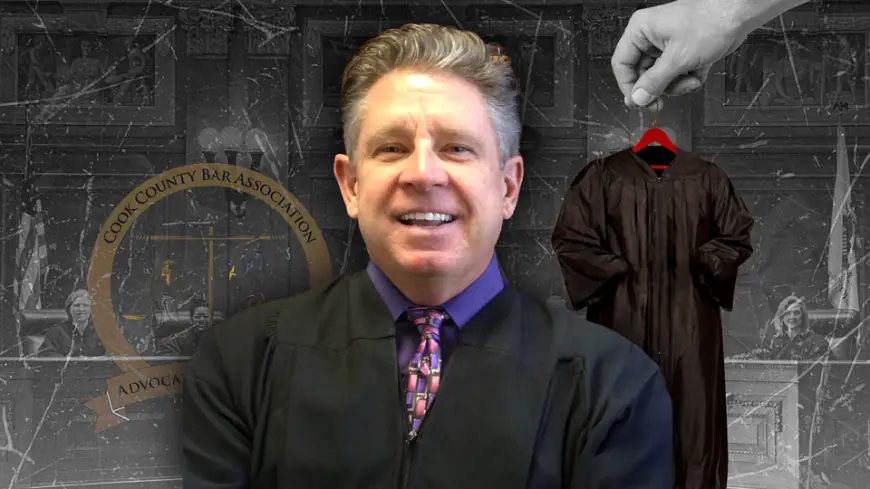
What’s new: A retired Cook County judge has brought a federal lawsuit accusing the state’s supreme court justices of removing him from a recall appointment in retaliation for speech he made as a private citizen. The case challenges the grounds and procedures used to vacate his assignment and seeks restoration and damages.
What happened and what’s new: Supreme Court Justices' removal challenged
Judge James R. Brown, a former Cook County Circuit Court judge, filed a federal civil rights complaint in the U. S. District Court for the Northern District of Illinois alleging that the Illinois supreme court justices removed him from a judicial recall appointment because of his public commentary. In a filing, the complaint says Brown had been recalled to the Cook County bench in December 2025 to address vacancies and that his appointment was revoked roughly six weeks later without notice, a hearing, or other procedural protections.
The complaint contends the revocation followed objections from two bar groups who raised concerns about an opinion column and a podcast appearance Brown made while he was retired and acting as a private citizen. Brown’s writings criticized what he characterized as the political use of the legal system directed at a former U. S. president; the lawsuit asserts those expressions prompted the court’s action. The filing further alleges that the court issued an unsigned statement that acknowledged speech was the motivation for vacating Brown’s appointment.
The litigation, brought by an advocacy organization on Brown’s behalf, asks the federal court to restore him to the recall position for the remainder of the assignment, to declare that the justices’ actions violated the U. S. Constitution, and to award damages for economic and reputational harm. The complaint names the justices and the court’s decision to vacate the appointment as central defendants and acts.
Behind the headline
Context: The lawsuit frames the core dispute as a collision between judicial appointment authority and constitutional protections for speech and due process. The complaint cites the Illinois Constitution’s limits on how sitting judges may be removed—specifically invoking impeachment and proceedings by the Illinois Courts Commission—and contends those procedures were not followed in this case. The filing characterizes the court’s unilateral action as an overreach that applied judicial conduct rules to a retired judge acting as a private citizen.
Incentives and stakeholders: The plaintiff seeks immediate reinstatement and compensatory relief; the recall system for filling vacancies is implicated; bar organizations that objected to Brown’s speech are identified as the instigating actors in the complaint. The Illinois supreme court justices hold the formal power to appoint and vacate recall assignments and therefore occupy decisive leverage in both the operational status of the recall program and the legal defenses they will mount in response to constitutional claims.
What we still don’t know
- Whether the court will defend the vacatur by citing a specific breach of judicial conduct rules in the appointment context.
- The timing and content of the court’s unsigned statement beyond the complaint’s characterization that speech motivated the removal.
- Whether the Illinois Courts Commission or another state body has opened any parallel inquiry into the removal process.
- How the federal district court will evaluate the interplay between state judicial appointment authority and federal constitutional claims in this posture.
What happens next
- Litigation proceeds in federal court: the district court could permit discovery and move toward motions on whether the plaintiff’s constitutional claims may proceed.
- Settlement or reinstatement: the parties could negotiate restoration of the recall appointment and monetary relief as an alternative to protracted litigation.
- Dismissal on jurisdictional or procedural grounds: the court might determine that state remedies or state procedures must be exhausted before resolving federal claims.
- Parallel state action: the Illinois Courts Commission or another state body could initiate or disclose separate proceedings affecting the underlying removal question.
Why it matters
The case raises immediate questions about the limits of judicial appointment and removal authority when speech by a retired judge is at issue, and it presses constitutional claims of First and Fourteenth Amendment import into the recall process. Near-term implications include potential disruption to how courts staff overflow or vacancy needs and the boundaries on disciplining or removing judges who speak publicly as private citizens. For the parties, the outcome will determine whether the recall appointment system can be used without heightened risk that public commentary will trigger unilateral vacatur, and whether the federal courts will be a venue for adjudicating such disputes.