



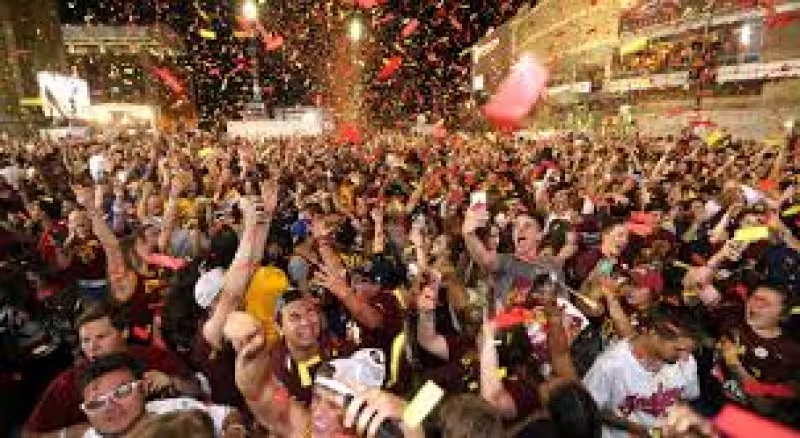
LeBron James spent a few days back with the Cleveland Cavaliers in Europe as the 2016 championship team gathered for a luxurious vacation to mark the 10-year anniversary of their NBA Finals victory.
The reunion was plainly a celebration: former teammates flew to Europe, shared time away from schedules and cameras, and carried the specific purpose of commemorating a title won in 2016. The trip brought the moment’s weight into relief — a decade has passed since that season, and the players chose a private, celebratory setting rather than a public ceremony.

The detail that matters most is LeBron’s brevity. He returned to the group only for a few days, a short stopover that underlined the reunion’s sentimental intent instead of suggesting any professional recalibration. That choice — to appear briefly — framed the gathering as a personal reconnection rather than a public relaunch of anything tied to the Cavs’ present roster or operations.
For readers tracking the individuals behind that 2016 team, the trip re-centers names like Kevin Love alongside James. Their presence together in Europe worked as a reminder that the championship was a shared moment whose meaning still draws the players back together, even as their lives and careers have moved on in different directions over ten years.
Context matters here: the reunion is explicitly about the Cavaliers’ 2016 NBA Finals title and the anniversary it represents. The players treated the trip as a private vacation, choosing Europe as a backdrop for reflection and companionship rather than a staged media event. That helps explain why LeBron’s appearance was measured and time-limited; the purpose was memory and camaraderie, not headlines.
The gathering also contains an obvious friction: a re-emergence of LeBron in Cavaliers company naturally prompts speculation about a return to the team, but the facts undercut that idea. His stay lasted only a few days. This was not a roster move, a public appearance tied to the franchise’s current plans, or a sign that any of the players are changing professional directions. The reunion’s design — private, short, and celebratory — separates sentiment from organizational intent.
Another gap remains: the public record of who else joined the trip is incomplete. Reports make clear the 2016 squad reunited for a European vacation, but which former teammates participated, how long each stayed, and whether the party included off-court events open to fans or partners has not been detailed. That absence keeps the reunion on the level of private memory rather than public spectacle.
The most consequential takeaway is straightforward. The 2016 Cavaliers treated their 10-year milestone like a family reunion, and LeBron’s short return emphasized that the gathering was about people and the moment they shared, not signals about the present-day NBA or Cleveland’s roster. If anything emerges next — a larger commemorative tour, a reunion game, or public appearances — it will have to be announced by the group; for now the European vacation stands on its own as a private, decade-marking celebration.



