



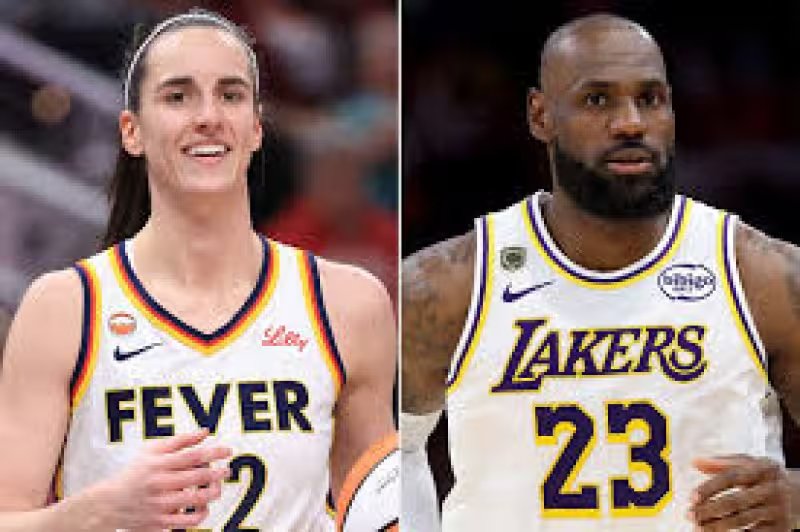
Caitlin Clark has officially moved ahead of LeBron James in basketball jersey sales, the sales chart tracking purchases since 2024 shows — leaving her only behind Stephen Curry on that list.
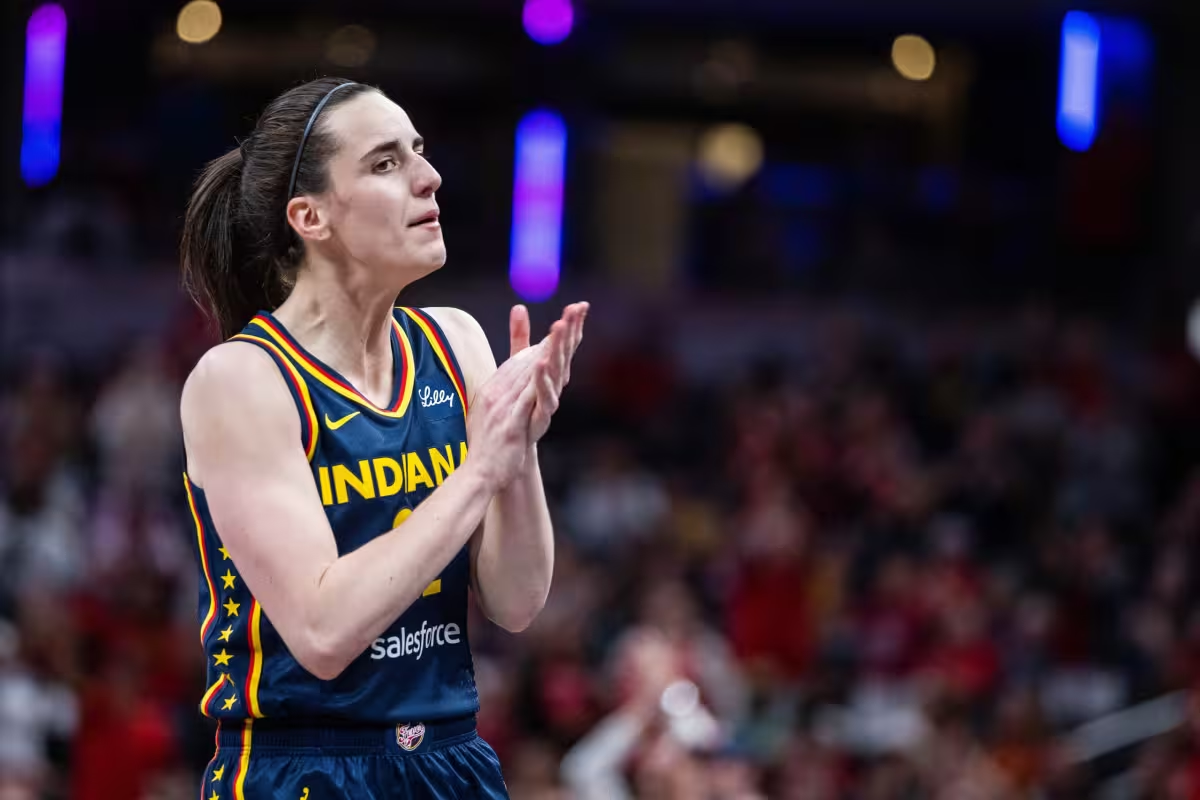
The shift matters not as a novelty but as proof that Clark’s commercial pull has translated into real consumer behavior: she is now listed at No. 2 in sales, with only Curry selling more jerseys since the chart began counting in 2024. Clark entered the WNBA that year as the first overall pick out of the University of Iowa, selected by the Indiana Fever, and she is just 24 years old. The same retail data that counts jerseys also showed fans overwhelmingly spending money on Clark even as other promotional choices suggested the league was not centering her.

Those numbers sit beside two other facts that underline the scale: Clark was named Athlete of the Year by Time shortly after her historic rookie season, and the league’s own promotional decisions have prompted backlash. On May 17, 2026, the WNBA posted a hype graphic previewing a Fever-Storm matchup that featured Seattle’s Zia Cooke and Indiana rookie backup guard Raven Johnson — and did not include Clark. Fanatics retail data, however, showed fans continued to buy Clark’s jerseys in volumes that outpaced long-established stars.
The contrast between fan behavior and league marketing is stark. Clark’s arrival in 2024 vaulted her into the center of public attention; the jersey ranking presents that commercial ascendancy as extending beyond WNBA fandom into a broader sports marketplace. The ledger also places her ahead of LeBron James, who began his career in 2003 after being drafted by the Cleveland Cavaliers, while Stephen Curry — who entered the NBA in 2009 with the Golden State Warriors — remains the only player selling more jerseys than Clark on the chart.
That gap between fans and promotion is the story’s friction. Supporters pointed to the omission and to history: they argued that a player who drives ticket demand and retail sales would typically be the face of team promos. Some observers compared the situation to how major stars in the past were always featured on game graphics, suggesting past superstars were never left out of team marketing. Critics said the contrast is not merely symbolic, noting Clark’s ability to move merchandise and draw attention — figures that have been connected to spikes in ticket interest reported as dramatically higher for games featuring her.
The practical consequence is immediate. Retail data now gives Clark leverage that most rookies never enjoy: measurable, league-wide spending on her name and likeness. That kind of consumer behavior forces a choice for teams and the league — either align marketing with where fans are spending, or continue a strategy that risks appearing misaligned with the marketplace. The WNBA’s decision to run a promo without Clark, and the subsequent sales figures, crystallize that choice.
This is not a long-term forecast as much as a present reality. The jersey chart records sales only since 2024, but in that window Clark has outpaced a generation of established stars in jersey purchases. That fact, and her Time recognition, show she has already become one of the faces of the WNBA. The league can treat that as an opportunity — to amplify the player driving attention — or as a tension to be managed; the sales data makes clear which option most fans have already chosen with their wallets.
For now, the simplest conclusion is this: the marketplace has decided Caitlin Clark matters commercially in ways the league’s recent graphics did not acknowledge, and that mismatch will shape how teams and the WNBA sell games, jerseys and the sport in the weeks and months ahead.



