




Croatia’s 2026 World Cup setup is built around Luka Modric and an experienced core, with manager Zlatko Dalic opting to lean back toward a four-man defence after experiments earlier this year.
The practical outline is set: Croatia open against England in Dallas on 17 June, meet Panama in Toronto on 23 June and finish the group against Ghana in Philadelphia on 27 June.

Dalic used qualifying to deepen his pool and test options, then tried a three-at-the-back in March friendlies — beating Colombia 2-1 and losing 1-3 to Brazil — but has bluntly closed that chapter: “I will never try to play with three at the back again.” The manager is now inclined to set up in either a 4-3-3 or a 4-2-3-1 for the tournament, returning to the familiar back four that produced recent results.
The spine of the squad combines returning starters and veteran leaders. Josko Gvardiol and Mateo Kovacic have come back from injury and are listed as central to the team’s plans; Dalic’s selection increasingly relies on those recoveries. Luka Modric, now 40, remains the focal point — he scored his 29th international goal in a warm-up against Slovenia and should surpass the 200-cap mark in North America.

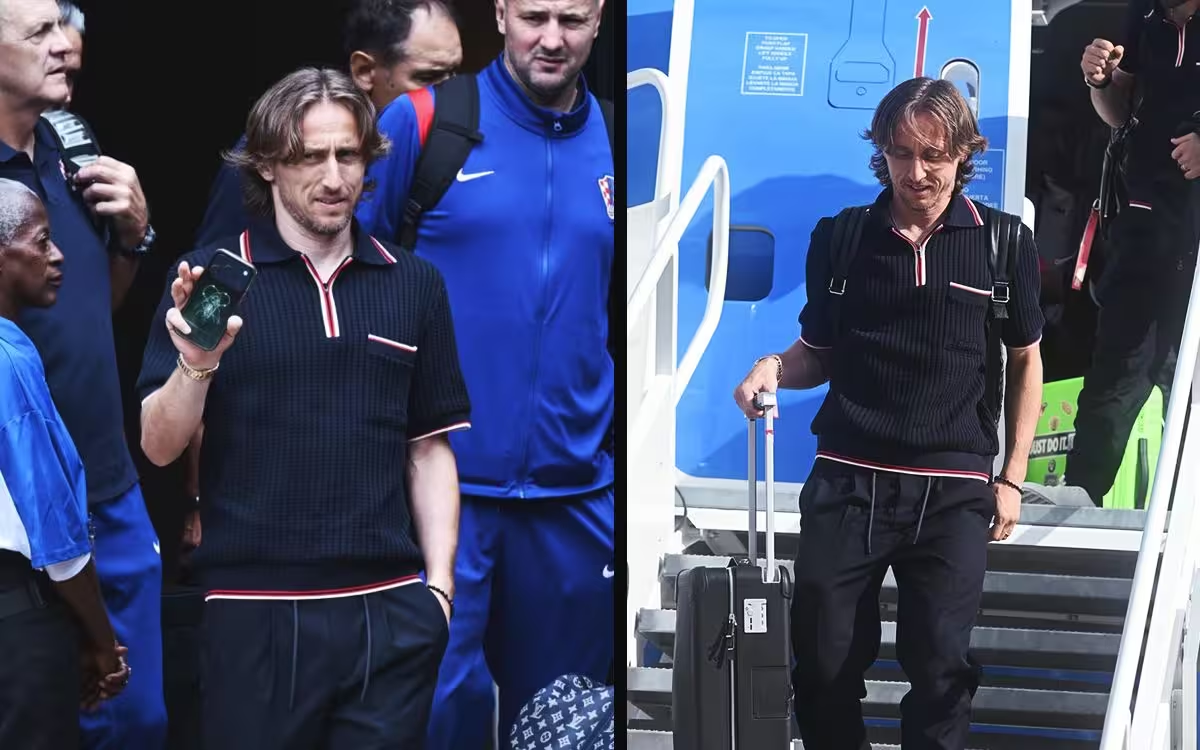
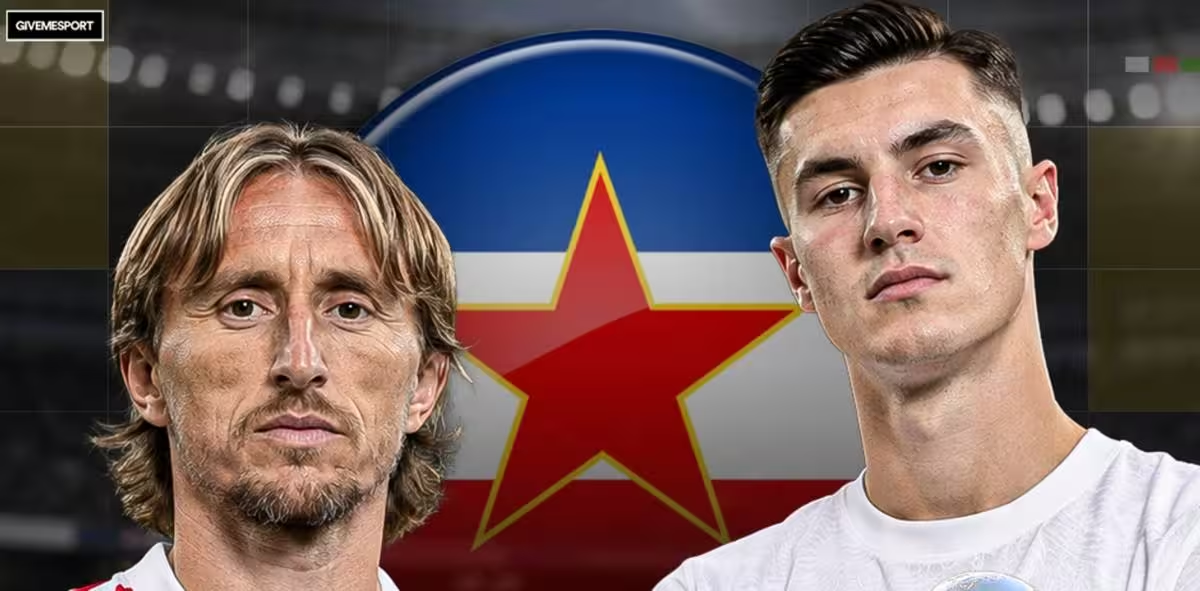
The age profile is notable: roughly half or more of Croatia’s likely starters are into their 30s. Kovacic is 32, Ivan Perisic is 37 and Andrej Kramaric is turning 35. That experience is the squad’s strength and its principal vulnerability: a generation that delivered a second-place finish in 2018 and third place in 2022 now carries the load again.
Qualifying itself was efficient. Croatia qualified with relative ease, sealing top spot last November after beating the Faroe Islands with one match to spare; Czechia was the only opponent to take at least a draw from them. Dalic used those matches both to qualify and to probe tactical options, widening the bench ahead of the tournament.
Dalic’s position and contract add another subplot. He is in his ninth year as Croatia manager and this will be his third World Cup in charge; his contract ends with this tournament. He has pushed back on external pressure — “Leave me in peace to do my job,” he has said — and warned he will not sign an extension if forced to decide prematurely.
On balance, tactical clarity and returning key players are the immediate practical takeaways for anyone tracking the croatia roster: expect a back four, expect Modric to orchestrate the midfield, and expect Kovacic and Gvardiol — fit again — to shoulder important minutes. The bench will be relied on for the minutes those veterans cannot sustain over a long tournament.
The open question ahead of the opening match in Dallas is stark: can an older, battle-tested Croatia repeat its recent deep runs when half its starting XI sit in their 30s? How Dalic manages minutes, and whether the recovered Gvardiol and Kovacic hold up, will decide if this is one last, credible charge or a passing of the guard that falls short.



