



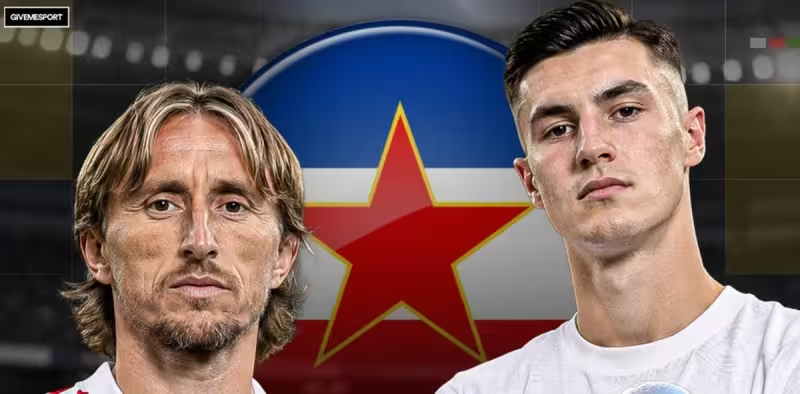
GiveMeSport published a thought experiment this week imagining a modern-day Yugoslavia squad for the 2026 World Cup — a single team built from players now eligible for the national sides of Croatia, Slovenia, North Macedonia, Montenegro, Serbia and Bosnia and Herzegovina.
The exercise names clear pillars. Atletico Madrid’s Jan Oblak would almost certainly be the number one goalkeeper, with Torino’s Vanja Milinkovic-Savic offering stiff competition and Valencia’s Stole Dimitrievski slotted as third choice. At the back the imagined roster includes Josko Gvardiol and centre-back options such as Strahinja Pavlovic and Nikola Milenkovic, while Josip Stanisic — who has been capped 29 times for Croatia — is also listed among the defensive options.

That roster construction is meant to prove a point: taken together, the successor states of the former Yugoslavia supply elite talent across every position. The timing matters because the 2026 World Cup is on the horizon, and the piece frames current club form against the international stage to show how a combined pool might stack up in North America.

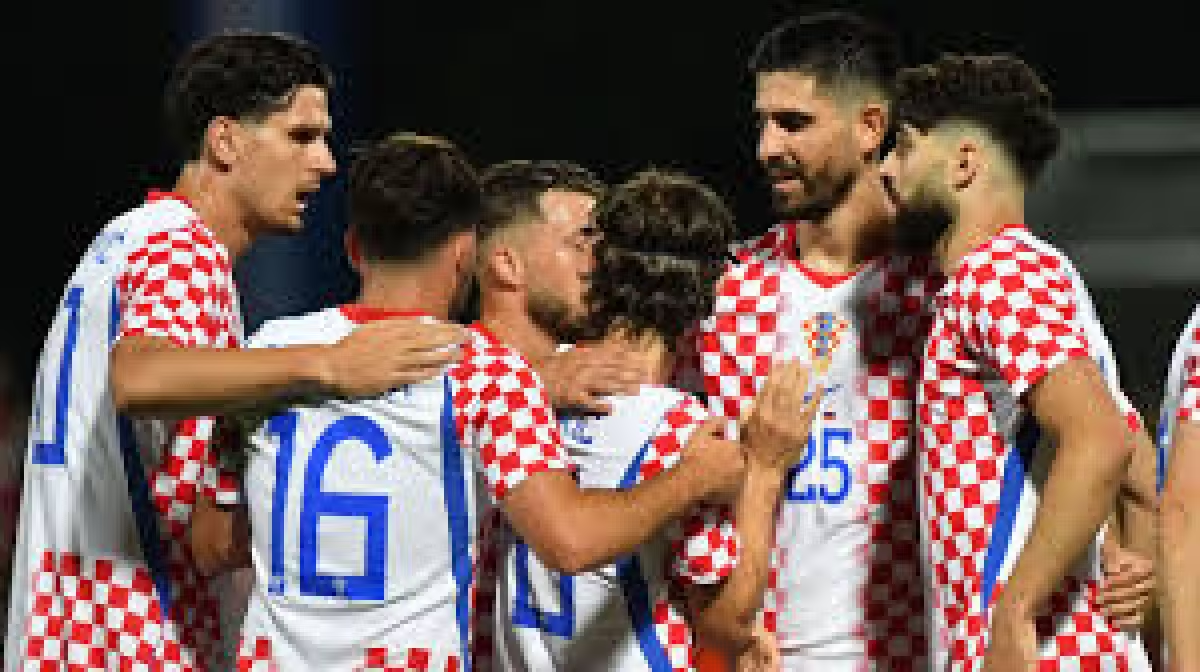
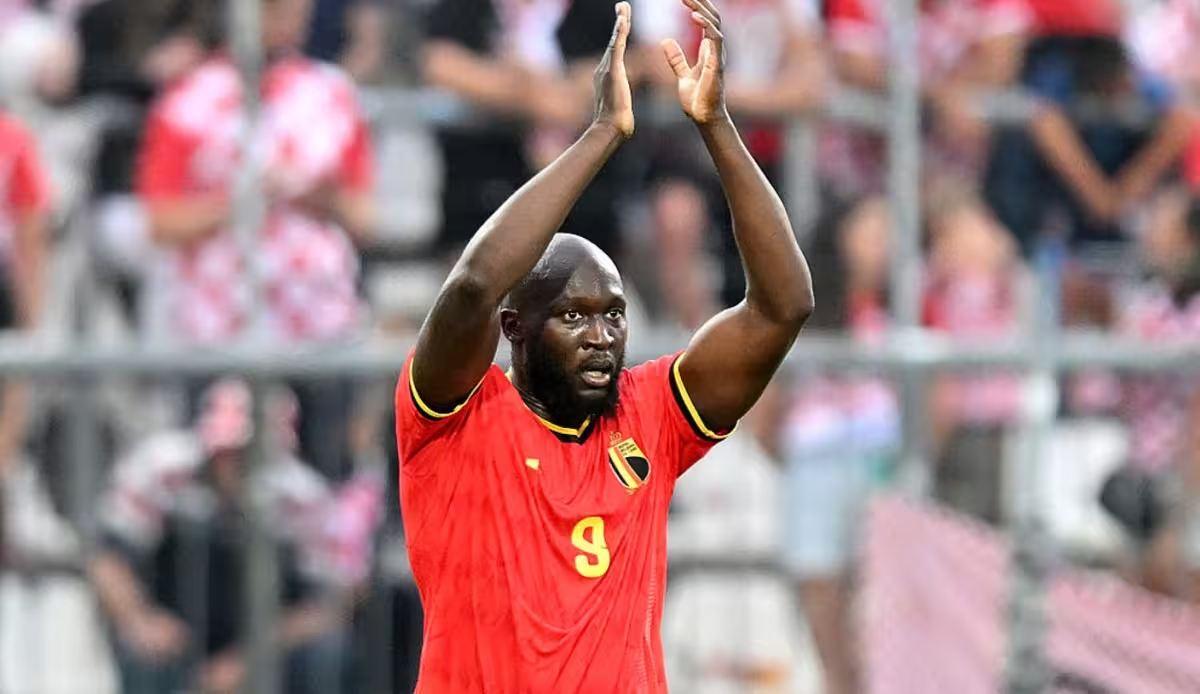
The background the exercise uses is familiar to football fans. A Yugoslav side reached the quarter-finals at the 1990 World Cup in Italy, only to be eliminated on penalties by reigning champions Argentina. By 1998 the Federal Republic of Yugoslavia appeared at the finals in France with a squad that included Savo Milosevic, Predrag Mijatovic, Sinisa Mihajlovic and Dejan Stankovic; that team escaped Group F level on points with Germany, beat the United States and then lost narrowly to the Netherlands in the Round of 16. Meanwhile, Croatia and Slovenia had already declared independence in 1991 and were competing as separate nations by 1998 — Croatia famously finished third that year and Davor Suker won the Golden Boot.
That last fact creates the central friction in the idea. The hypothetical recombines players from states that broke away in 1991 — including Croatia and Slovenia, which had their own squads at the 1998 finals — into a single 26-player roster for 2026. The thought experiment therefore collapses decades of new national identities into a single selection problem: who would make the cut, and which national loyalties would be reset on the pitch?
On paper the squad is defensively solid and well stocked in goal, but the exercise leaves practical questions unanswered. GiveMeSport’s outline names core members and positions, yet the full 26-player list was not completed in the version provided. The piece does not attempt to map coaching, selection rules or eligibility across modern FIFA regulations — it remains an illustrative roster, not a proposal for a competing national side.
What matters next is straightforward and unresolved: the missing final roster and the mechanics of assembling such a team. For readers curious which current stars would form that starting XI, the named players show how deep the talent pool is; for anyone wondering whether such a team could actually appear at the World Cup, the exercise exposes the gap between tempting on-paper strength and the complex reality of separate national teams, selection and eligibility. The takeaway is plain — when you group the successor states’ best players together, you get a squad that, on paper, could be a major force at a World Cup, but the exact 26 and how they would be organised remain unanswered.



