



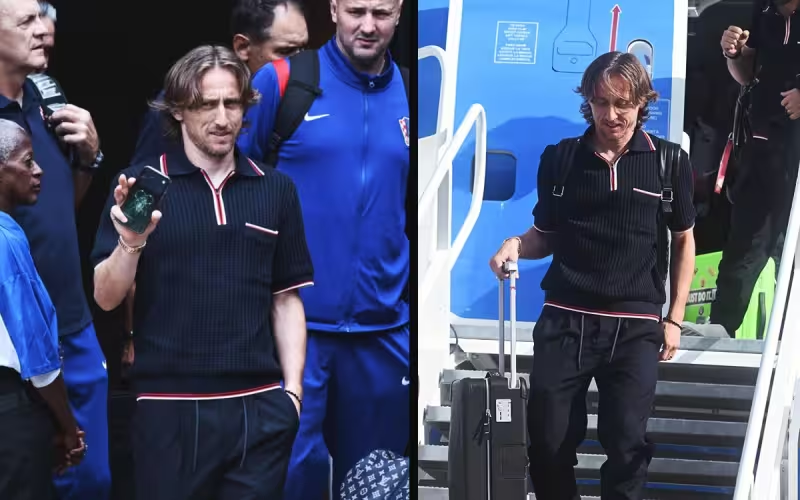
When Croatian reporters asked Luka Modric about his playing future, he declined to give an answer and said, "I’m focused exclusively on the tournament because I want to help the team in the best way possible."
Those words were short and deliberate. They also left a practical question unanswered: Modric remains an AC Milan player, but his contract runs out at the end of the month, and club and country now face the same deadline — a public decision that has not been made. Matteo Moretto said a decision on Modric’s future has not been made yet, and people involved with the situation confirm that what happens next will come after the tournament rather than before it.

The immediate weight of Modric’s refusal is simple and timely. He arrived at the tournament as a contracted player; by the end of the month he will not be, unless a deal is struck. Before the competition began, he had been willing to renew with AC Milan. Today he would not confirm whether that willingness still stands. That combination — contract expiry plus a public refusal to answer — turns a routine press exchange into a news event.
Context matters here, and it comes after the development: Modric is competing at a major international tournament that he has said deserves his undivided attention. Previous coverage noted he heads to a fifth World Cup; he chose to keep the conversation strictly about the squad and its immediate needs rather than about his employment status or life after football.

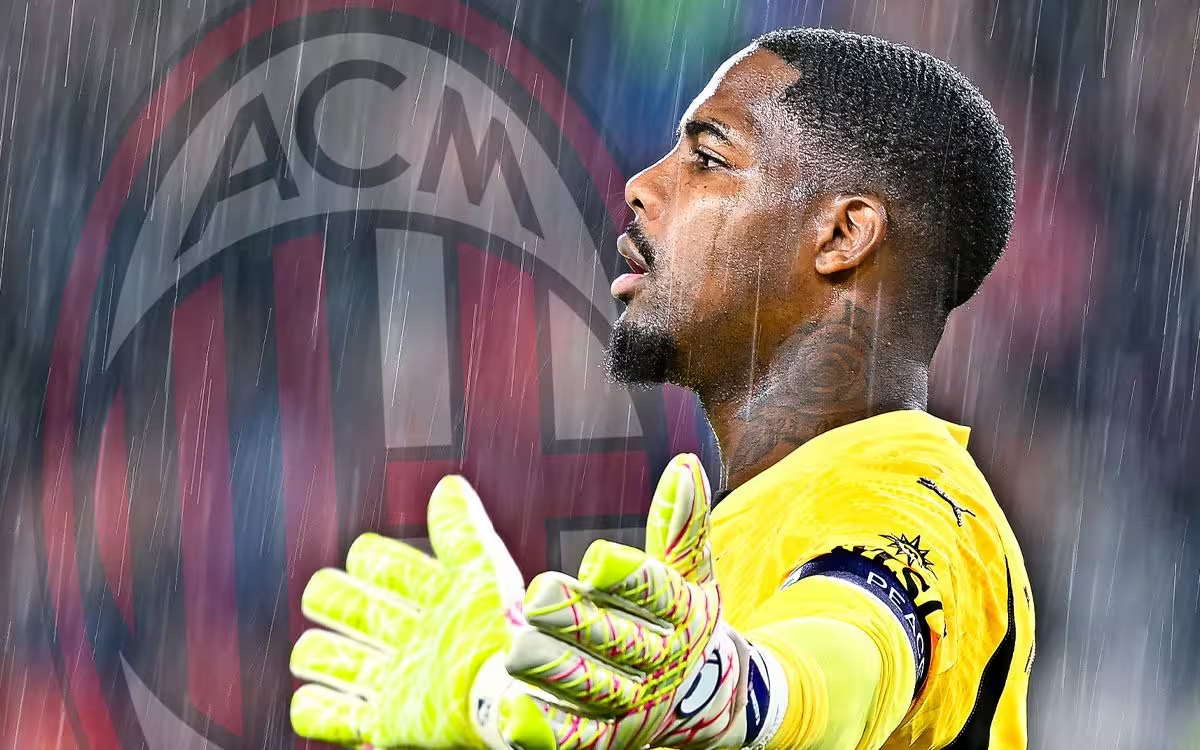
The friction runs deeper than timing. People close to the matter suggest retirement appears to be next on the cards for Modric, a possibility that would end his club career in its current form. He has not announced any decision. That leaves three clear, unresolved outcomes: a renewal with AC Milan, retirement, or some alternative yet to be declared. Each would carry different immediate consequences for the club, for Croatia’s squad planning after the tournament, and for Modric’s own public legacy.
Modric’s one explicit line to the media resolved little beyond his focus. He insisted that his priority is the tournament and the team; everything else, he indicated, can wait. That position protects the squad from distraction but it also creates a compressed calendar for AC Milan. The end-of-month contract expiry is not a vague window; it is a specific cut-off that forces a decision into a narrow post-tournament period if Modric keeps his silence.
The clearest next steps are procedural: the contract expires at the end of the month and Modric remains registered with AC Milan until then. If he wants to extend his club career, a renewal will need to be agreed and announced. If he wants to stop, retirement would remove the need for negotiation but would also require a public declaration he has so far declined to make. For now, the only public fact is the one he offered to journalists — that he is focused on helping his team in the tournament in the best way possible.
The unresolved decision now becomes the story’s hinge. Modric’s words buy space for Croatia and for himself to concentrate on the present. They also sharpen the wait: a choice must arrive before the month closes or immediately after, and until it does, Modric’s club status will remain an open question while he chases the one outcome he says matters most right now.



