



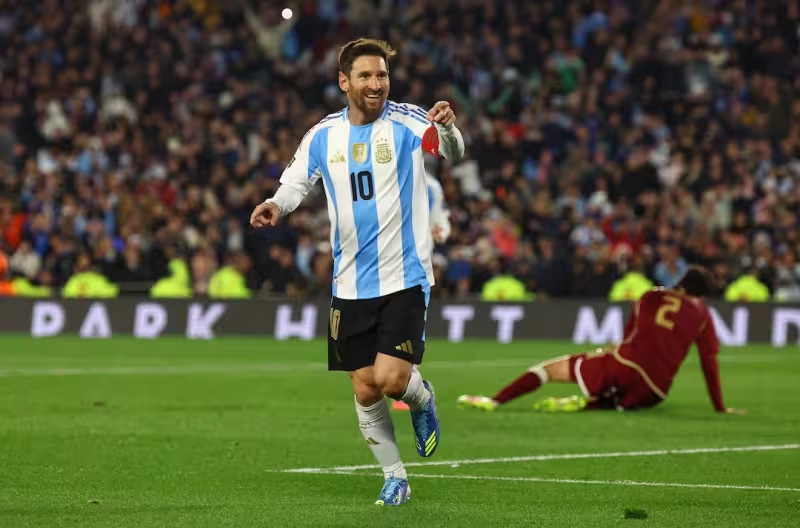
Lionel Messi became the first footballer in the world to appear at six World Cups when he started Argentina's opener against Algeria in Kansas City, a match that also marked his 200th international appearance and came at age 38.
The numbers are stark: six World Cups, 200 caps and a veteran still trusted to start for the reigning world champions. Messi first played at the tournament in 2006 in Gelsenkirchen — he was 18 then and scored in that debut — and the Kansas City start extended a career that now spans two decades of major tournaments. Argentina sit in Group J with Austria and Jordan, and Messi was expected to lead the side from the start.

Behind the milestone sits another running tally that matters to Argentina and their supporters: Messi and Diego Maradona were tied at eight World Cup assists heading into the Algeria game, and Messi needs one more to move past Maradona on the all-time list. He will turn 39 during the World Cup staged across the United States, Mexico and Canada, an age at which most players have long retired from international duty; the match in Kansas City only deepened the question of how far he can push the records he already shares with past legends.


The simplest friction in the record books: Guillermo Ochoa also reached six World Cup tournaments, but he did so without taking the field in Mexico's opener, sitting on the bench against South Africa. That detail separates the two men in one key statistic — Messi became the first to appear in six tournaments on the pitch — even as both have now been part of six tournament squads. Cristiano Ronaldo remains on the same horizon as well: he could equal six World Cup appearances if he plays for Portugal against DR Congo on Wednesday.
For Argentina the immediate consequence is practical as much as ceremonial. Starting Messi in the opener confirms the team’s reliance on his experience as it navigates Group J, and it hands Messi another clear chance to alter the assist record he shares with Maradona. Whether he provides that pass or produces moments fans talk about — even a future Messi Hat Trick in a later match — the milestone in Kansas City is concrete and irreversible.
The unanswered, and most consequential, question now is not whether Messi will add another World Cup appearance — he has set that record — but whether he will convert this longevity into further statistical separation from the legends beside whom he is measured. He needs one more World Cup assist to become the tournament’s outright leader, and every Argentina match from here is a direct opportunity to do it. If he reaches that assist first, the six-tournament mark will feel less like an endpoint and more like the frame for a new record run.



