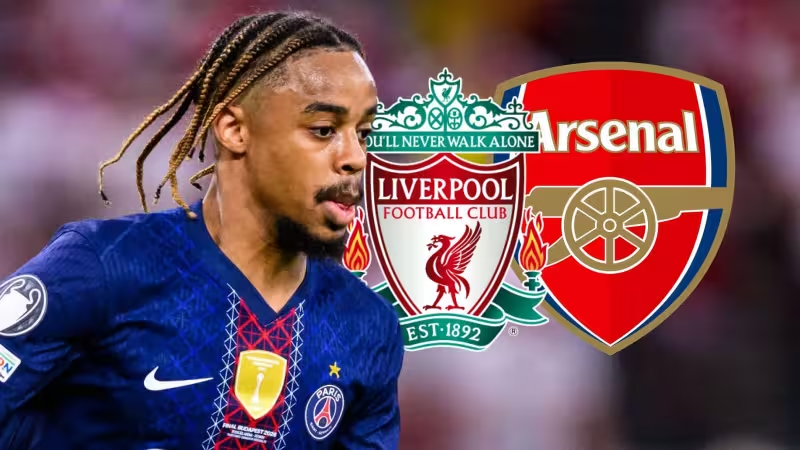
Bradley Barcola has informed Paris Saint-Germain that he wants to leave the club this summer, a move that opens a potentially high-profile transfer battle. The 23-year-old France international still has two years remaining on his contract at PSG.
Barcola’s representatives have already sounded out Europe’s leading clubs. Arsenal and Liverpool have been spoken to about a possible move, and Manchester City, Manchester United and Chelsea have also been told of the situation; his camp has been holding talks with sides capable of meeting both the financial demands and his ambition to play regularly at the highest level.

The decision follows a growing frustration at PSG. Barcola has become increasingly unhappy with his role under Luis Enrique, believing he has slipped down the attacking pecking order behind Khvicha Kvaratskhelia, Desire Doue and Ousmane Dembele. He was especially disappointed not to start either the Champions League semi-finals or the final during PSG’s run in the competition.
PSG’s immediate reaction is straightforward: the club would like to keep Barcola and have him sign a new contract. That preference is practical as well as symbolic — with two years left on his deal the club has leverage in negotiations, and retaining a young, homegrown French forward fits PSG’s long-term planning.
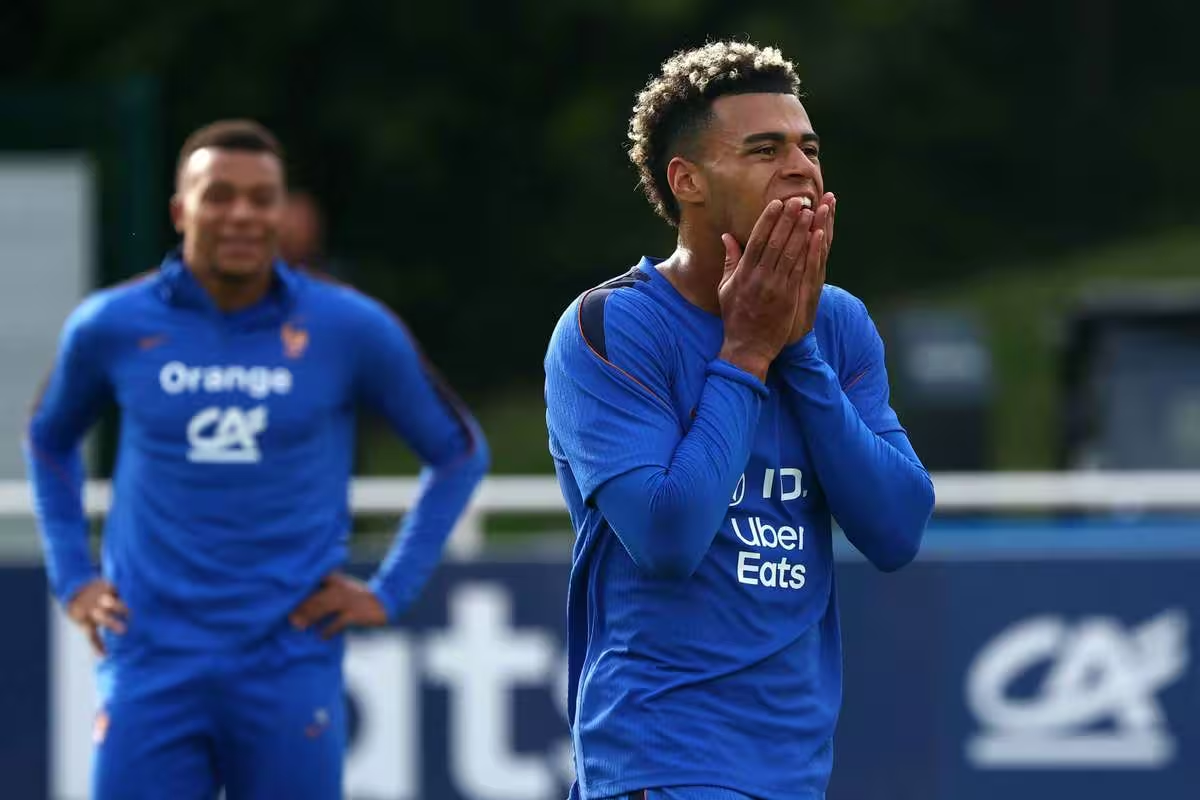


Yet the terms of the dispute are already clear. Barcola says he wants a fresh start where he is a regular starter in the biggest games; PSG want to lock him into a longer-term agreement. Those positions are not easily reconciled. The player’s camp has spent the past month assessing options and testing interest, and telling multiple clubs that a transfer could be possible this summer.
The timing matters. By informing PSG now, Barcola has given potential suitors time to prepare offers before the window opens in earnest, and he has put Paris’s sporting department under pressure to decide whether to try and persuade him to stay or to cash in while his value is high. His disappointment at being omitted from the Champions League semi-final and final adds a clear motive driving the request rather than a vague preference to move.
Still unresolved is the single practical question that will determine how quickly this story moves: which club, if any, will submit a formal bid first. Interest has been communicated widely, but a conversation and a written offer are different things. PSG can stall, demand a substantial fee, or begin serious talks about a new contract — each path forces different outcomes for Barcola and for the clubs circling.
The decisive moment now is the first firm approach. If one of the clubs already briefed makes an opening bid, PSG will have to choose between an immediate sale that satisfies Barcola’s desire to go and preserves transfer value, or resisting in hopes of convincing him to sign an extension and remain a part of Luis Enrique’s plans. The transfer window will show which side of that split holds.