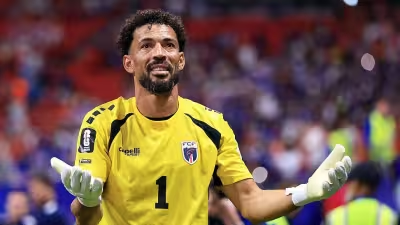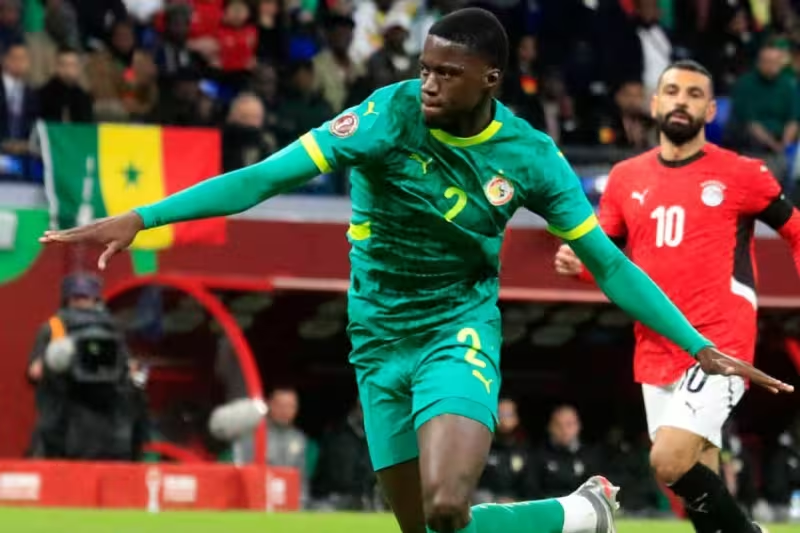
Senegal must settle a crucial defensive call before Tuesday’s 21:00 World Cup opener against France: Mamadou Sarr is leading the race to partner Moussa Niakhaté, while captain Kalidou Koulibaly has returned from injury but remains short of nearly two months' competitive rhythm.
The immediate weight of the decision is plain. Koulibaly and Idrissa Gueye have both recovered and are available to start, but the captain has been absent from competition for almost two months and may need more match rhythm than a game of this magnitude allows. Sarr’s advantage — notably his speed — has pushed him ahead in the pecking order for a fixture where pace will be tested repeatedly.

Senegal will be complete for the match on Tuesday night, and the rest of the expected spine reads like a clear template: Gueye is expected to sit as the holding midfielder, Sadio Mané is expected to operate down the left, Nicolas Jackson will be relied on up front, and Ismaïla Sarr remains the team’s attacking winger capable of troubling defences. The only other live internal choice is in midfield, where Lamine Camara and Habib Diarra remain the alternatives.
The friction is obvious. Koulibaly is the usual captain and the name most trusted to marshal the back line, but his long absence raises a practical worry: does tournament pressure demand a fully sharp leader or is experience enough to override a lack of recent minutes? That calculus has handed Sarr the edge; his readiness and pace fit the immediate tactical need against France’s attacking threat.
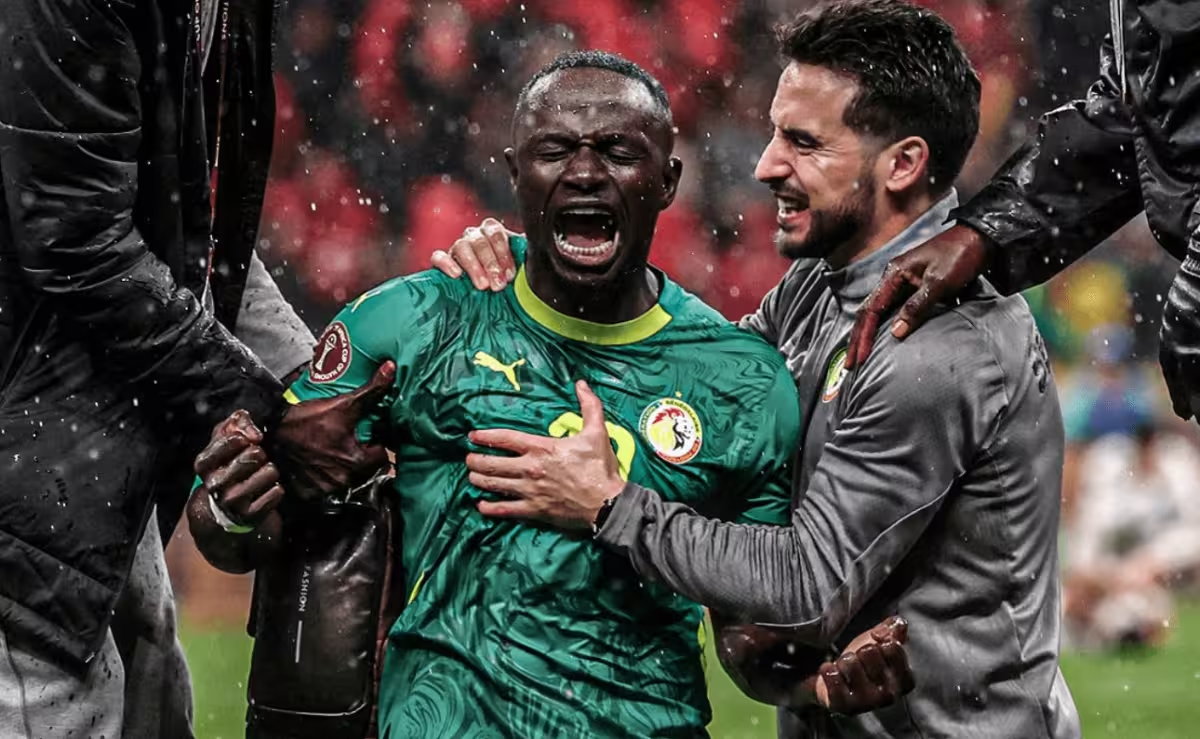
Pape Thiaw still holds the final pencil. He can restore Koulibaly to the starting eleven if he judges the captain’s return to training sufficient, or he can stick with the younger option who has shown the form and mobility considered essential for this particular matchup. Either route would be defensible; the choice will tell you whether Thiaw prioritises experience and leadership or current match fitness and speed.
Practical detail for readers ahead of kickoff: if Sarr starts alongside Niakhaté, expect a back pairing geared to rush out to cover counters and shield the back line with pace; if Koulibaly starts, the setup is likelier to lean on his organising presence and aerial authority. In midfield, Gueye’s role as a holding midfielder should remain constant, but whether Camara or Diarra joins him will shape Senegal’s ability to press high or sit deeper.
There is also a peripheral chorus of names in the wider conversation — including Ibrahim Mbaye among others — but the only selection that will materially change Senegal’s game plan against France is the central-defence call. The rest of the starting eleven appears drawn up around Gueye’s screening work, Mané’s left-sided activity and Jackson’s focal point in attack.
What to watch when the whistle blows: the first 15 minutes will reveal Thiaw’s intent. If Koulibaly looks brisk and authoritative, it will validate a bold restoration; if he looks hesitant, Senegal will rely on Sarr’s acceleration to plug spaces and chase runners. The midfield pairing chosen alongside Gueye will also determine how often Senegal can disrupt France’s buildup and force turnovers in dangerous areas.
For now, the sensible read is that Mamadou Sarr is the likeliest starter next to Moussa Niakhaté, given Koulibaly’s recent lack of competitive action. The final word, however, rests with Pape Thiaw, whose team sheet before kickoff will answer the tournament’s most immediate tactical question for Senegal: whether to trust the captain’s return or to back the sharper defender for one of the tournament’s biggest opening nights.